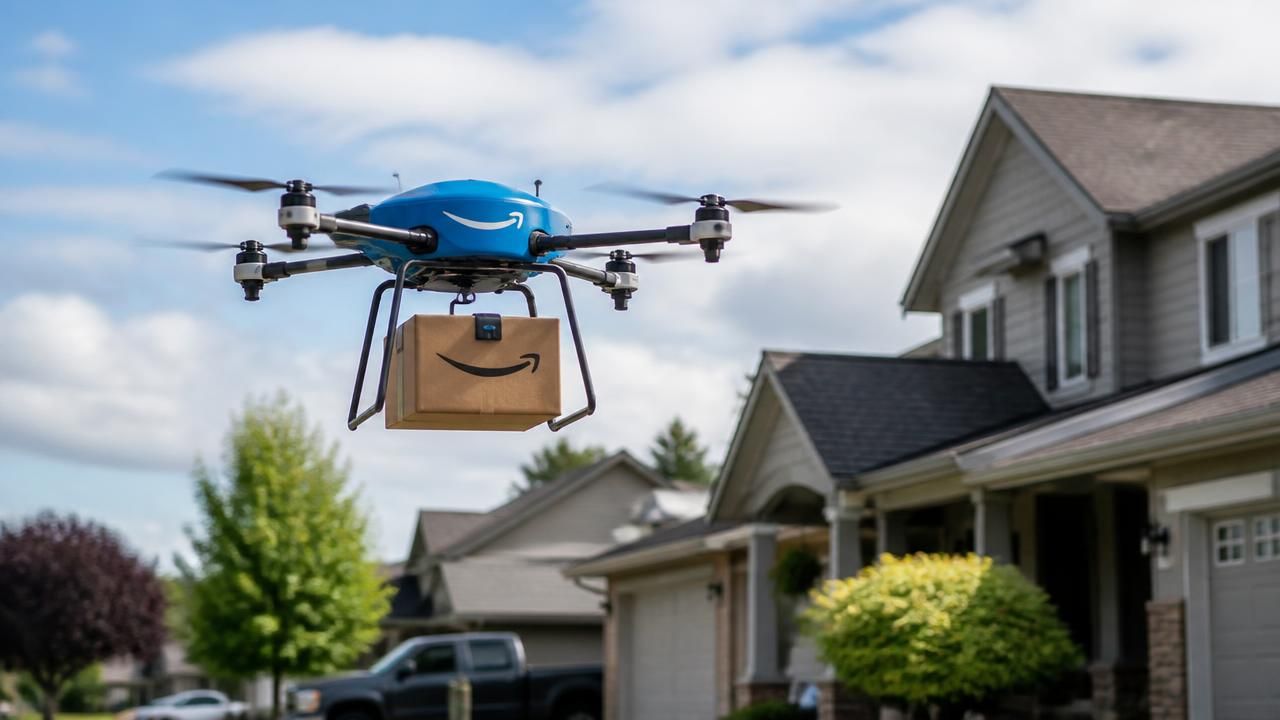
Amazon has announced a major expansion of its Prime Air drone delivery service, targeting nearly 500 U.S. cities and towns by the end of 2026. The move represents a sixfold increase from the current footprint of 10 cities across seven states, and signals the company's intent to make drone delivery a mainstream convenience. But the growth also raises questions about noise, privacy, and public tolerance for low-flying aircraft in residential neighborhoods.
Announcement and New Locations
On August 19, Amazon revealed it would soon begin drone deliveries in the metropolitan areas of Chicago, Cleveland, Atlanta, Syracuse (New York), and Boise (Idaho), with more locations to follow later this year. Each Prime Air site covers an area of roughly 175 square miles, offering delivery times between 30 and 60 minutes. The company says the service is designed for lightweight packages, typically under five pounds, which constitute a substantial portion of Amazon's deliveries.
The expansion builds on existing operations in 10 cities across seven states, including Phoenix, Tampa, Kansas City, Omaha, Baton Rouge, Detroit, Houston, and San Antonio, Dallas, and Waco in Texas. By the end of 2026, Amazon aims to serve nearly 500 cities and towns, bringing drone delivery to tens of millions of additional residents.
How the Service Works
Prime Air uses autonomous drones that fly from Amazon warehouses to customers' homes, dropping packages via a tether or landing in designated zones. The service is integrated into the Amazon app, with customers selecting drone delivery for eligible items. Key operational details include:
- Delivery radius: Each site covers approximately 175 square miles, enabling deliveries within 30 to 60 minutes.
- Package weight: Lightweight items only, typically under 5 pounds.
- Flight altitude: Drones cruise at low altitudes, typically 50–120 meters, remaining below manned aircraft.
- Noise: The drones emit a humming sound, which has become a point of contention in some communities.
Amazon has not yet specified how many drones will be deployed or the exact rollout timeline for all 500 locations, but the announcement suggests a rapid scaling from the current 10 sites.
Community Concerns: Noise and Privacy
As drone delivery expands, so does scrutiny from residents. In Michigan, where Amazon already operates in Detroit, local reports highlight growing concerns about noise and privacy. A USA Today article documented complaints from homeowners near delivery zones, describing constant buzzing and drones hovering over backyards. Privacy advocates worry about surveillance, as drones are equipped with cameras for navigation and obstacle avoidance.
“Each Prime Air site offers delivery drone service within an area of about 175 square miles, with delivery times ranging from half an hour to an hour.” — Amazon's announcement, as reported by Ars Technica
These concerns are not unique to Michigan. In suburban areas, the promise of 30-minute delivery clashes with the reality of altered residential skies. Local governments may face pressure to regulate drone noise, similar to ordinances passed for other low-flying aircraft.
The Competitive Landscape
Amazon is not alone in the drone delivery race. Rivals including Walmart, Alphabet's Wing, and UPS have been testing or rolling out their own services. However, Amazon's scale and logistics infrastructure give it a significant advantage. Analysts note that the move to 500 cities could reshape e-commerce expectations, making drone delivery a standard option for everyday purchases.
Yet, the expansion also tests societal thresholds. As Ars Technica points out, “The planned expansions from Amazon and its rivals could make the convenience of delivery drone services available to tens of millions more people in the coming months—but will also test more communities’ tolerance for increased noise from daily drone flights.”
Different Framings in Media
Coverage of the announcement varies across outlets. Tech-focused media such as The Verge and Ars Technica emphasize the scale and technical achievement, with headlines highlighting “nearly 500 cities.” Consumer-oriented outlets like PCMag focus on the “30-minute wait” benefit for shoppers. Meanwhile, local news and USA Today zero in on the community impact, framing the drones as an intrusion on daily life.
This dichotomy mirrors the broader debate over technology adoption: innovation versus disruption. Amazon, for its part, emphasizes convenience and sustainability, noting that drones are electric and reduce road congestion. But residents in launch areas have yet to be fully convinced.
What's Next
Amazon’s plan to reach nearly 500 cities by end of 2026 is ambitious, but the company has a history of delayed timelines. Prime Air was first announced in 2013, but only began limited commercial operations in 2022. Regulatory approval from the Federal Aviation Administration (FAA) will be key to the expansion. Currently, Amazon operates under Part 135 certification, allowing beyond-visual-line-of-sight flights in specific areas.
The coming months will see the first flights in the newly announced metros, with more cities added incrementally. For consumers, the promise of a package landing in the backyard in under an hour may soon be a reality for millions. For communities, the hum of drones overhead will become part of the soundscape—a trade-off that is still being negotiated.
As the service scales, Amazon will need to address legitimate concerns while maintaining the operational efficiency it has demonstrated in initial markets. The next two years will be a test not only of engineering but also of social acceptance.