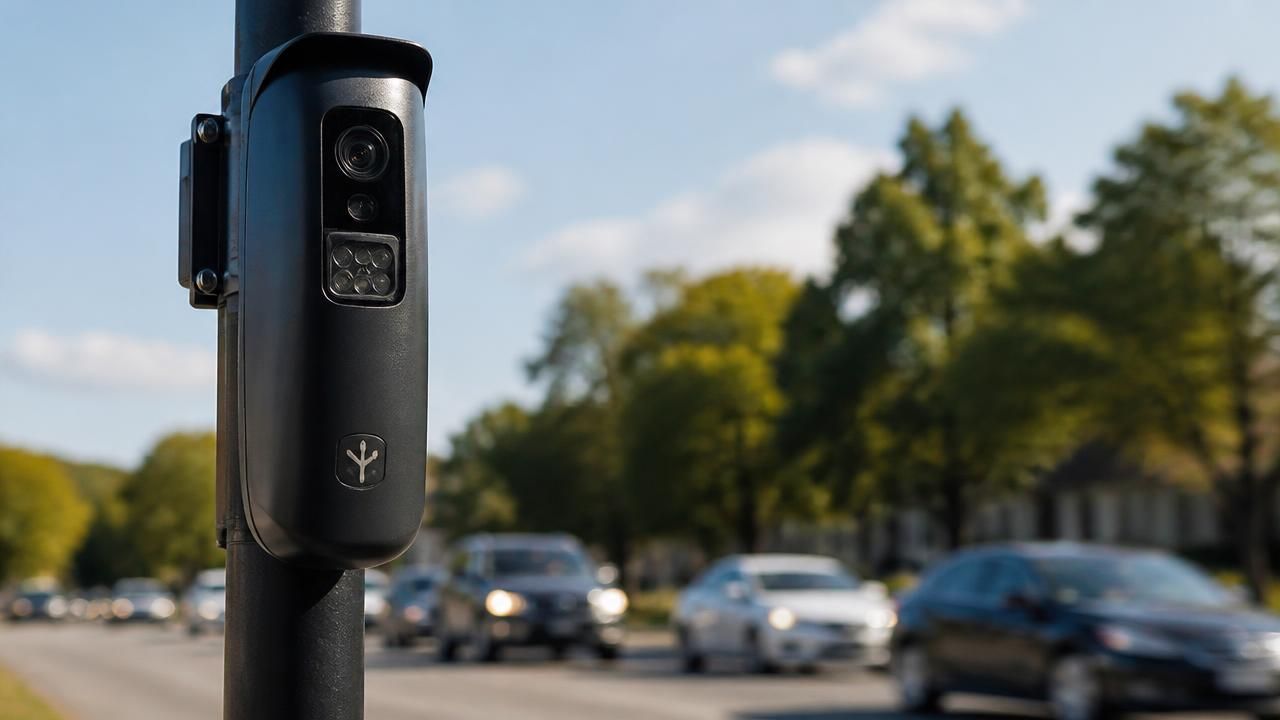
Flock Safety, the company behind the ubiquitous license-plate-reading cameras that have appeared in thousands of neighborhoods, has quietly introduced a powerful new AI tool that goes far beyond tracking plates. According to a Wired investigation that reconstructed the system's code, the software can now search for vehicles based on how they drive—allowing police to identify cars by patterns like swerving, speeding, or making sudden stops. The tool is already in use by some law enforcement agencies, and it has reignited fierce debate over the balance between public safety and civil liberties.
Flock's cameras have long been controversial. Critics argue that the network of surveillance devices, which captures every plate that passes by, creates a permanent record of where citizens go and when. Now, with the addition of behavioral search capabilities, the American Civil Liberties Union (ACLU) says the threat to privacy has become even more acute. The organization's headline is blunt:
"Despite 'New' Updates, Flock's Creepy Cameras Remain Major Civil Liberties Threat."The ACLU argues that the company's attempts to address abuse do little to curb the underlying problem of mass surveillance.
Beyond License Plates
License plate readers are nothing new, but Flock's latest AI feature represents a significant escalation. The Next Web reported that the tool "lets police search for people by how they drive." Instead of just scanning for a plate number, officers can now query the system for vehicles that exhibit certain behaviors, such as exceeding a speed threshold, weaving between lanes, or stopping abruptly. The AI analyzes video feeds from Flock cameras to generate a "driving signature" for each vehicle, which can then be matched against a database of all vehicles captured.
Wired's investigation, which involved reconstructing the code, confirmed that the system "goes much further than tracking license plates." The publication obtained the software used by Flock and found that it includes a module for "vehicle behavior analysis" that can classify maneuvers and create searchable indices. While Flock has marketed the tool as a way to detect reckless drivers and hit-and-runs, privacy advocates warn that it enables a new form of granular surveillance.
Civil Liberties in the Crosshairs
The ACLU has been one of the most vocal opponents of Flock's technology. In a series of documents and campaigns, the organization has detailed how the cameras can be used to track individuals' movements, build profiles, and target marginalized communities. With the addition of AI-driven behavior analysis, the group argues that the system becomes even more invasive. "This is not just about license plates anymore," the ACLU notes. "It's about creating predictive and behavioral profiles of everyone who drives through a Flock camera's field of view."
The organization also points out that Flock's data retention policies are problematic. Even when the company says it deletes data after 30 days, the ACLU argues that the existence of such a vast database—combined with AI analysis—chills free speech, discourages people from attending protests or visiting sensitive locations, and creates an environment of constant suspicion.
Florida Scandals and Corporate Reforms
The controversy reached a boiling point in Florida, where several scandals involving Flock cameras made national headlines. In one incident, a police officer allegedly used the system to stalk a romantic interest, looking up a woman's driving history for personal reasons. In another case, deputies were found to be using the cameras to monitor people engaged in lawful activities, such as parking outside a mosque. These abuses prompted Flock to announce "updates" to its system, including stricter access controls, audit trails, and a policy of terminating accounts for misuse.
The News-Journal reported that these changes were a direct response to the Florida incidents and broader criticism across the United States. Flock said it would require agencies to adopt formal policies before accessing certain features, and that it would more carefully vet who can use the AI search tool. However, the ACLU remains skeptical. In its response, the organization argued that the updates are cosmetic:
"Despite 'new' updates, Flock's creepy cameras remain major civil liberties threat."The group says that the fundamental issue is the existence of a mass surveillance infrastructure, not just how it is accessed.
Local Pushback
In response to these concerns, the ACLU is encouraging communities to take action at the local level. A separate ACLU guide titled "How to Pump the Brakes on Your Police Department's Use of Flock's Mass Surveillance License Plate Readers" offers concrete steps for residents and activists. These include:
- Drafting or supporting ordinances that require a warrant for any license plate data search.
- Demanding that police departments disclose their contracts with Flock and any other surveillance technology providers.
- Pushing for independent audits of how the data is used.
- Organizing public hearings to raise community awareness.
The ACLU notes that community pressure has already worked in some cities, leading to the cancellation of Flock contracts or the imposition of strict usage rules.
The Federal Void
Both Wired and the ACLU point out that one reason for the rapid expansion of Flock's AI capabilities is the lack of federal oversight. In a related ACLU analysis, the organization highlighted the Trump administration's efforts to dismantle AI protections, including executive orders and policy changes that remove transparency requirements and accountability measures at federal agencies. "The absence of federal governance creates a patchwork of local policies—or none at all," the ACLU says. This vacuum allows companies like Flock to deploy cutting-edge technology with little public scrutiny, as long as they find willing local buyers.
Flock, for its part, defends its technology as a crime-fighting tool that helps police solve cases faster and deter crime. The company has said it is committed to "safety" and privacy, and that its AI features are designed to find criminals, not track ordinary citizens. But with reports of abuse already emerging, and with Wired's code analysis showing the system's potential, the debate is far from over.
Balancing Innovation and Rights
The Flock controversy is a case study in the tension between technological innovation and constitutional rights. On one hand, AI-powered surveillance can be a powerful force for public safety, helping police track down suspects in hit-and-runs or violent crimes. On the other hand, the same tools can be used to monitor our every move, creating a chilling effect on freedom. As Flock expands its capabilities, and as political leaders roll back AI safeguards, the responsibility increasingly falls on local communities to set boundaries.
For now, the message from civil liberties advocates is clear: the public must stay informed, ask hard questions, and demand accountability. The code has already been written; it is up to us to decide how it is used.