In a significant leap for China's rapidly evolving space program, private launch company LandSpace successfully landed its orbital-class rocket booster back on land Tuesday, marking the first such recovery on Chinese soil. The achievement places China alongside the United States as one of only two nations to master the delicate propulsive landing technique pioneered by SpaceX.
The landing, which took place at a test facility in the Gobi Desert, follows a previous Chinese booster recovery at sea last month. With this second recovery by a different operator, China is demonstrating a breadth of reusable rocket expertise that mirrors the competitive landscape in the United States.
Who, What, When, Where
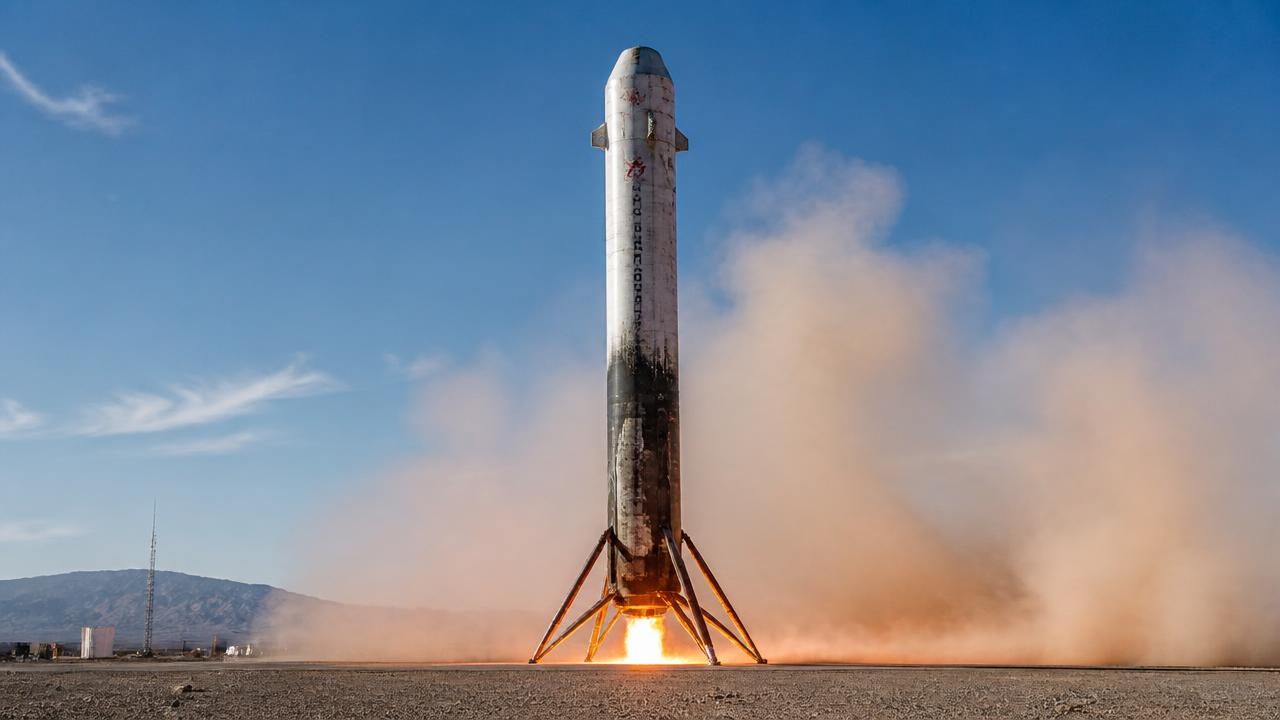
LandSpace, a Beijing-based commercial launch firm, performed the landing on Tuesday after launching a Zhuque-3 (朱雀三号) prototype vehicle on a high-altitude test flight. The booster ascended several kilometers, then executed a controlled descent, relighting its engines to slow its fall and touching down precisely on landing legs—a maneuver reminiscent of a Falcon 9 landing.
This was the first land-based recovery of an orbital-class booster in China. Just over a month ago, another Chinese company recovered a booster at sea, an achievement that itself was a national first. Together, these events signal a rapid acceleration in China's push toward fully reusable launch vehicles.
Joining an Exclusive Club
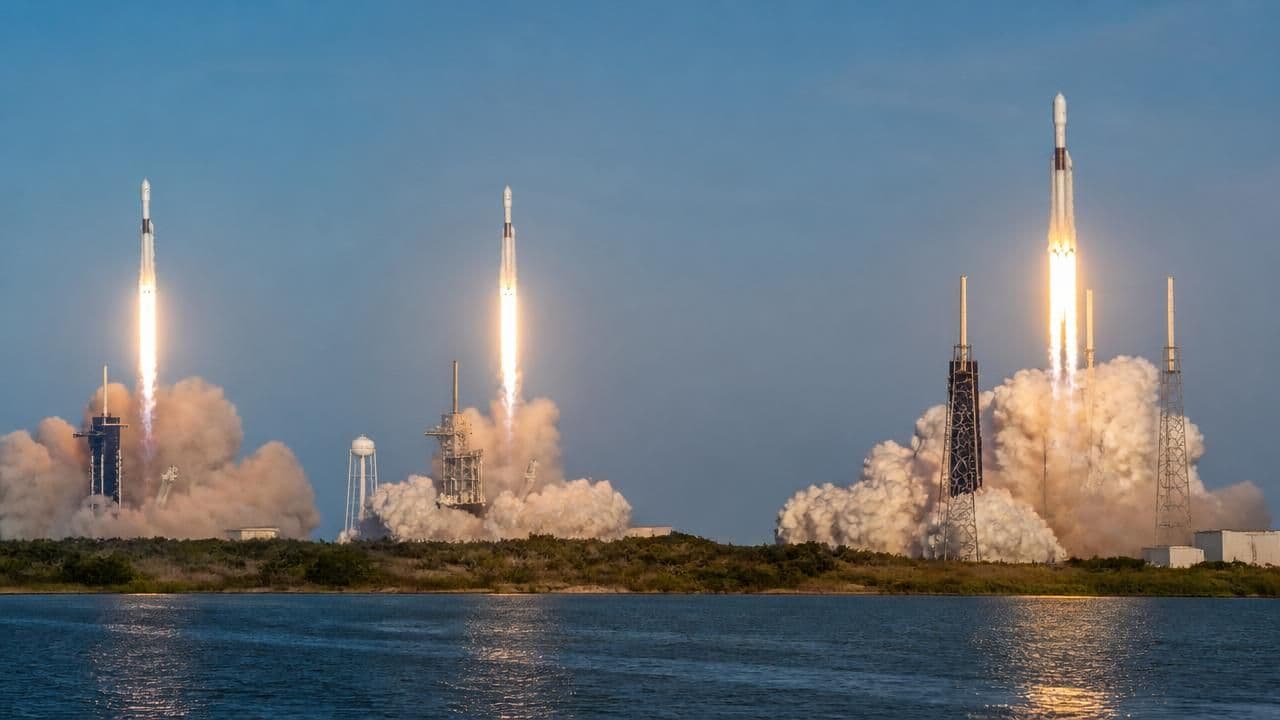
Until recently, only two American companies—SpaceX and Blue Origin—had successfully propulsively landed orbital-class boosters. SpaceX achieved the feat in December 2015 with its Falcon 9. It took Blue Origin a decade to replicate that success, which it did in 2025. Now China has achieved two such recoveries in just over 30 days, a pace that surprised industry observers.
“For a country to go from zero to two successful orbital-class booster recoveries in a single month is extraordinary,” said Dr. Emily Chen, a space policy analyst at the Center for Strategic and International Studies. “China is clearly investing heavily in this capability.”
Ars Technica notes that the US is now preparing for a potential third company to join the reusable rocket club, with Rocket Lab, Stoke Space, Relativity Space, and Firefly Aerospace all working on designs that could fly in the next couple of years. China, meanwhile, has a similar number of companies pursuing reusability, some under the state-owned China Aerospace Science and Technology Corporation (CASC) and others, like LandSpace, driven by private capital.
Why This Matters
Reusable rockets are the economic linchpin of modern space access. By recovering and refurbishing boosters, companies can drastically reduce launch costs, enabling more frequent missions and opening new markets. China's progress in this area could reshape the commercial launch market, challenging SpaceX's dominance and potentially offering lower-cost alternatives to international customers.
“The geopolitical implications are significant,” said Marco Rossi, a professor of aerospace engineering at MIT. “China is demonstrating that it can build competitive, low-cost launch systems independently. That changes the calculus for every nation and company looking to send payloads to orbit.”
Sea vs. Land Landings
The distinction between sea and land recoveries is important. A sea landing, where the booster touches down on an autonomous drone ship, offers more flexibility in flight path and often uses less propellant for the return boost back. A land landing, by contrast, requires the booster to fly back to its original launch pad or a dedicated landing zone, demanding greater precision but enabling faster turnaround and lower operational costs.
SpaceX first landed on land in December 2015, then at sea in April 2016, and now routinely uses both methods. China appears to be following a similar trajectory, with its sea recovery last month and now a land recovery.
What Skeptics Say
Despite the successes, some experts caution that a test landing is not the same as operational reuse. The Japanese companies and other newcomers have yet to prove they can recover, refurbish, and re-fly a booster quickly and economically. LandSpace has not yet announced plans for an orbital launch with reuse, and the company's test vehicle was a subscale demonstrator, not a fully fledged orbital booster.
“Landing is only half the battle,” said Sarah Johnson, a former NASA engineer. “The real test is whether you can reload the rocket, fix the engines, and fly it again within days or weeks. That's where SpaceX has excelled, and the Chinese companies will need to show similar discipline.”
What’s Next
LandSpace plans to conduct a full orbital launch of its Zhuque-3 rocket in 2026, with the goal of recovering the first-stage booster on land. The company has already signed several commercial contracts and is betting that reusability will give it a competitive edge in the international launch market.
Meanwhile, other Chinese firms are not standing still. CASC is developing a reusable variant of its Long March 10 rocket for crewed lunar missions, and startups like iSpace and Galactic Energy have tested landing hardware of their own. Analysts expect China to attempt multiple recovery missions in the coming years, potentially matching or exceeding the US pace by 2030.
The Global Race Heats Up
The milestone is a reminder that the space industry is no longer a two-nation race. India, Japan, and the European Union are also investing in reusable rocket technology, but they have yet to demonstrate a successful propulsive landing of an orbital-class booster. China's rapid progress could spur these nations to accelerate their own programs, potentially lowering costs and increasing access to space for all.
As the evening sky cleared over the Gobi Desert, LandSpace's booster stood upright on its landing pad, a testament to human ingenuity and the relentless pursuit of reusability. For China, it was a proud moment; for the world, a sign that the space race just got a lot more interesting.