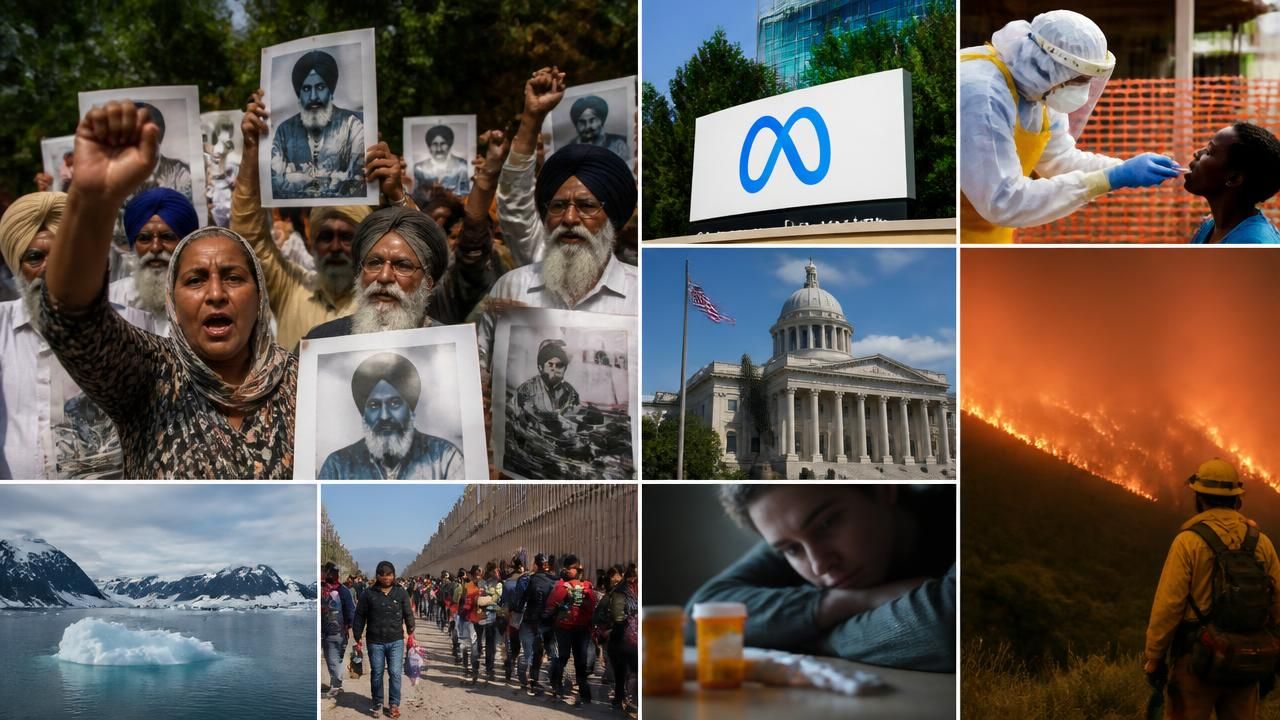
This week's news spans continents and covers a wide range of critical issues – from a government's attempt to suppress a film in India to the worsening Ebola outbreak in Central Africa. Public radio stations across the United States have brought these stories to the fore, each highlighting different facets of global and domestic challenges. Here is a synthesis of eight such reports, offering a snapshot of the issues shaping our world.
India's Blocked Film Becomes a Grassroots Movement
In India, the government's decision to block the biopic of activist Jaswant Singh Khalra has backfired, according to NPR. The film, titled Satluj, was banned on grounds of
"national security."Khalra, a former police officer turned human rights activist, was known for investigating police abuses, particularly the extrajudicial killings and disappearances during the Punjab insurgency of the 1990s. Instead of silencing the story, the censorship has galvanized local villagers and activists, turning the ban into a grassroots movement. Screenings have been organized in defiance, and the controversy has drawn more attention to Khalra's work than the film might have otherwise received. This incident underscores the delicate balance between state authority and the freedom of expression, and how attempts to suppress information can fuel public curiosity and resistance.
Kentucky AG Joins Multi-State Lawsuit Against Meta
In the U.S., Kentucky's Attorney General has joined a multi-state lawsuit against Meta, the parent company of Facebook and Instagram, calling it
"the opioid fight of our time."The lawsuit, reported by South Carolina Public Radio, alleges that Meta's platforms have contributed to a youth mental health crisis by designing addictive features and failing to protect young users. The AG’s comparison to the opioid epidemic draws attention to the scale of the harm and the need for corporate accountability. The case is part of a broader wave of legal actions against social media giants, reflecting growing bipartisan concern about the impact of technology on children and teenagers.
Hawaii Neighborhoods Endure Prolonged Power Outage
In Honolulu, residents of Kalihi and Kalihi Valley are reporting that they have been without power for days, according to Hawaii Public Radio. The outage has disrupted daily life, forcing families to contend with spoiled food, lack of air conditioning, and unsafe conditions. Utility officials have not provided a clear restoration timeline, and the prolonged blackout has heightened frustration among community members. This local story is a reminder of the fragility of infrastructure and the importance of grid resilience, especially in communities that are already vulnerable.
Social Security Trust Funds Face 2032 Depletion
The Social Security Trustees have issued a stark warning: the program's funds could run short by 2032, according to Ocean State Media. Without legislative action, beneficiaries may face reduced payouts in the next decade. This warning is part of the annual Trustees report, which has consistently highlighted the long-term financial pressures on Social Security due to an aging population and lower birth rates. The report sets the stage for contentious policy debates in Washington, with advocates urging either tax increases, benefit adjustments, or a combination of both to ensure the program's solvency.
Striking Hospital Employees Sound Alarm on Workplace Violence
Hospital workers in the U.S. have gone on strike, raising concerns about workplace violence, as reported by Ocean State Media. The striking employees, likely nurses and support staff, are demanding better safety protocols and staffing levels, arguing that inadequate protections have put them at risk of assaults from patients and visitors. Their unprecedented action highlights the growing anxiety among healthcare workers about their safety, an issue exacerbated by the pandemic. The union's stance is that hospitals must do more to protect their employees, and the strike is a wake-up call for healthcare administrators across the country.
Trump Administration Proposes Logging in Untouched National Forests
The Trump administration has taken steps to open previously untouched national forests to logging, according to Ocean State Media. This policy shift, which environmentalists see as a threat to pristine ecosystems and wildlife habitats, is framed by the administration as a measure to reduce wildfire risks and boost the timber industry. The plan would allow commercial logging in areas that have been off-limits for decades. Critics argue it is a giveaway to the logging industry that could do long-term ecological damage. The decision is expected to face legal challenges and has become a flashpoint in the broader debate over public lands management.
Liberia Agrees to Accept 1,200 Third-Country Deportees
In a move that has raised eyebrows, Liberia has agreed to accept 1,200 third-country deportees from the United States, as reported by Ocean State Media. These are individuals who are not Liberian nationals but are being deported from the U.S., and the arrangement is part of a diplomatic agreement to facilitate removals. The deal has sparked concerns about human rights and the treatment of stateless individuals, as well as the burden placed on Liberia. It also highlights the U.S. government's efforts to find countries willing to take deportees who cannot be returned to their countries of origin.
Congo's Ebola Outbreak Exceeds 5,000 Cases, Outpaces Response
Finally, the Ebola outbreak in the Democratic Republic of Congo has reached a grim milestone: more than 5,000 cases, as reported by Ocean State Media. The outbreak, which is the second-largest in history, is continuing to spread faster than the response efforts can contain it. Health workers face challenges including community mistrust, violent attacks on treatment centers, and limited resources. The World Health Organization has described the situation as critical, and the global health community is racing to contain the virus before it crosses more borders.
Telling the Story of Our Times
These eight stories, while independent, together paint a picture of a world grappling with governance, public health, environmental policy, and social justice. From the freedom of expression in India to the safety of healthcare workers in America, and from the looming fiscal challenges of entitlement programs to the urgency of an African epidemic, journalists across the public radio ecosystem are working to inform the public. As these developments unfold, the need for accurate, comprehensive reporting has never been more important.