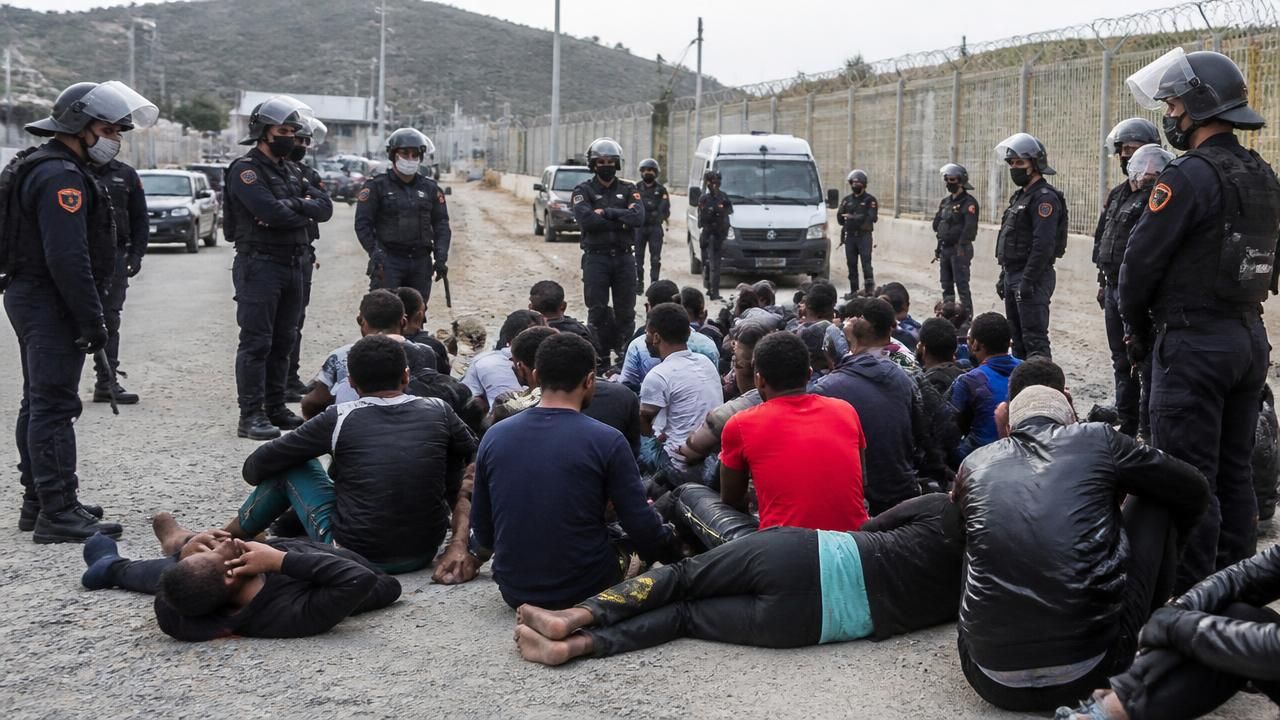
Moroccan security forces have arrested at least 111 people attempting to cross into the Spanish enclave of Ceuta, in a coordinated operation that thwarted a second mass migration surge just two weeks after thousands of people stormed the border. The arrests took place on Saturday, following social media posts urging another large-scale crossing into Ceuta, a Spanish territory on Morocco's northern coast.
Reports from different outlets vary on the number of detainees: while the Guardian and NBC News cite 111 arrests, other sources such as Yahoo News and Open.kg report that 294 migrants were intercepted overall. The discrepancy highlights the chaos and opacity surrounding border operations in the region, but all accounts agree that the attempted incursion was effectively halted by Moroccan authorities, who deployed police reinforcements and cut-off routes to the border.
Background: A border already under pressure
The latest incident comes two weeks after an estimated 8,000 to 12,000 migrants surged into Ceuta when Moroccan border guards reportedly stood aside, causing a diplomatic crisis between Spain and Morocco. At the time, Spain sent troops to the enclave and began deporting many of the migrants, while humanitarian groups warned of dire conditions. The BBC reported that Spain dispatched military units to restore order, and in the aftermath, at least 96 migrants died attempting to reach European soil, according to the Guardian.
Ceuta and its sister enclave Melilla have long been flashpoints in the EU's migration policy, with high fences, razor wire, and periodic mass crossing attempts. The recent surge has reignited debates about border security, migrant rights, and diplomatic leverage, with both Morocco and Spain trading accusations over who is responsible for controlling the flow.
Saturday's crackdown: What happened
Witnesses and officials described a heavy police presence along the perimeter separating Morocco from Ceuta, particularly near the Fnideq crossing point, where the largest groups attempted to approach. Moroccan police used tear gas to disperse crowds, and by the end of the day, 111 individuals had been formally detained, according to the state news agency. The Telegraph dubbed the operation a 'show of strength' that headed off a second wave, while iNews noted that thousands of migrants had been observed gathering in the hills near the border, waiting for an opportunity to break through.
The Moroccan authorities are clearly determined to prevent a repeat of the chaotic scenes we saw earlier this month. The arrests are a signal both to migrants and to Spain that they intend to enforce border controls.
Social media platforms had been flooded with messages calling for a new crossing attempt, echoing the viral campaigns that preceded the earlier surge. In response, both Spanish and Moroccan authorities increased surveillance and patrols. The Olive Press, a Spain-based English-language outlet, reported that the second attempt 'fell flat' due to the preventive measures, though it also raised questions about the migrants' desperation.
Broader migration crisis and Melilla deaths
The events at Ceuta are part of a larger pattern of migration pressure on Spain's North African territories. In June 2022, at least 23 migrants died while attempting to scale the fence into Melilla in a mass crossing that drew international condemnation. Moroccan authorities were accused of using excessive force and attempting to cover up the deaths, with the Guardian publishing an investigation into alleged abuses. Activists and migrants in Morocco told France 24 that a wave of police raids is now targeting sub-Saharan African migrants, pushing many to take even more dangerous routes.
Humanitarian groups have expressed alarm over the treatment of migrants who were stranded in Ceuta after the earlier crossing. Some have staged beach protests, demanding asylum and legal status. A report from AOL UK quoted one migrant who said, 'I'd rather die here than go back to Morocco,' reflecting the fear of deportation and violence. Meanwhile, border workers' unions in Spain claimed that Spanish authorities ignored warnings before the initial mass crossing, a charge that has fueled political tension in Madrid.
Political and diplomatic ramifications
The crisis has reverberated across Europe, where far-right parties have seized on the images of migrants crossing the border to push for stricter immigration policies. In Spain, the government has faced criticism both for being too lenient and too harsh, while Morocco has used the border issue as leverage in disputes over Western Sahara and other diplomatic matters.
The Euractiv report of a 1,000-strong fence storming attempt in a related incident underscores the scale of the challenge. However, Saturday's effective crackdown suggests that Moroccan authorities are willing to cooperate with Spain to maintain order—at least for now. Analysts say this could open a window for deeper EU-Morocco cooperation on migration, but also raise concerns about human rights abuses at the border.
What next?
With the immediate threat averted, attention turns to the long-term situation. Thousands of migrants remain in Morocco, many hoping to reach Europe, while Ceuta's infrastructure is strained by the earlier arrivals. The Spanish government has appealed for EU financial assistance to manage the enclaves, and the European Commission has pledged support. But as the Times of London noted, the underlying drivers—poverty, conflict, and political instability in West Africa—remain unresolved, making further surges likely.
For now, the Moroccan police operation has sent a clear message: a second mass crossing would not be tolerated. But whether that message deters migrants or simply forces them to find more desperate routes is a question that continues to haunt the region.
- At least 111 migrants arrested in Saturday's operation; some reports say 294 intercepted.
- Two weeks earlier, over 8,000 migrants entered Ceuta in a single day.
- At least 96 migrants died attempting to reach Europe during recent surges.
- Morocco faces accusations of using excessive force, including tear gas and police raids.
- Border tension is intertwined with broader EU-Morocco diplomatic relations.