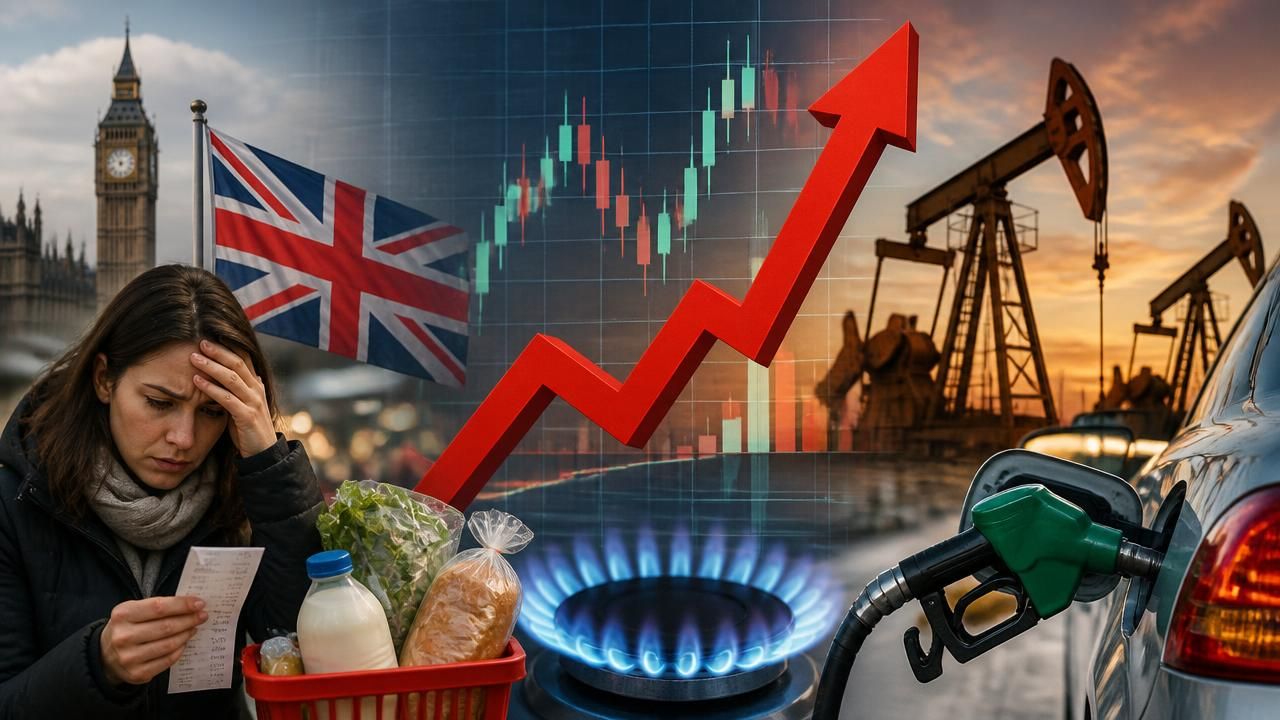
The world is feeling the heat. A surge in energy prices—triggered by the ongoing Iran war and its chokehold on oil and gas supplies—has sent inflation rates climbing across major economies, with the UK, US, Germany, Japan, and China all reporting multi-year or multi-decade highs in recent weeks. What began as a supply-side shock is now morphing into a full-blown cost-of-living crisis, forcing central banks to reconsider interest rate policy and reigniting debates about energy security and the transition to renewables.
UK: Inflation Hits Four-Month High, Citi Warns of 18%
In the UK, consumer prices climbed to a four-month high as energy bills surged. Official data showed the Consumer Prices Index (CPI) rising to 3.3% in March, with petrol costs and household energy bills leading the charge. The rebound ends a brief period of respite for British households, who had hoped that the previous slowdown in inflation would continue. Instead, the war-driven oil shock has upended those expectations.
JP Morgan was quick to label the rebound a “warning shot for what could come next.” In a note to clients, the bank warned that the energy price spike could push inflation higher still, feeding through to broader goods and services. Citi went further, warning that UK inflation could breach 18% if energy prices remain at current levels—a figure not seen since the 1970s. Such forecasts have put the Bank of England under intense pressure to raise interest rates, with services sector inflation data making a hike “more likely,” according to proactiveinvestors.co.uk.
“The rebound in UK inflation is a warning shot for what could come next,” said a JP Morgan economist. “Energy prices are the primary driver, but the risk of second-round effects is real.”
Beyond headline inflation, UK manufacturers are feeling acute pain. The Guardian reported that manufacturers are facing the sharpest rise in cost inflation since Black Wednesday in 1992, a stark reminder of how quickly an energy shock can cripple industrial competitiveness. Meanwhile, grocery inflation accelerated to 5.2%, according to Worldpanel data, squeezing household budgets further.
Global Inflation: A Synchronized Surge
The UK is far from alone. Across the developed and developing world, inflation is accelerating at a pace not seen in years, and energy is the common thread.
- United States: Consumer inflation posted its largest annual gain in three years, with prices rising broadly. Gasoline costs, driven by the Iran war, pushed the CPI to its highest level in almost two years, according to the BBC. Wholesale (producer) prices also surged by the most in four years, signaling more consumer pain ahead.
- Germany: Europe’s largest economy saw inflation accelerate to 2.9% in April, up from 2.8% in March, as energy costs soared. The spike is complicating the European Central Bank’s efforts to manage monetary policy.
- Japan: Wholesale inflation accelerated to its fastest pace in three years, a worrying sign for an economy that has long struggled with deflation. Core inflation in Tokyo remains subdued but is expected to accelerate on the energy shock.
- China: Consumer inflation hit a three-year high on a holiday-driven surge, while factory inflation reached a 45-month high as energy prices bit. Producer deflation is lingering, but the energy shock is now feeding through to the world’s manufacturing powerhouse.
This synchronization is what worries economists most. As Reuters noted, the gas price surge is “just one more headwind for the world economy,” which was already grappling with supply chain disruptions and labor market tightness. The Intereconomics analysis of the 2021-22 inflation surge highlighted the dangers of scarcity and strong labor markets; today’s conditions echo those themes.
Markets and Policy: Higher-for-Longer Rate Fears
Financial markets are bracing for a prolonged period of tight monetary policy. Stocks retreated as oil prices surged and inflation accelerated, while the VIX—Wall Street’s “fear gauge”—spiked 3.7% to 20.60, reflecting heightened uncertainty. The prospect of “higher-for-longer” interest rates is now a central theme for investors, as central banks from the Bank of England to the Federal Reserve are forced to act.
In the UK, the Bank of England is caught between fighting inflation and avoiding a recession. With services inflation proving sticky, market bets on a rate hike have intensified. Across the Atlantic, the Fed faces a similar dilemma, with producer prices coming in hotter than expected. Even smaller economies are feeling the strain: S&P warned that the energy price surge is a risk to Hungary’s credit rating.
Climate and Renewables: A Silver Lining?
Amid the gloom, the crisis is strengthening the case for a rapid green transition. BusinessGreen reported that grim UK energy bills forecasts have sparked renewed calls for a swift shift to renewable power. A Morningstar analysis noted that the Iran war could drive a renewables push that might cut UK energy prices by 50% in the long run. UK parliament committees are now exploring how to reduce reliance on oil and gas and accelerate the path to net zero.
However, such benefits are unlikely to materialize soon enough to ease the immediate squeeze. For now, households and businesses are left to contend with rising prices and the prospect of higher borrowing costs.
Framing the Story
Different outlets are telling this story through different lenses. Bloomberg focuses on the macro data and the “warning shot” for the UK economy. The Guardian foregrounds the pain felt by manufacturers and consumers. Reuters provides global context, with a steady stream of data from every major economy. The Times highlights the historical echo of Black Wednesday. And green-energy publications see an opportunity to accelerate decarbonization. But all agree on the core fact: the Iran war has ignited an energy-driven inflation spike that is testing economies worldwide.
As the conflict shows no sign of abating, and with oil prices continuing to rise, the immediate outlook is grim. The path to relief lies either in a de-escalation of the war or in a dramatic acceleration of renewable energy investment—or, more likely, both. Until then, the world’s consumers will be paying the price.