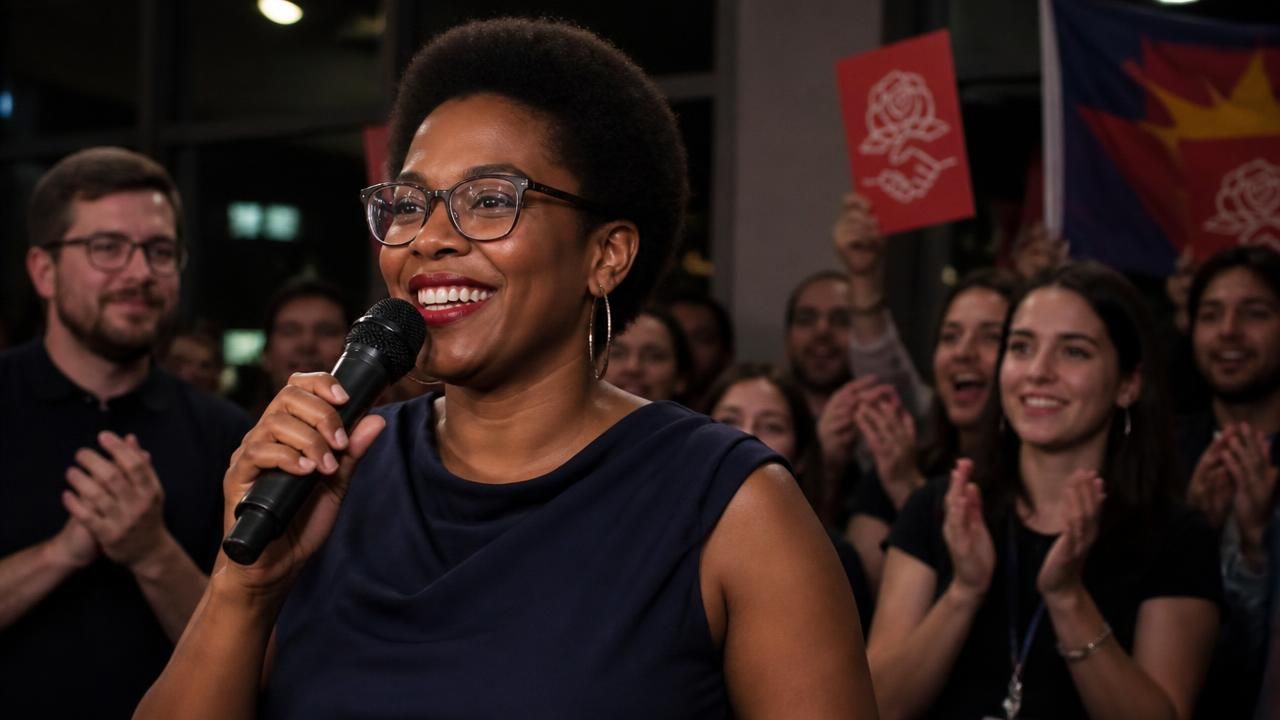
In a stunning political upset that reshapes Florida’s 2026 midterm landscape, Democratic Socialist state Representative Angie Nixon defeated Alex Vindman, a key witness in Donald Trump’s first impeachment trial, in Tuesday’s Democratic Senate primary. Nixon’s victory sends her into the November general election against Republican Attorney General Ashley Moody, who won her primary handily.
The Upset
Nixon, a member of the Democratic Socialists of America, outpaced Vindman despite his high national profile and establishment backing. The race was one of several closely watched primaries in Florida and Alaska on Tuesday, with results signaling a potential leftward shift even in a state that has become a Republican stronghold under Governor Ron DeSantis.
The New York Times called the outcome "the latest left-wing victory against establishment Democrats," while The Guardian described it as a "surprise primary win." Axios highlighted the DSA’s expanding reach, noting that Nixon’s success in Trump’s home state underscores the progressive movement’s resilience in hostile territory.
Who Is Angie Nixon?
Nixon, a former community organizer and current Florida state representative, ran on a platform of Medicare for All, a Green New Deal, and rent control. She positioned herself as an authentic voice for working families, arguing that Vindman—a former Army officer and national security official—represented the Washington establishment she sought to overturn.
Her campaign relied heavily on grassroots organizing and small-dollar donations, contrasting sharply with Vindman’s more traditional fundraising network. That strategy paid off, as Nixon outperformed expectations in a primary with relatively low turnout.
Who Is Alex Vindman?
Vindman gained national fame in 2019 when he testified during Trump’s first impeachment inquiry, providing damaging accounts of the president’s pressure campaign on Ukraine. He later authored a memoir and became a prominent critic of Trump, which earned him support from anti-Trump Republicans and national security hawks. But that résumé did not translate into Florida Democratic votes, particularly among progressives who saw him as insufficiently bold on economic issues.
Some analysts, including The New Republic, cautioned that the primary "isn’t what it seems," noting that Vindman’s candidacy was largely a vehicle for national donors rather than a reflection of grassroots sentiment. Others pointed to Nixon’s aggressive attacks on Vindman’s past ties to neoconservative foreign policy as a deciding factor.
Broader Implications for the Democratic Party
Nixon’s win is the latest in a series of progressive primary victories that have rattled the Democratic establishment. But its significance extends beyond the party’s internal battles. In Florida, a state that has trended sharply right in recent cycles, Democrats are now nominating a self-described socialist to take on a popular Republican in a general election where the GOP is heavily favored.
Critics argue that such a nominee may be unelectable in a state that Trump won decisively. Supporters counter that Florida Democrats have lost while running moderate candidates, and that Nixon’s energy could mobilize the base in a way that traditional politics cannot.
"Florida’s Democratic Senate primary isn’t what it seems," wrote The New Republic. "The real fight is over the soul of the party, and Nixon’s victory shows progressives are winning it."
Nevertheless, Nixon now faces a steep climb against Moody, who enters the general election with high name recognition and a massive fundraising advantage. Florida has not elected a Democrat to the U.S. Senate since 2012, and the state has become increasingly Republican under DeSantis’s leadership.
Florida’s Governor’s Race: Donalds vs. Jolly
Tuesday’s primary also settled the governor’s race, with Republican Congressman Byron Donalds and former Congressman David Jolly advancing to the November ballot. Donalds, a charismatic Black conservative and Trump ally, won the GOP nomination in a crowded field, while Jolly, a former Republican who became an independent and then a Democrat, secured the Democratic nod.
The two will face off in what promises to be a fiercely contested and historic election. Both candidates have broken from political orthodoxy in different ways: Donalds has positioned himself as the heir to the MAGA movement, while Jolly has reinvented himself as a centrist Democrat focused on preserving democratic institutions. The race will be a key test of whether Florida’s changing demographics can overcome its red-tinted political culture.
What Voters Decided
Affordability dominated voter concerns, according to polls and local reports. The Tallahassee Democrat noted that the economy and cost of living were top issues shaping the primary, with candidates across the board forced to address housing costs, wages, and insurance premiums. Nixon’s progressive economic message appears to have resonated with primary voters.
Other down-ballot races in Florida and Alaska also delivered surprises, though the Senate primary unquestionably captured the most attention. In Alaska, two candidates with the same name—Dan Sullivan—competed in what analysts described as a strange political matchup, adding a further layer of unpredictability to the night’s results.
Looking Ahead to November
As the general election begins, national Democrats will have to decide how much to support Nixon, who has already drawn criticism from Republicans for her socialist label. Meanwhile, Nixon is unlikely to moderate her message, having built her political career on challenging the status quo.
For now, her victory is a reminder that the progressive wing of the Democratic Party retains significant power, even in regions where Republicans dominate. Whether that translates into general-election success in Florida remains to be seen—but Tuesday night made one thing clear: the political establishment’s grip on Democratic primaries is as weak as ever.