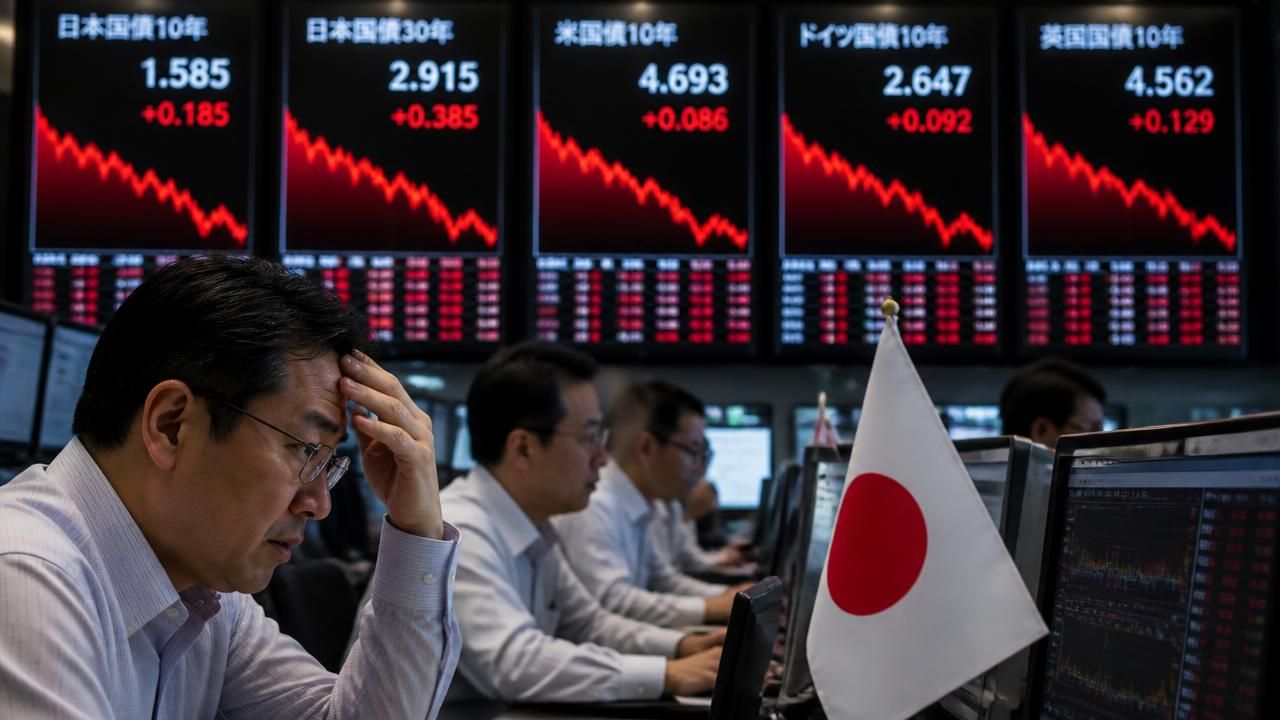
The world's bond markets are flashing red. From Tokyo to Washington, investors are demanding higher yields as governments grapple with ballooning deficits, political instability, and the fading allure of traditional safe havens. The epicenter of the latest turmoil is Japan, where a vicious selloff in government bonds has raised alarm bells about fiscal sustainability and central bank credibility.
Japan's Bond Market Blowout
Japan's government bond (JGB) market has blown out as election angst grips investors. The threat of higher interest rates from the Bank of Japan (BOJ), combined with political uncertainty ahead of a general election, has triggered a wave of selling. The BOJ 'rattled markets globally with a hint of a rate increase,' according to the Japan Times, sending shockwaves through global fixed-income markets. Meanwhile, reports from Reuters indicate that Japan is considering trimming its super-long bond issuance to a 17-year low, a move that would signal a historic shift in its debt management strategy.
Japanese insurers have been offloading superlong government bonds, exacerbating the rout. 'Japan insurers offload superlong government bonds,' reported Insurance Business, as they seek to avoid further losses amid rising yields. This has prompted rare warnings from the government about bond market stability, with policymakers issuing a policy roadmap that explicitly flags concerns about the fiscal situation.
'Scramble to sell Japan sounds fiscal warning bells,' warned Reuters, highlighting the growing anxiety over the country's debt trajectory.
The political dimension is critical. With the ruling Liberal Democratic Party (LDP) facing an election, investors are wary that a victory for Sanae Takaichi, known for her expansionary fiscal views, could spur another bond market meltdown. 'Japan investors remain wary Takaichi will spur another meltdown,' observed the Japan Times. ING's election preview notes that a big LDP win could have significant implications for the economy, bonds, and the yen, potentially leading to even more stimulus and higher debt levels.
US Treasuries Under Scrutiny
Across the Pacific, US Treasuries are also feeling the heat. The 10-year Treasury yield forecast is to gently drift up following a war-driven surge, as per Reuters. The market is jittery about the fiscal impact of a new tax bill and the widening deficit. A recent Treasury auction saw tepid demand, which Reuters attributed to 'investor jitters about tax bill, deficit.' This is a warning that even the world's deepest and most liquid bond market is not immune to fiscal concerns.
The ownership of US debt is shifting. According to the Bipartisan Policy Center, foreign investors hold a shrinking share of US debt. Yet, as Reuters reports, Norway's wealth fund actually boosted its US Treasury holdings despite these concerns. And while there is much speculation about China weaponizing its stash of Treasuries, Reuters analysis concludes that Beijing is unlikely to do so, given the potential for financial self-harm and the lack of viable alternatives.
Safe-Haven Conundrum
The traditional role of US Treasuries as a safe haven is being questioned. CNBC's report, 'Safe havens aren't behaving like they used to,' underscores that during recent market stress, assets like gold and the yen have not provided the expected diversification benefits. Morningstar's analysis asks whether US bonds are still broken as diversifiers for stocks, pointing to their correlation with equities in a higher-inflation environment. Brookings research explains the technical plumbing of the Treasury market and why it matters for global financial stability.
This has led investors to search for alternatives. UBS suggests that China bonds offer diversification potential beyond the dollar, while LSEG highlights the growing investment opportunities in China's local government bond market. Even emerging market bonds are being reconsidered for their high yields, albeit with greater risk.
Global Fiscal Worries and Policy Responses
The bond selloff is a global phenomenon. Bloomberg reported that Asian bonds followed Treasuries lower on concerns over government finances. In the UK, however, borrowing costs eased as the bond market calmed, offering a counterpoint to the broader turmoil. Meanwhile, the Mar-a-Lago Accord, a hypothetical agreement among major economies, spells uncertainty for the global financial system, as East Asia Forum notes.
Central banks are in a difficult position. The Federal Reserve's response to the COVID-19 crisis, as documented by Brookings, involved massive asset purchases and rate cuts, expanding its balance sheet. With inflation now higher and fiscal deficits large, the room for maneuver is limited. Intereconomics warns about the history of financial repression, where governments force low interest rates to reduce debt burdens, a scenario some see as increasingly likely.
Looking Ahead
The bond market turmoil reflects a broader reckoning. Governments that borrowed heavily during successive crises now face higher borrowing costs and skeptical investors. The Bank of Japan's hint of rate hikes, the US deficit trajectory, and the political risk in Japan all point to a world where bond investors demand higher compensation for risk.
What happens next? Japan may cut its super-long issuance to calm the market, but that doesn't solve the underlying fiscal problem. The US may see yields drift higher, but a major crisis is unlikely as long as the dollar and Treasuries retain their status. The key takeaway for investors is that the old rules of fixed income are changing, and diversification across asset classes and geographies has become paramount.
As the IMF often stresses, fiscal sustainability is crucial for macroeconomic stability. With elections pending in Japan and political battles over taxes in the US, the path forward is fraught with uncertainty, and bond markets are the first to signal it.