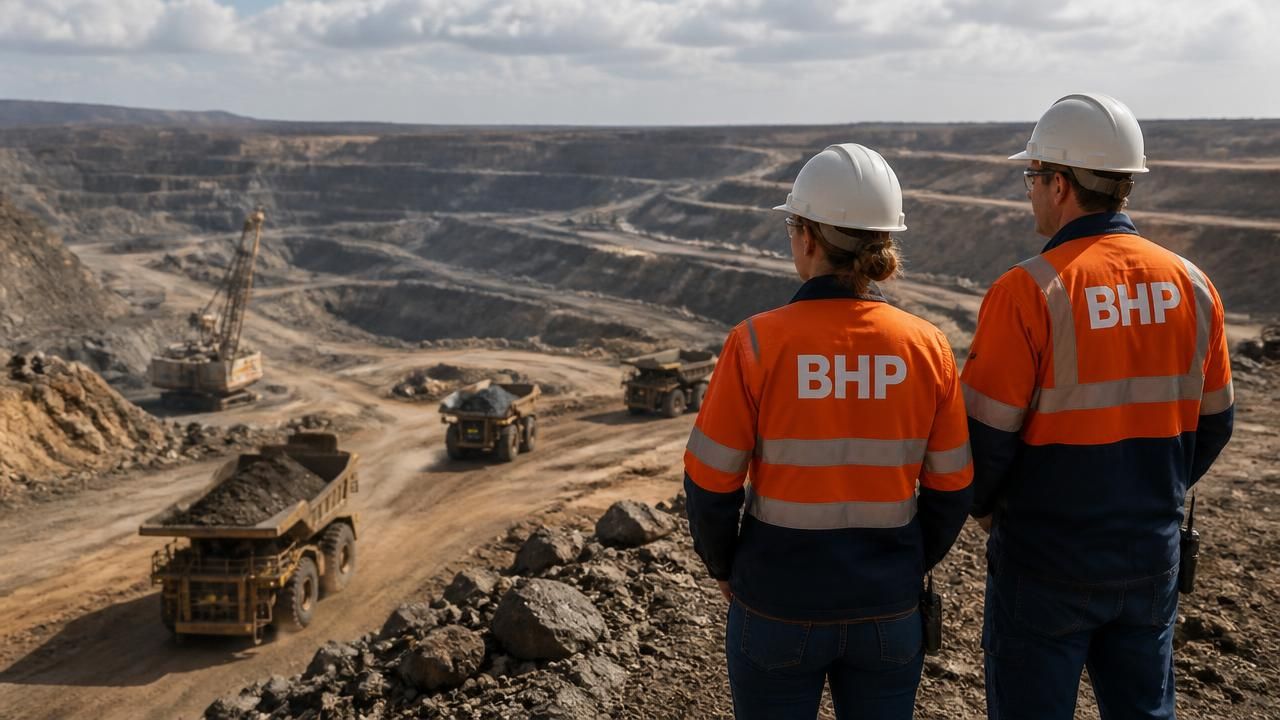
BHP Group, the world's largest listed miner, is navigating a complex commodity landscape as it reports record copper and iron ore production, steady demand from China, and a growing strategic tilt toward India. Yet the company's latest earnings also underscore persistent pain in nickel, a commodity that continues to weigh on net income and investor sentiment.
Speaking on Bloomberg's Insight with Haslinda Amin, BHP CEO Brandon Craig offered a cautiously optimistic view on the demand side. “China's iron ore demand remains steady, supported by manufacturing activity,” Craig said, while also pointing to stronger Indian demand for metallurgical coal as a supportive factor for the market. The remarks come as BHP and its Australian peers Rio Tinto and Fortescue grapple with mixed signals from the world's largest steelmaking nation.
China: Steady for Now, But Peaking in Sight
Chinese demand has been a cornerstone of the iron ore market for decades, but recent data suggests the tide may be turning. According to a report from SteelOrbis, Australia expects iron ore exports to peak before easing on weaker Chinese demand. This aligns with broader concerns about China's property sector slowdown and its transition toward more sustainable, less steel-intensive growth.
However, BHP's CEO pushed back against the narrative of an imminent collapse. “Manufacturing activity is holding up,” Craig said, highlighting that China's industrial engine remains resilient even as the property sector cools. His comments echo a sentiment expressed in a Reuters analysis titled “China muscle-flex is iron ore miners' call to arms,” which frames China's policy moves as a critical factor that miners must respond to with agility.
Indeed, the market's sensitivity to Chinese policy was evident in recent ASX trading sessions. On a day when the S&P/ASX 200 dipped 0.24% to 8,666, mining stocks were the primary drag, with BHP, Rio Tinto, and Fortescue all under pressure. Yet on other days, easing geopolitical tensions or softer US inflation lifted metals and mining shares, showing how intertwined global macro factors are with Australia's resource-heavy index.
India Emerges as the Next Growth Frontier
While China's demand plateau looms, BHP and rivals Rio Tinto are increasingly looking to India as a long-term driver. A Seeking Alpha headline captures this shift: “BHP, Rio Tinto look beyond China for India in ramping up steel production.” India's infrastructure push and expanding urbanization are expected to drive significant steel demand growth over the next decade, making it a prime market for seaborne iron ore and metallurgical coal.
BHP's CEO underscored this point, noting that “stronger Indian demand for metallurgical coal should support the market.” This aligns with India's ambitious plans to double steel production capacity by 2030, a move that would require substantial raw material imports. For Australian miners, India represents not just a hedge against Chinese slowdown, but a potentially massive new customer base.
Record Output and Rising Copper Optimism
Despite the mixed demand signals, BHP has delivered operational strength. According to an MSN report, BHP reported record copper and iron ore output amid continuing project investment. The company's focus on future-facing commodities, particularly copper, is paying off as global electrification and AI-driven data center demand fuel copper optimism. This was reflected in the market: a Kalkine report noted that BHP shares edged higher as copper optimism supported mining sector sentiment.
The copper story is critical for BHP's long-term positioning. As the world transitions toward renewable energy and electric vehicles, copper demand is expected to surge. BHP's investment in copper projects, including the massive Escondida mine in Chile, positions it to capitalize on this trend. A Forbes headline captured this optimism: “BHP Rides High On Strong Demand For Copper And Iron Ore.”
Yet, the operational success has not translated into unalloyed financial gains. Bloomberg reported that BHP sees nickel pain lingering as net income slumps. The company took significant impairments on its nickel operations, a stark reminder that not all commodities are benefiting from the energy transition. Nickel, a key component in EV batteries, has faced oversupply and falling prices, forcing BHP to reassess its exposure.
ASX and Market Sentiment
The impact of these developments on Australia's stock market has been pronounced. The S&P/ASX 200 has seen volatile swings, with mining stocks often leading the charge or dragging the index down. On one day, the ASX 200 climbed 0.8% as mining giants and tech stocks drove gains amid global AI optimism. On another, it slipped 0.11% to 8,701 as mining stocks weighed. This seesaw action reflects the tension between strong commodity prices and concerns about global demand, particularly from China.
Analysts note that BHP's chart structure is back in focus, with technical traders watching key support levels. Meanwhile, a report on Fortescue argues that its share price remains undervalued in 2025, suggesting there is still upside for iron ore miners if demand holds up.
Looking Ahead
BHP's ability to navigate these crosscurrents will depend on several factors: the resilience of China's manufacturing sector, the pace of India's steel expansion, the evolution of nickel prices, and the global macro environment. As Brandon Craig put it, “Demand from China remains steady,” but the mining giant is clearly preparing for a future where diversification and cost discipline are paramount.
For now, the market seems willing to give BHP the benefit of the doubt, with shares edging higher on copper optimism and resilient iron ore pricing. But the shadow of China's eventual slowdown, combined with lingering nickel weakness, ensures that the world's largest mining company will remain a closely watched bellwether for the global economy.
- China: Manufacturing demand holds, but export peak looms.
- India: Emerging as a key growth market for steelmaking materials.
- Copper: Record output and long-term demand driven by electrification.
- Nickel: Impairments and oversupply drag on earnings.
- ASX: Mining stocks create a volatile but ultimately resilient index.
As the commodity cycle turns, BHP's dual focus on tradition (iron ore) and transition (copper) may prove decisive. The company's next move will be watched closely by investors from Sydney to London to Beijing.