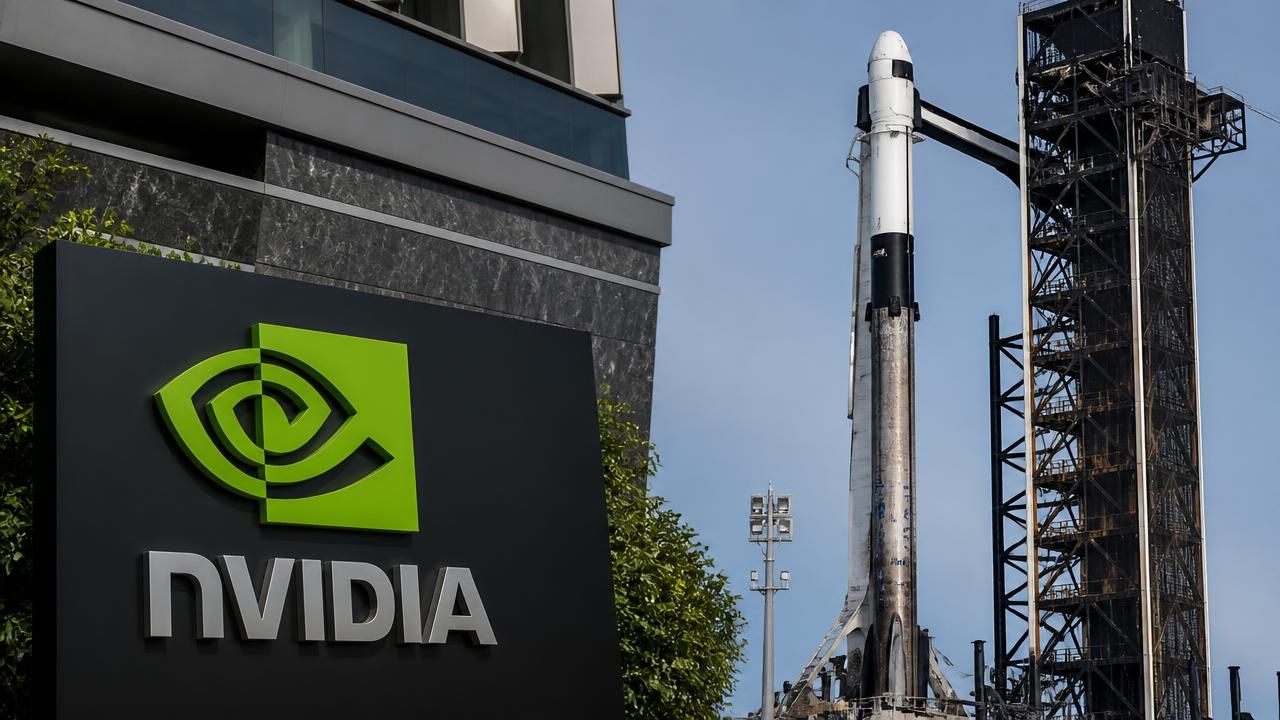
Nvidia, the world's most valuable chipmaker, revealed in a Friday SEC filing that it holds nearly 123 million shares of SpaceX, a stake worth approximately $21 billion at the end of June. The disclosure instantly positions Elon Musk's rocket company as Nvidia's second-largest holding, underscoring the increasingly intertwined fortunes of the AI hardware giant and the private space sector.
The news, first reported by Ars Technica and later picked up by CNBC, Yahoo Finance, and others, stems from Nvidia's January investment in xAI, Elon Musk's artificial intelligence lab. That investment was completed just before Musk merged xAI with SpaceX, converting the AI bet into a substantial equity position in the combined entity. At the time of the merger, the deal was valued at $21 billion, but a sharp decline in SpaceX's share price since its June initial public offering has slashed the worth of Nvidia's stake to about $17 billion today.
A Strategic Bet with Multiple Layers
The filing reveals more than just a financial position. It highlights Nvidia's deepening relationship with Musk's empire at a time when AI and aerospace are converging. SpaceX, historically a launch services provider, has increasingly leaned on AI for rocket landings, satellite autonomy, and data processing. Nvidia, for its part, has been seeking anchor customers for its most advanced GPUs and AI platforms. The two companies earlier this year announced an "exclusive AI partnership" focused on deploying Nvidia's hardware and software aboard SpaceX's Starlink satellites and ground stations.
"This is not a passive investment," noted a financial analyst quoted by Invezz. "Nvidia is aligning itself with a company that could become one of the largest consumers of AI compute in the world, both in space and on the ground."
What the Numbers Say
According to the SEC filing, Nvidia's stake is its second-largest holding, trailing only its position in its own stock. The disclosure also revealed that other institutional investors, including Alphabet and Harvard University, hold lesser SpaceX stakes, indicating a broader trend of mainstream investors entering the space economy.
- Stake size: ~123 million shares, worth $21B at June 30, 2026.
- Current value: ~$17B after post-IPO share price decline.
- Origin: xAI investment completed in January 2026, converted to SpaceX shares via merger.
- Other holders: Alphabet, Harvard University, and undisclosed others.
The drop in SpaceX's stock price since its June IPO has raised eyebrows. Some analysts argue it reflects a broader correction in the space sector, while others point to concerns about the complex valuation of a combined AI-rocket company. Yet Nvidia's long-term commitment appears unchanged.
Framing from Different Outlets
Coverage of the story has varied widely across outlets. Ars Technica focused on the "entangled financial relationships" between Nvidia and its biggest customers, noting that SpaceX uses Nvidia chips extensively. Yahoo Finance emphasized the milestone of SpaceX becoming Nvidia's No. 2 holding, calling it a "huge pay-off." Meanwhile, KuCoin's story centered on the "exclusive AI partnership" that accompanies the equity stake, suggesting the two companies are building a strategic moat in space-based AI.
"This is a defining moment for AI and space convergence. Nvidia is betting that the next frontier of AI isn't just on Earth — it's in orbit," wrote a commentator on Profit Confidential.
CNBC's coverage was perhaps the most cautionary, noting the access-denied error for some users but still reporting that the stake was disclosed at the end of the second quarter, and that SpaceX's share price drop had already eroded billions in value.
Why This Matters
The disclosure carries significant implications for the AI industry, the space economy, and Nvidia's own strategic positioning. For Nvidia, the stake provides a hedge against potential downturns in its core chip sales by locking in a stake in a fast-growing customer. For SpaceX, the relationship guarantees access to cutting-edge AI technology at a time when its Starlink network is processing exabytes of data daily.
Experts note that this could also signal a shift in how tech giants invest in infrastructure. Instead of merely supplying components, Nvidia is becoming a co-owner of its key customers' success. That model, if successful, could be replicated elsewhere in the aerospace and defense industries.
Historical Context
Nvidia has a history of strategic investments, but this is its largest in a single privately held company. The stake also represents a rare instance of a major chipmaker owning shares in a rocket company, a sector traditionally dominated by government contracts and sovereign funds. The xAI-to-SpaceX conversion, structured as a merger rather than a purchase, allowed Nvidia to avoid some capital gains taxes while gaining a more diversified asset.
However, not all analysts are bullish. The decline in SpaceX's share price has sparked concern that the company's post-IPO valuation was overblown. Some hedge funds have reportedly shorted the stock, betting that the AI-space bubble will burst. But Nvidia's filing suggests its leadership sees long-term value beyond short-term volatility.
What Comes Next
Investors will be watching Nvidia's next quarterly filing for any changes in its SpaceX position. The company is also expected to discuss the partnership in more detail at its upcoming GPU Technology Conference. For Elon Musk, having Nvidia as a major shareholder could bolster SpaceX's balance sheet and help fund its ambitious Starship program, which aims to make human settlement of Mars a reality.
In the immediate term, the disclosure has reignited debate about the boundaries of corporate cross-investment in the AI and space sectors. As one unnamed banker told Yahoo Finance, "When Nvidia moves, the market listens. This is a signal that the future is going to be built not just by software, but by silicon and steel — all the way to the stars."