Across the United States, a coordinated wave of Republican-backed voting restrictions is reshaping how Americans cast ballots. From Indiana and New Hampshire banning student IDs at the polls to proposals to eliminate mail-in voting and ranked-choice voting, GOP lawmakers are framing these measures as essential to “election integrity.” But voting rights advocates, Democrats, and a growing number of legal challenges argue they amount to voter suppression—particularly targeting young voters, who are among the least likely to turn out.
The Student ID Flashpoint
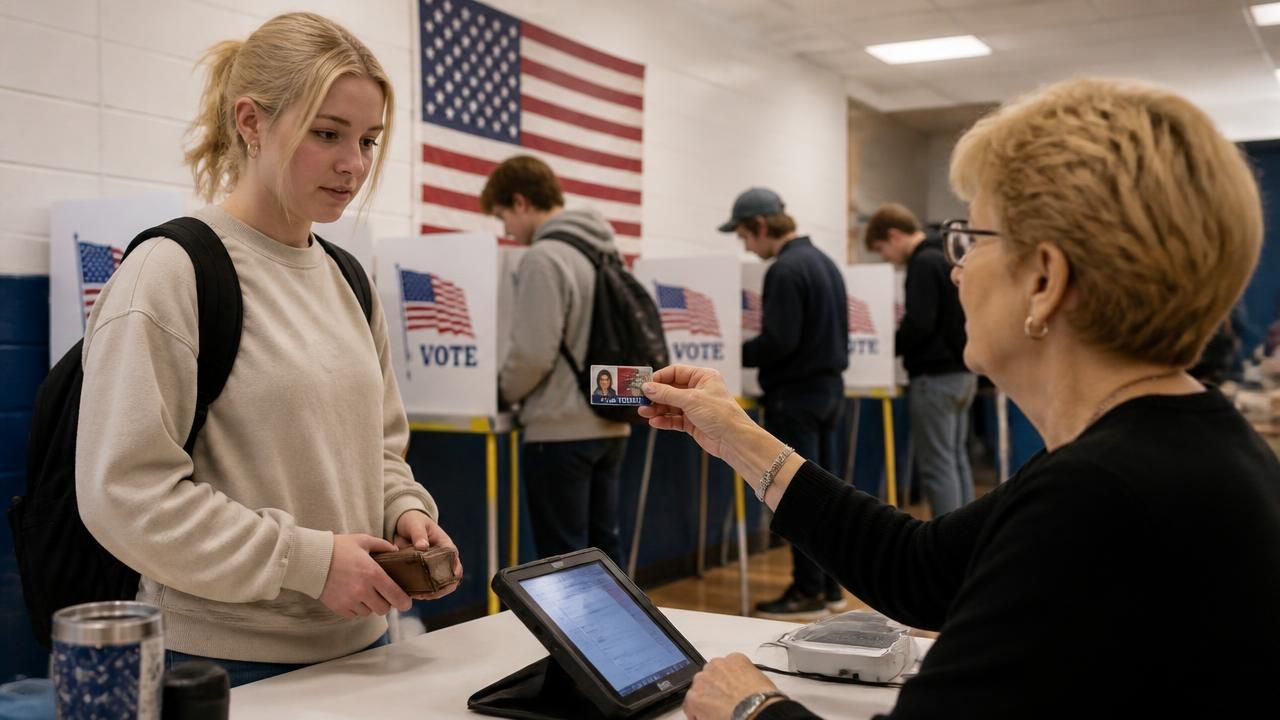
Few issues have crystallized the battle more sharply than the use of college student IDs for voter identification. Under new laws signed in Indiana and New Hampshire, student ID cards are no longer accepted as valid proof of identity at polling places. The restrictions, championed by Republican legislators, come as student voters have become increasingly active in recent elections. NPR reports that the bans have sparked lawsuits, noting that they create “the latest hurdles to the ballot box for the U.S. voting-age group least likely to vote.”
In Indiana, Governor Mike Braun signed a bill removing student IDs from the list of acceptable voter identification in March 2025. Purdue University’s student newspaper, The Exponent, reported the signing, which was quickly challenged in court. A federal judge initially blocked the ban, but the Seventh Circuit Court of Appeals later granted a motion to reinstate it—prompting Indiana Attorney General Todd Rokita to call the ruling a “big win for election integrity,” according to WRTV. Meanwhile, New Hampshire’s Republican Governor Kelly Ayotte signed a similar measure, drawing criticism from civil rights groups who argue students will be disenfranchised without a driver’s license or passport.
The push extends beyond those two states. Idaho’s state Senate voted to eliminate student IDs as an acceptable form of identification, and CNN reports that Republican-controlled states are “targeting college students’ voting power ahead of high-stakes 2024 elections.” Proponents argue that student IDs are less secure and often lack an expiration date or proof of citizenship. But opponents counter that the real aim is to suppress a demographic that leans heavily Democratic—a charge echoed by the ACLU and other advocacy groups involved in litigation.
Mail-In Voting Under Attack
The student ID battles are occurring against a broader backdrop of GOP efforts to restrict mail-in voting. Former President Donald Trump has repeatedly claimed without evidence that mail-in ballots are rife with fraud, and Reuters reports he has vowed to end their use ahead of the 2026 midterm elections. Republicans in Congress have introduced legislation to ban most mail-in voting, a proposal that the New York Times notes follows Trump’s lead. At the state level, South Dakota has enacted a ban on election drop boxes—a move that most county auditors actually disagree with, according to South Dakota News Watch. Even in states where Republicans once supported mail voting, Stateline found a contradictory trend: GOP officials back mail-in ballots for overseas military personnel but simultaneously pursue court battles to restrict them in battleground states like Pennsylvania and Wisconsin.
Democrats and voting rights organizations have pushed back with expansion efforts. As Axios reported, a 2023 push to expand voting rights gained ground in several states—including automatic voter registration and same-day registration—but these measures have been overshadowed by restrictive legislation. The contrast has set up a stark partisan divide over the very mechanics of democracy.
Ranked-Choice Voting and the Broader Electoral Battleground
The GOP’s focus on election rules extends to ranked-choice voting (RCV), a system that allows voters to rank candidates by preference. RCV has gained momentum in recent years, but so have efforts to stop it, as The 19th noted. In Michigan, a GOP-led House committee held hearings on a bill to ban RCV, while Missouri Republicans advanced legislation that, according to the Missouri Independent, could let as few as 5% of voters defeat initiative petitions—a move that would make it far harder for citizens to bypass the legislature on issues like abortion and redistricting. Stateline reports that RCV faces a “cloudy future” after setbacks in several states, yet advocates remain hopeful that more cities and states will adopt it.
The Courts and the Voting Rights Act
These state-level fights are playing out as the U.S. Supreme Court considers a case that Politico warns could weaken the Voting Rights Act just in time for the midterms. The case, which involves Alabama’s congressional map, could dramatically reduce the ability of minority groups to challenge discriminatory voting laws. If the Court rules narrowly, experts say it could have a chilling effect on litigation challenging student ID bans and other restrictions.
The legal whiplash is already visible. In Indiana, the federal judge’s temporary block of the student ID ban was overturned on appeal, but similar challenges in New Hampshire and Idaho are still pending. “This is not about security,” said an ACLU attorney quoted in the New Hampshire Bulletin. “This is about making it harder for students to vote.” Republican lawmakers, however, insist the rules are necessary. As one New Hampshire state senator put it, “We must ensure that only legal citizens vote, and student IDs do not establish citizenship.”
Who Decides What Democracy Looks Like?
The cumulative effect of these measures is a fundamental shift in who decides how elections are run. With Republicans controlling the trifecta in many states, they are using their power to set rules for everything from acceptable ID to the availability of drop boxes to the counting of mail ballots. Democrats are responding with lawsuits and legislative countermeasures, while national politics—including Trump’s persistent claims of fraud—loom over every decision.
What is clear is that the 2024 and 2026 elections will be fought not just on the issues, but on the rules that determine who can vote and how. For students on college campuses, for military families overseas, and for millions of Americans who prefer to vote by mail, the stakes could not be higher. The battle over election integrity is, at its heart, a battle over democracy itself.