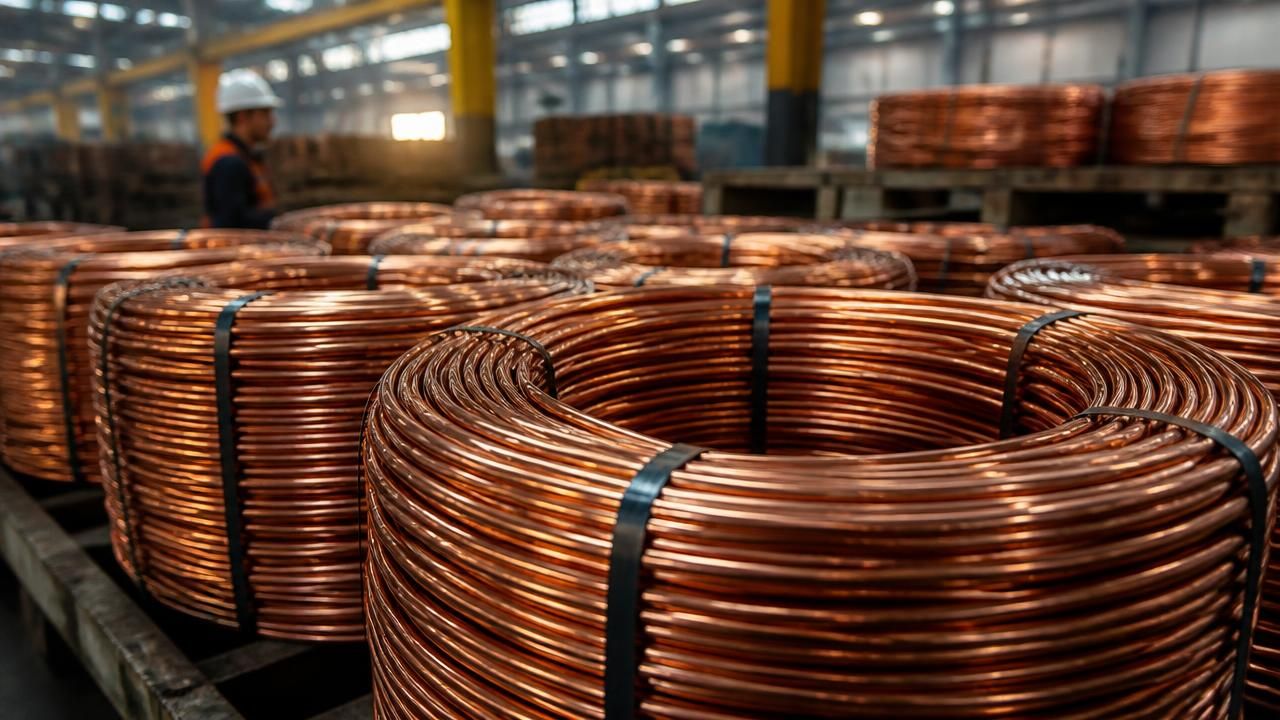
Copper prices have surged to record highs on the London Metal Exchange, extending a seven-week rally as supply tensions, US tariff threats, and an escalating conflict with Iran roil global metals markets. The benchmark three-month copper contract touched an all-time peak, while a key price spread widened to unusual levels, signaling intense competition for near-term supply.
A Record Rally on the LME
Bloomberg Markets reported that copper headed toward a record, with the LME price spread—the gap between cash and three-month contracts—flashing signs of acute tightness. The widening spread is a classic indicator that buyers are scrambling to secure immediate delivery, often a precursor to further price gains. Benchmark Minerals confirmed that the LME copper three-month price climbed to a record high, while StoneX noted that the metal posted new record highs alongside historical intra-day volatility.
“Copper extended a seven-week rally to head toward a record, with a key price spread on the London Metal Exchange widening to unusual levels in a clear sign of rising competition for short-term supply.” — Bloomberg Markets
Mining.com attributed the rally to a combination of Trump tariff risks and broader supply concerns. The threat of US import tariffs has created a powerful arbitrage, driving traders to ship copper into the United States ahead of potential duties, a dynamic reminiscent of the 2018 trade war.
Aluminum’s Middle East Risk Premium
Aluminum has been a standout performer, jumping above $4,000 per tonne in 2026 as the Iran conflict puts Middle East supply at risk. Mining.com reported that Iran’s attacks on Gulf aluminum plants threatened a supply crisis, with several major smelters located in the region. The Middle East accounts for a significant share of global aluminum output, and any disruption sends shockwaves through supply chains.
Discovery Alert noted that Middle East conflict pushed aluminium prices above $4,000 for the first time, underscoring the geopolitical premium now embedded in the metal. The LME aluminum contract saw its own historic volatility, with prices swinging sharply as traders assessed the risk of further escalation.
US Policy: Critical Minerals and Tariffs
Saxo Bank highlighted the impact of US critical minerals policy on copper, silver, and platinum. The US government’s push to secure supply chains for strategic metals has added a new layer of demand to an already constrained market. Saxo’s analysis suggests that critical minerals designations could channel investment into domestic mining and recycling, but in the short term, they intensify competition for global supplies.
The tariff threat is a double-edged sword. While US tariffs aim to protect domestic industry, they also distort trade flows. Copper is particularly vulnerable, as the US is a net importer. COMEX copper stocks surged to record highs amid the US arbitrage, with traders rushing to deliver metal into US warehouses to lock in tariff-free prices before any new duties take effect.
COMEX Stockpiles and Arbitrage
Discovery Alert reported that COMEX copper stocks surged to record highs as the US arbitrage attracted massive inflows. This buildup of inventory on the COMEX contrasts with tightness on the LME, where available stocks remain low. The divergence highlights the fragmentation of global copper markets, with the US commanding a premium due to tariff fears.
Investing.com noted that copper faces a Gulf energy crisis, with the Iran conflict threatening a $12,000 floor for prices amid inflation concerns. While that report was partially blocked, its framing underscores how geopolitical risk is now a core driver of copper’s rally.
Silver, Tin, and the Broader Complex
Silver is also feeling the heat. Discovery Alert described unprecedented market pressures on silver and copper supply fears, with silver prices benefiting from both industrial demand and safe-haven buying. Platinum, too, has been influenced by US critical minerals policy, as Saxo Bank noted.
Tin scarcity is another emerging theme. Discovery Alert covered an investor bet reshaping markets in 2026, with tin supply shortages driving speculative interest. Tin is essential for soldering in electronics, and supply constraints from Myanmar and other producers have made it a focal point for commodity investors.
Gold and the Dollar
Not all metals are rallying. A Facebook market update reported that gold prices fell from a three-week high as a stronger dollar outweighed support from tariff uncertainty and US-Iran tensions. The dollar’s strength, driven by expectations of tighter US monetary policy, has capped gold’s upside even as geopolitical risks persist. This divergence between gold and industrial metals highlights the unique dynamics at play in each market.
Outlook: Analysts See Structural Support
Deutsche Bank’s Commodities Outlook 2026 asks “where next?” after a year of extraordinary gains. The bank’s analysts point to a combination of supply-side constraints, energy transition demand, and geopolitical fragmentation as structural supports for metals prices. MoneyExcel’s copper price forecast through 2030 suggests that the current rally may be the beginning of a prolonged bull market, driven by electrification and the build-out of clean energy infrastructure.
- LME copper three-month price hit a record high in 2026, extending a seven-week rally.
- Aluminum topped $4,000 per tonne as Iran’s attacks threatened Gulf smelters.
- COMEX copper stocks surged as traders exploited the US tariff arbitrage.
- Silver, platinum, and tin are also under supply pressure, while gold retreated on a stronger dollar.
- US critical minerals policy and Trump tariff risks are reshaping global trade flows.
Conclusion
The current metals rally is a convergence of multiple forces: physical supply tightness, geopolitical conflict, US trade policy, and the long-term demand story of the energy transition. Copper’s record high is not just a headline number—it is a signal of structural change in global commodity markets. As analysts at Deutsche Bank and Saxo Bank highlight, the world is entering a new era where critical minerals are as strategically important as oil. For investors, the question is no longer whether metals will stay elevated, but how high they can go—and what further shocks may be needed to test those limits.