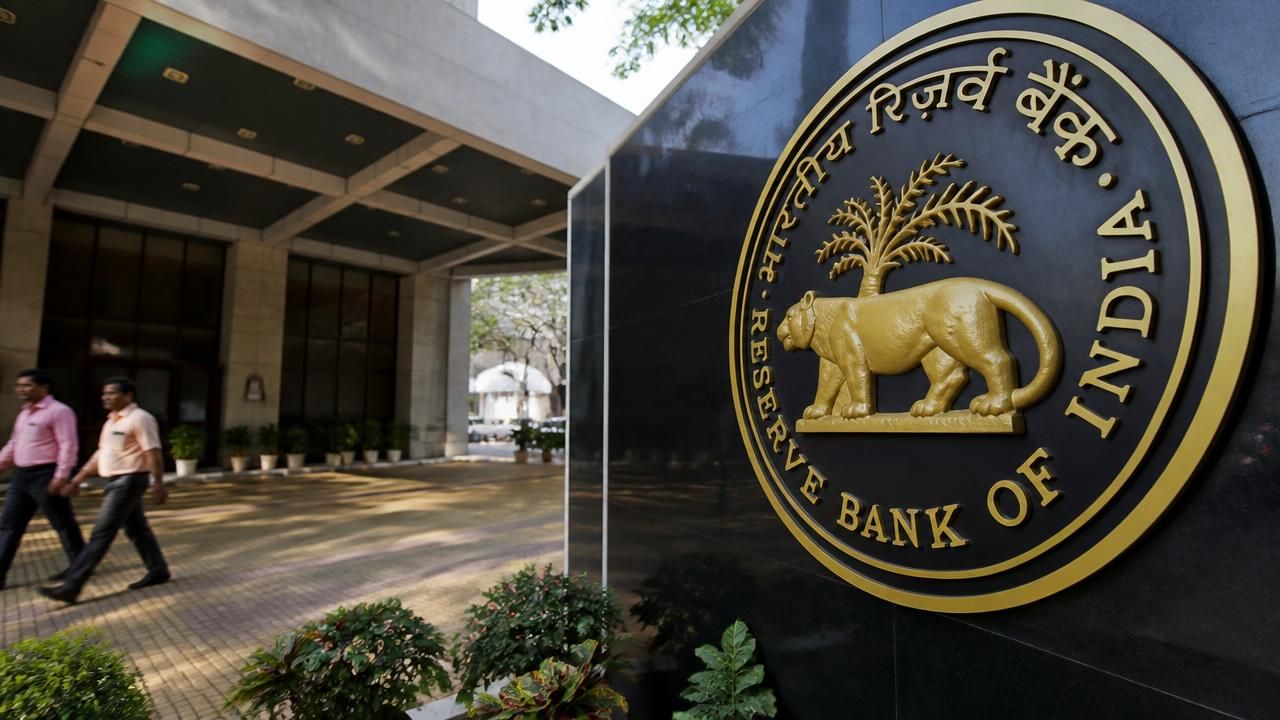
India's central bank is inching toward its first interest-rate increase of the cycle, as a broadening inflation basket, resilient economic growth and a newly hawkish US Federal Reserve combine to push the Monetary Policy Committee off the sidelines.
The question dividing economists is no longer whether the Reserve Bank of India will tighten, but when — at its October policy meeting or at its December gathering. Reuters reported that the rate-setting panel has signaled impending hikes while deliberately keeping its options open, indicating that the timing will hinge on how the inflation path evolves over the coming weeks. Bloomberg framed the same shift more bluntly: India's rate-hike moment is nearing as price pressures build.
For much of the past year, the RBI has been able to hold the repo rate steady and describe its stance as cautious, arguing that headline inflation was largely a function of volatile food and fuel prices that would eventually fade. That argument is now harder to sustain. Reuters, in a separate assessment, noted that broadening inflation, robust growth and a wave of rate increases by global peers have collectively built a compelling case for Indian tightening.
Why the case for tightening is strengthening
Three forces are converging on the Monetary Policy Committee.
- Broadening price pressure. What began as a spike in food and fuel costs is increasingly showing up in core inflation — the measure that strips out volatile items and is watched closely as a signal of demand-driven pressure. The RBI targets consumer price inflation of 4%, with a tolerance band of 2% to 6%, and economists warn that the headline number is drifting toward the upper end of that range rather than back toward the midpoint.
- Robust growth. India has remained one of the fastest-growing major economies, giving policymakers the confidence that demand can absorb higher borrowing costs. Stronger activity removes the argument that a rate hike would snuff out a fragile recovery.
- Global tightening. Central banks from Washington to other emerging-market capitals have moved toward tighter policy, narrowing the gap between Indian and overseas rates and pressuring the rupee.
Crude oil adds a further twist. India imports the overwhelming majority of its oil, so rising Brent prices feed directly into transport costs, factory input prices and the import bill — all while widening the current-account deficit and weighing on the currency.
The Fed factor
The decisive new variable is Washington. The US Federal Reserve's hawkish turn and its willingness to raise rates to contain American inflation have reshaped the calculus for emerging markets. As msn.com put it, a Fed that is — in economists' phrasing — “fed up with inflation” leaves the RBI with an October-or-December dilemma rather than a comfortable wait-and-see position.
Higher US rates strengthen the dollar and pull capital toward American assets, pressuring the rupee and complicating life for import-dependent economies. Outlook Money reported that analysts now believe the RBI may have to begin raising rates as early as October, precisely because inflation is firming at the same moment the Fed turns more aggressive. Waiting too long risks a sharper currency depreciation and imported inflation, which would force a larger and more disruptive adjustment later.
October or December?
Wall Street is already positioning for action. CNBC-TV18 reported that JPMorgan expects the RBI to raise rates by a cumulative 50 basis points by December — a projection that implies either two 25-basis-point moves or a single larger increase.
JPMorgan expects the RBI to deliver 50 basis points of tightening by December, according to CNBC-TV18 — a pace that would mark a decisive exit from the holding pattern of recent meetings.
The October-versus-December debate turns on data. If inflation continues to broaden into core categories and crude stays elevated, the argument for moving in October — front-loading the adjustment and anchoring expectations — becomes more persuasive. If price pressures prove transient and the global backdrop stabilizes, the committee may prefer December, buying time to assess the monsoon's effect on food prices and the durability of domestic demand.
How the story is being framed
Coverage of the same policy shift reflects subtly different emphases. Bloomberg's television and markets platform frames it as a macro inflection point — “India's rate hike moment nears” — placing the RBI alongside other central banks preparing to normalize. Reuters emphasizes institutional process, highlighting that the panel itself has signaled impending hikes while retaining discretion over timing, and separately that underlying fundamentals — inflation breadth, growth momentum, global action — have already made the case. CNBC-TV18 leads with the market view, foregrounding JPMorgan's 50-basis-point call. Outlook Money centers the Fed, arguing that a hawkish Washington may force India's hand earlier than domestic data alone would suggest. msn.com packages the tension as a binary choice: October or December.
What it means
- Borrowers: Home, auto and corporate loans tied to floating rates would become more expensive, with transmission likely to follow quickly if banks' funding costs rise.
- The rupee: A hike could slow depreciation by narrowing the rate differential with the US, though it would not reverse the broader dollar trend on its own.
- Bonds: Yields would likely climb further as markets price in additional tightening, pressuring existing bond portfolios.
- Growth: The RBI's bet is that a modest, pre-emptive increase preserves the expansion rather than derailing it — the classic argument for acting before inflation becomes entrenched.
What to watch
The next inflation print, the trajectory of Brent crude, the rupee's level against the dollar and the Fed's own guidance will all feed into the committee's decision. The signals from the panel so far suggest the direction of travel is settled. Only the calendar remains genuinely open — and in monetary policy, timing is often the most consequential decision of all.