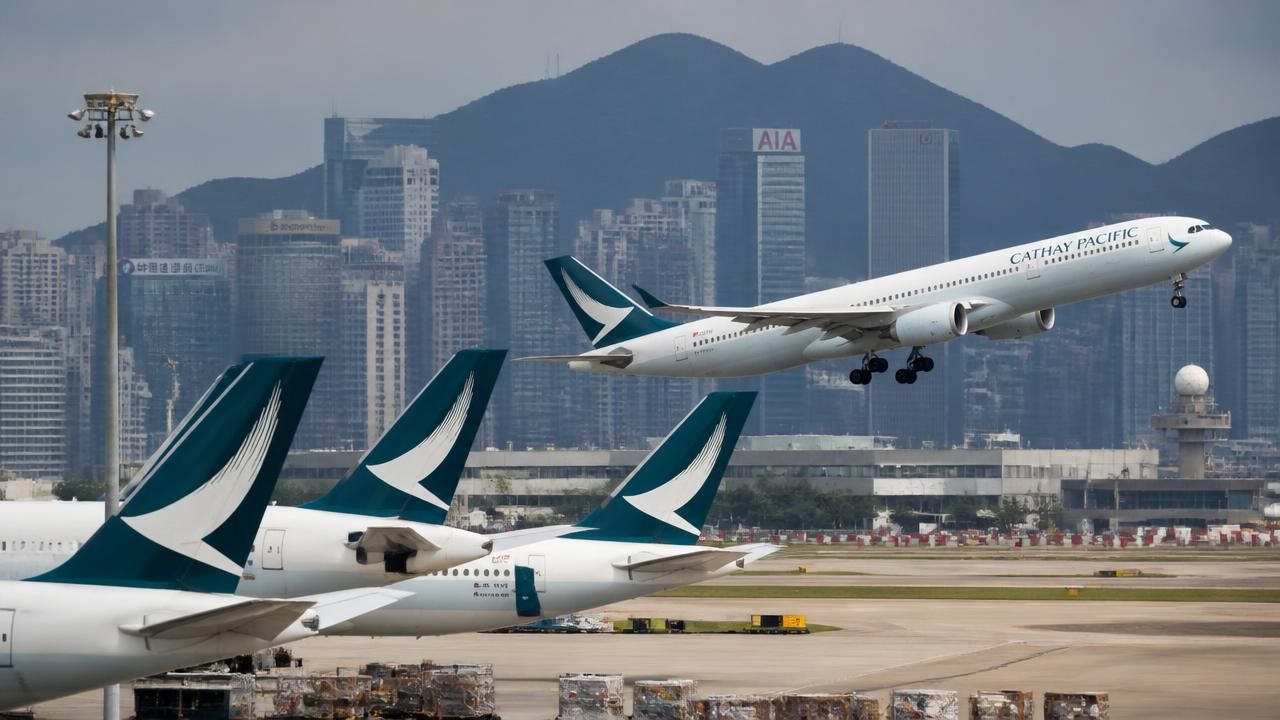
Hong Kong's aviation sector is soaring. The city's airport handled 11.7% more passengers in the first half of 2026 compared with a year earlier, Financial Secretary Paul Chan announced, while flag carrier Cathay Pacific posted its best first-half profit since 2010 — a remarkable turnaround for an airline that suffered billions in losses during the pandemic.
The figures underscore a robust recovery for one of Asia's most important aviation hubs. In 2020, Cathay reported a HK$21.6 billion (US$2.8 billion) loss — its worst year ever — as COVID-19 grounded much of global travel. Now, with borders fully reopened and demand surging, the group has seen passenger traffic climb month after month.
A Resurgent Hub
Speaking at an industry forum, Chan said the first-half performance was a testament to Hong Kong's resilience. "We have hosted a variety of events and attracted more visitors, and the momentum continues," he was quoted as saying by Bloomberg. The airport authority reported strong growth in both passenger and cargo volumes, cementing Hong Kong's position as a leading international gateway.
Monthly figures illustrate the acceleration. In March, Cathay's passenger traffic surged 24% year-on-year, with cargo volumes up 11%. May saw a further 17% jump. The strong momentum helped the airline deliver a first-half profit that topped market expectations, despite a surge in fuel costs, according to Reuters.
"We have hosted a variety of events and attracted more visitors, and the momentum continues." — Paul Chan, Hong Kong Financial Secretary
Cathay Pacific's Turnaround
Cathay Pacific has emerged as a standout performer in the region. The airline flagged stronger first-half profit earlier in the year, and final results confirmed it as the best since 2010. This achievement is particularly notable given the headwind of rising jet fuel prices, which have pressured carriers globally. The company's success reflects robust travel demand, disciplined capacity management, and a strong cargo business that has benefited from e-commerce and supply chain shifts.
The airline is now doubling down on growth. Plans to expand its fleet signal confidence in future demand, while Hong Kong Air Cargo has opened a new route to Glasgow Prestwick Airport, expanding its cargo network. Analysts note that Cathay's geographic position gives it a unique advantage in connecting mainland China with the rest of the world.
Divergent Fortunes Across Asia
Hong Kong's recovery is mirrored across the region, but with notable divergences. Taiwan's major airlines have reported record first-half revenues, helped by strong travel demand. Singapore's Changi Airport handled 17.6 million passengers in the first quarter, nearing pre-pandemic levels, and Macao's international airport hit a record in July.
Yet challenges persist. China's top airlines have warned of heavy losses ahead of an uncertain summer travel season, pointing to a gap between Hong Kong's internationally focused carriers and domestic Chinese carriers facing capacity and pricing pressures. Meanwhile, the competitive landscape is shifting: Kuala Lumpur has been overtaken as Southeast Asia's second-busiest airport, and fuel supply issues have forced Changi to trim some flights.
Fuel Costs and Regional Rivalry
Fuel costs remain the biggest headwind for the industry. Cathay's profit came despite a surge in prices, underlining the airline's hedging strategies and operational efficiency. However, not all carriers are so fortunate. Singapore's Changi Airport handled fewer passengers in the second quarter due to reduced Southeast Asian flights arising from fuel supply and cost issues. This highlights how volatility can affect even the most successful hubs.
In the wider region, competition is intensifying. Taiwan's carriers have expanded aggressively, and airlines are adding routes to mainland China in response to a rise in travelers — a trend noted by Korean media, which reported that the number of travelers to China has grown by 2 million in two years. Hong Kong-Taipei remains one of the world's busiest routes, underscoring the enduring demand for cross-strait travel.
Challenges Ahead
Despite the positive momentum, the aviation industry faces several tests in the second half of the year. Fuel price volatility, geopolitical tensions, and operational disruptions all loom. Earlier this month, Hong Kong airport experienced operational difficulties that lasted several days, serving as a reminder of how fragile supply chains can be. Additionally, the global economy remains uncertain, and a slowdown in consumer spending could temper demand.
Yet the outlook is largely optimistic. China's Ministry of Transport expects 2.36 billion passenger trips during the upcoming Golden Week holiday, a boon for airlines and airports across the region. Hong Kong is well positioned to benefit from the surge in Chinese outbound travel, with carriers expanding routes to Chinese cities and beyond.
Outlook: Flying High
As the second half of 2026 unfolds, Hong Kong's aviation sector appears set to continue its ascent. The combination of Cathay's strong financial performance, the airport's record traffic, and supportive government policies — Chan reiterated the government's commitment to strengthening the hub — bodes well for the city's economic future.
The broader Asian aviation market is also thriving, with Changi, Taiwan, and Macao all showing robust growth. Even airports farther afield, such as Vancouver, have reported record passenger volumes, reflecting a global travel boom. For Hong Kong, the challenge will be to maintain its competitive edge amid rising costs and rivalry from other hubs. But if the first half is any guide, the city is rising to the occasion.