For decades, the brain has been described as a kind of biological computer—hard-wired at birth, fixed in adulthood, and slowly degrading with age. But a wave of recent research, showcased in WIRED's Brain Week and across dozens of scientific journals, tells a radically different story. The brain is not a static circuit board but a living, dynamic network that is constantly reconfiguring itself in response to experience, injury, and even digital overload. From the first weeks of gestation to the final stages of aging, our neural connections are being formed, pruned, and rewired in ways that shape who we are and who we become.
Not Hard-Wired: The Myth of Fixed Neural Circuits
One of the most persistent misconceptions about the brain is that it is 'hard-wired' for certain behaviors or capabilities. Yet education researchers and neuroscientists increasingly challenge this view. An Education Week opinion piece asks pointedly whether 'brain-based' education has gone too far, while a separate EdWeek story reports that 'learning is not hard-wired.' Aeon contributor argues that the metaphor of 'rewiring' gets something fundamentally wrong about neuroplasticity: the brain doesn't simply replace old wires with new ones; it grows, prunes, synapses, strengthens existing pathways, and even creates new neurons.
"The metaphor of 'rewiring' suggests a fixed system being reconnected, but the brain is a living tissue that continually remodels itself," write neuroscientists.
That plasticity is on vivid display in personal accounts like the BBC's "How I rewired my brain in six weeks," and in Nature research documenting the paternal brain's structural and functional plasticity over 24 weeks postpartum. The brain's "miracle superpowers of self-improvement," as the BBC put it, are real—but they come with constraints. Cognitive biases, addiction, and deeply ingrained behavioral patterns are also biologically reinforced, which is why changing your behavior is so hard, as Trill Magazine observes.
Key Moments of Brain Transformation
Scientists are beginning to map the critical windows when the brain changes most dramatically. A ScienceDaily report identifies 'five big moments' when your brain undergoes major rewiring, and WCNC News echoes this with a study on five phases of brain aging. These moments span the entire lifespan:
- Infancy: Newborn brain wiring already predicts social attention months later, according to Psychiatrist.com, and Neuroscience News reports that babies are "born to connect" with an innate face-recognition mechanism.
- Adolescence: The teen brain is wired to take risks, as ABC Science explains, reflecting a period of dramatic synaptic pruning and reward-system recalibration.
- Pregnancy and parenthood: The Guardian describes "sweeping reorganisation" in the pregnant brain, caused by hormonal surges that prepare the mother for caregiving. New research also shows fathers' brains undergo similar, if less pronounced, changes.
- Premature birth: Babies born early often have altered brain wiring, as HuffPost UK and Nature Communications report, which can have long-term effects on attention and social behavior.
- Aging and injury: The brain's connectivity changes with age, but it can also reroute around damage. A UBC study shows, for the first time, how the brain rewires itself after a concussion, and ScienceDaily notes these five phases of aging are not purely decline—some phases involve increased integration.
This research underscores that the brain is never truly 'finished.' Even in adulthood, experience can reshape it—whether through learning a new language, starting a new job, or running a marathon. A British Psychological Society article lists ten ways running changes your mind and brain, from boosting neurogenesis to improving executive function.
The Digital Environment Is Reshaping Our Neural Pathways
Just as the brain adapts to physical exercise, it adapts to the digital environment—sometimes in ways that are less benign. Sanford Health warns that "constant digital input can lead to real brain rot," and The Week explores the phenomenon of "TikTok brain," where rapid-fire short-form video content may be shrinking attention spans. Vox reminds us that we are "hardwired for negativity," a bias that doomscrolling exploits and amplifies. National Geographic reports that doomscrolling actually rewires your brain, reinforcing anxiety and compulsive checking.
"Constant digital input can lead to real brain rot," warns Sanford Health News.
Children are particularly vulnerable. The New York Times reported in 2019 that screen use is tied to children's brain development, and scientists at Johns Hopkins now say sounds influence the developing brain earlier than previously thought. Parents may find a silver lining in a Scary Mommy headline that kids can hear their mom's voice above all others—but that doesn't mean they'll listen. Meanwhile, simple interventions like using a red light filter on your phone, as tested by Verywell Mind, can help reduce the compulsive pull of doomscrolling.
Yet not all digital engagement is harmful. Brain-computer interfaces (BCIs) are pushing the boundaries of how we interact with technology and may one day help treat neurological disorders.
From Wiring Diagrams to Brain-Computer Interfaces
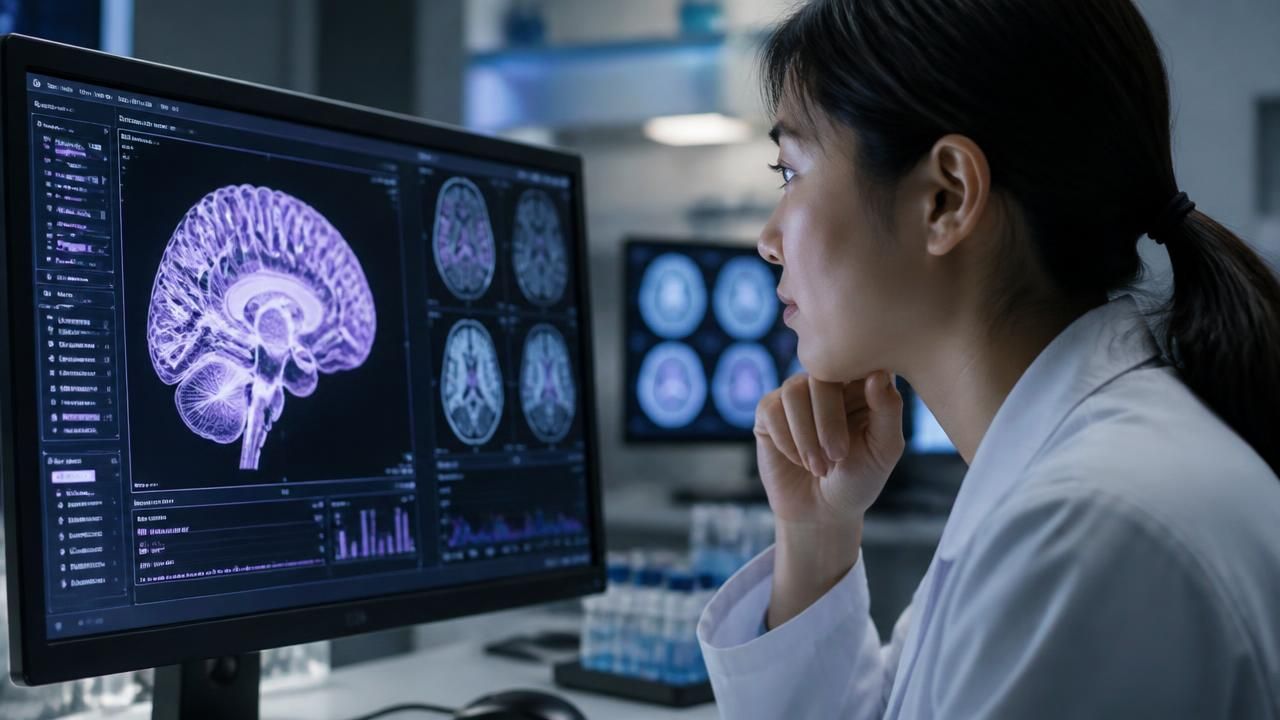
Neuroscience has made remarkable progress in literally seeing the brain's wiring. Scientists have mapped miles of wiring in the mouse brain, created a whole-brain wiring diagram of the oxytocin system in adult mice, and built a 3D map showing 300,000 molecules in a single human synapse. Even our sense of smell is being decoded: Columbia researchers used a mathematical model to explain how different brains agree on smells.
On the clinical front, brain-computer interfaces are moving from science fiction to reality. Neuralink completed its first-in-human implant, though Reuters and WIRED detail troubled history: tiny wire issues, and a gruesome account of monkey deaths during testing. Meanwhile, a Chinese startup is developing a non-invasive BCI that requires no implant, and WIRED reports China has a controversial national plan for BCIs. A new brain implant for depression is about to be tested in humans, offering hope for psychiatric conditions that resist traditional treatment. Even a beanie is being designed to read your thoughts, as WIRED profiled—making BCI technology more accessible, if less powerful.
The Social Brain: Hard-Wired for Connection and Bias
Beyond the hype of neural implants, much of the brain's wiring is devoted to social behavior. UConn Today notes that cognitive biases and brain biology help explain why facts don't change minds—our neural circuitry is not built for objectivity but for preserving social identity. PBS reports that social status is hard-wired into the brain, and Abbott Laboratories argues that humans are hard-wired for generosity. UCLA neuroscientist Matthew Lieberman's book makes the case that social connection is as important as food and shelter, a view supported by lab studies showing empathy and harm aversion in rats (Wikinews).
All of this research points to a dual nature: Our brains are indeed wired—deeply, structurally, and predictably—but they are also rewiring themselves constantly, shaped by experience, environment, and even the devices we hold in our hands.
Conclusion: Beyond the Wiring Metaphor
The mounting evidence from brain science should make us cautious about simplistic metaphors. As the Aeon article warns, "rewiring" is just a model—not the mechanism. The brain is not a computer with replaceable cables; it is an organ of extraordinary adaptability, resilience, and vulnerability. Understanding its true nature will require better science, better education, and better digital habits. But one thing is clear: our brains are never static. From the womb to the nursing home, they are always in flux, always learning, always reconnecting—for better or worse.