Chinese President Xi Jinping has called for a fundamental shift in disaster management—from reactive emergency response to proactive prevention—as extreme weather unleashes deadly floods across southern and central China. The directive, reported by state news agency Xinhua on Saturday, comes as heavy rains have killed at least 15 people in the southwest, a dam breach has triggered new evacuations, and rescue teams are still digging through rubble after a magnitude earthquake in Gansu province.
"President Xi Jinping called for China to shift disaster management toward prevention, saying safety and resilience should be integrated into planning and development," Xinhua reported. The remarks were made during a high-level meeting on flood control and disaster relief, underscoring the urgency of a summer marked by record rainfall, swollen rivers, and mounting economic pressures.
Deadly floods and infrastructure failures
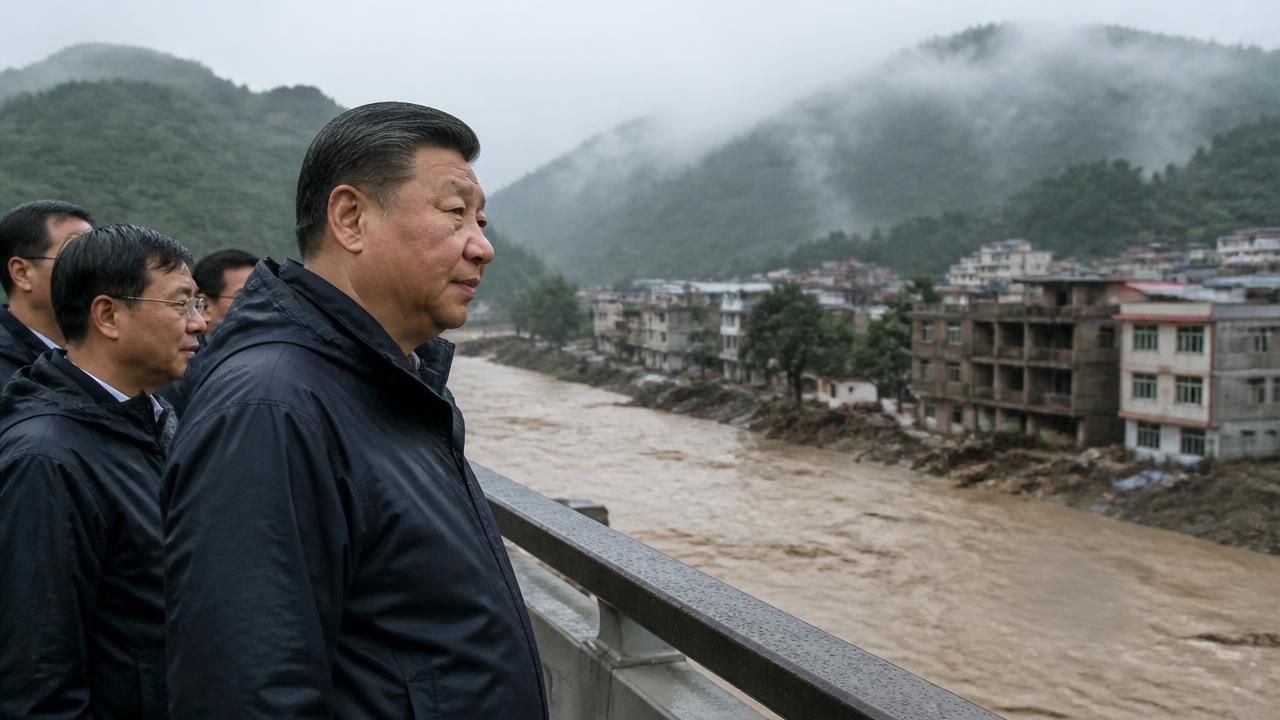
According to Reuters, rain in southwest China has killed at least 15 people, with authorities bracing for worse as the annual flood season peaks. The deaths occurred as mountainside villages were hit by flash floods and landslides. In a separate incident in central China, a dam breach triggered floods that forced the evacuation of thousands of residents. Local officials from BSS News described the breach as "sudden," with water surging through farmland and low-lying communities.
The flooding is part of a broader pattern of extreme weather that has battered the country this summer. In Gansu province, rescue work is still underway after a 5.4-magnitude earthquake struck a rural area, collapsing homes and killing at least four people, according to China Daily. The earthquake, which occurred on a fault line in the northwestern highlands, has compounded the strain on emergency services already stretched by flood response.
Xi's directive: prevention as a national priority
At the Saturday meeting, Xi Jinping urged "all-out efforts in flood control and disaster relief," according to Global Times. But his emphasis went beyond immediate rescue. "Safety and resilience should be integrated into planning and development," he said, signaling a longer-term strategy to harden infrastructure and urban design against climate shocks.
"We must change from focusing on post-disaster rescue to focusing on pre-disaster prevention. This is not just a technical adjustment; it is a fundamental change in mindset." — Official paraphrase of Xi's remarks, as carried by Xinhua
The shift aligns with Xi's broader vision of a "Beautiful China" that harmonizes development with nature, but it also reflects pragmatic concerns. Bloomberg noted that Xi's call comes "amid an economic slowdown," where disaster recovery costs can drain fiscal resources and disrupt supply chains. By investing in prevention, Beijing aims to protect growth and avoid the massive reconstruction bills that have followed past floods.
Diplomacy and trade amid the crisis
Even as the nation mobilized for disasters, Xi continued his diplomatic schedule. In separate meetings on Friday, he received Grenadian Prime Minister Dickon Mitchell and Timor-Leste President José Ramos-Horta. State media reported that Xi called for advancing bilateral ties, with a focus on trade, investment, and climate cooperation.
These engagements underscore how China's domestic resilience is intertwined with its global posture. The meetings also showcased Xi's push to strengthen ties with developing nations, at a time when Western economies are diversifying supply chains away from China. According to Xinhua, Xi used the visit of Grenada's PM to reaffirm China's commitment to South-South cooperation, while his talks with Ramos-Horta covered infrastructure and sustainable development.
Hainan Free Trade Port: a high-standard opening
In a related development, Xi stressed adopting "high standards for building the Hainan Free Trade Port" during a separate inspection tour or meeting, as reported by english.news.cn. The free trade port, located on China's southern island of Hainan, is a centerpiece of Beijing's strategy to widen market access and attract foreign investment. Xi's emphasis on high standards suggests that even amid disaster management, the government will not loosen its commitment to economic reform and openness.
The juxtaposition of disaster response and trade diplomacy was not lost on analysts. "China is balancing multiple priorities: keeping people safe, maintaining economic stability, and projecting global leadership," said a Beijing-based political commentator. "Xi's message is that resilience and prosperity are not mutually exclusive."
How China is responding
The government has activated emergency response mechanisms, deploying troops, police, and medical teams to the hardest-hit areas. In central China, engineers are working around the clock to repair the breached dam, while downstream communities remain on high alert. In Gansu, search-and-rescue teams are combing through debris for survivors.
- More than 10,000 rescue workers have been mobilized across affected provinces.
- Emergency funds of ¥500 million (about $70 million) have been allocated for relief.
- Weather authorities have issued red alerts for rainstorms in several regions.
- The Ministry of Emergency Management has dispatched drones and satellite imagery to assess damage.
Yet the human toll is still climbing. Local media report that dozens remain missing, and the death toll could rise as floodwaters recede. The dam breach alone has displaced over 30,000 people, many of whom are now being housed in temporary shelters.
Perspectives and implications
Global Times, the state-backed tabloid, framed the response as "all-out," highlighting the efficiency of China's centralized disaster management system. Reuters, on the other hand, emphasized the loss of life and the challenge facing Xi as he balances safety with economic growth. NBC News connected the disaster to the broader economic slowdown, noting that extreme weather disrupts factories, agriculture, and logistics.
Scientists caution that such events will become more frequent and intense as climate change accelerates. China is the world's largest emitter of greenhouse gases, but it has also become a leader in renewable energy and mass reforestation. Xi's push for "resilience" in planning may be a recognition that adaptation is no longer optional.
The coming weeks will test China's ability to manage overlapping crises—floods, earthquakes, and a fragile recovery. But Xi's message from Beijing is clear: the country must build not just for today's storms, but for tomorrow's climate.