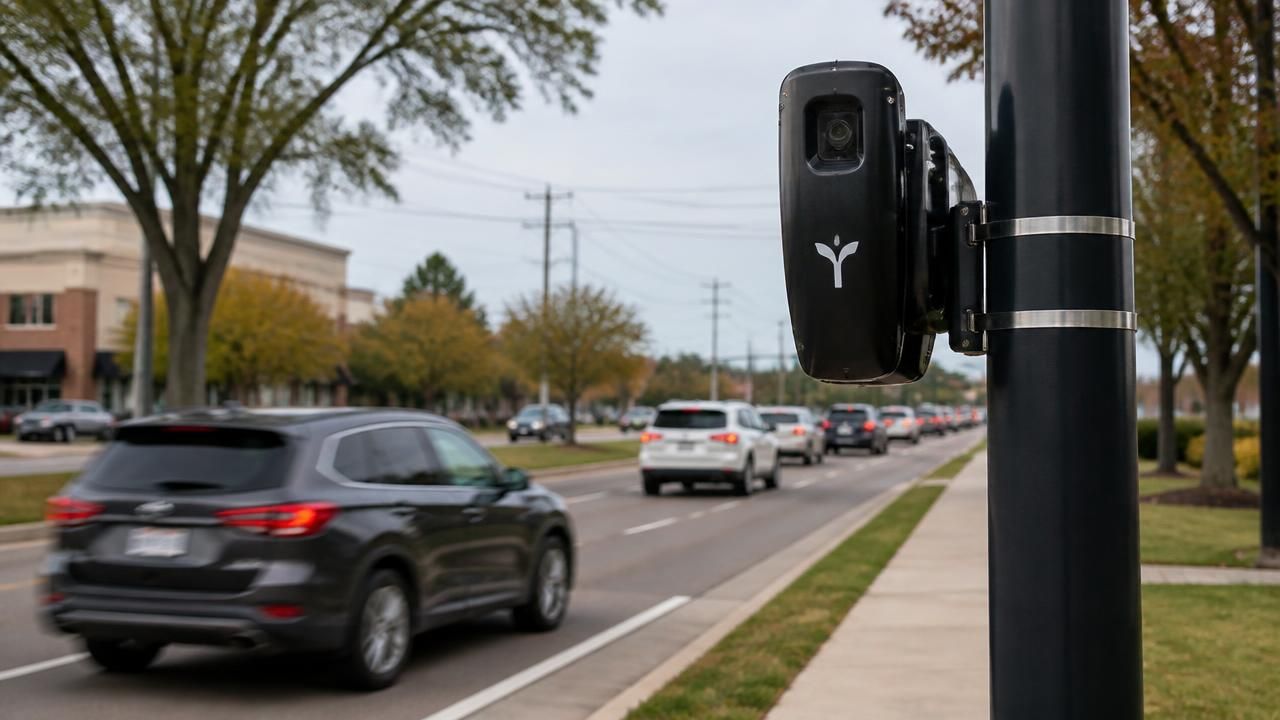
Across the United States, a quiet transformation is taking place on streetlights and utility poles. Automated cameras—speed cameras, red-light cameras, and license plate readers—are spreading from major cities to suburbs and small towns. The most prominent among them are Flock Safety cameras, solar-powered devices that capture the license plate of every passing vehicle. But unlike traditional traffic cameras, Flock cameras are not just enforcing speed limits; they are building searchable databases that can track the movement of nearly every car in a city. And that has sparked a fierce backlash.
According to a map compiled from public records and reported by MSN, Flock cameras are now installed in all 50 states. The company, founded in 2017, markets its technology as a crime-fighting tool that alerts police to stolen cars, wanted criminals, and vehicles linked to Amber Alerts. In Iowa, the Des Moines Register reports that local police departments are touting the cameras as a way to solve serious crimes. 'What are Flock cameras used for in Iowa, and why are they controversial?' the newspaper asks, reflecting a growing public debate.
How Flock Cameras Work
Flock cameras are always on. They photograph every passing vehicle, not just those on a watchlist. The system runs the plates through a national database and flags matches. But even non-matching vehicles are recorded, and that historical data can be accessed by law enforcement agencies with whom Flock shares access. Privacy advocates argue this is an unprecedented form of mass surveillance.
- Flock cameras capture license plates and vehicle characteristics, including make, model, color, and unique features like roof racks.
- They can also detect vehicle speed and issue citations in some jurisdictions.
- The data is typically retained for 30 days, but some police departments extend retention.
The New York Times has described Flock cameras as 'dividing U.S. cities' and notes that police love them, while citizens often do not. A headline from the Times warns, 'Flock Cameras Can Track Every Car in America.' That framing captures the tension between public safety and civil liberties.
Backlash Erupts in Communities
In recent months, the backlash has moved from city council meetings to direct action. In some areas, cameras have been vandalized. One roadside camera in an undisclosed location 'went up in flames,' according to Yahoo News Australia, with a warning that 'evidence is collected.' The Fashion Times reports that 'Americans are tearing down Flock cameras as anger over mass surveillance reaches a boiling point.' A map published by MSN shows where these cameras are located, fueling public scrutiny.
The Bay State Banner, a Black-owned newspaper in Boston, highlights concerns about profiling and privacy. 'Flock camera backlash spreads amid profiling, privacy concerns,' the paper reports. Civil rights groups worry that communities of color may be disproportionately targeted, and that the constant recording of innocent people erodes trust in law enforcement.
Not everyone agrees. An op-ed in the Indianapolis Star argues that the 'Indiana backlash against Flock cameras is misguided.' The writer contends that cameras are a valuable crime-solving tool and that the storage of license plates is a minor intrusion compared to the benefits of catching criminals and recovering stolen vehicles.
Speed Cameras Add Fuel to the Fire
The debate is not limited to Flock cameras. Traditional speed cameras are also proliferating. NPR reports that 'as speed cameras spread to more states, so does the backlash from drivers.' Minneapolis is the latest city to approve traffic cameras, according to the Star Tribune. 'Speeders, beware: Traffic cameras coming soon to Minneapolis,' the paper warns. Proponents point to evidence that speed cameras reduce crashes and save lives, but opponents see them as revenue generators that infringe on privacy.
'There's clear evidence that cameras make roads safer,' say advocates, citing studies that show reductions in speeding and crashes at camera-equipped intersections.
A Broader Backlash Against Automated Tech
The resistance to Flock cameras is part of a larger cultural moment. The Wall Street Journal reports that 'Robotaxis are spreading across the U.S.—and so is the backlash.' Autonomous vehicles, like surveillance cameras, represent a technological leap that many citizens did not ask for. Cities have seen protests, and sometimes vandalism, against driverless cars. The pattern is consistent: new automated systems deployed with little public input, followed by fierce opposition.
In Minneapolis, city officials have tried to address concerns by emphasizing that cameras will only be used for speed enforcement, not general surveillance. But for many residents, the distinction is meaningless. The camera is always watching.
Different Lenses: How the Media Frames the Story
The coverage of this issue reveals a sharp divide in how outlets perceive the technology:
- NPR focuses on the safety evidence, giving weight to advocates who say cameras prevent accidents and save lives.
- The New York Times emphasizes the surveillance angle, describing how every car is tracked and the privacy implications.
- Bay State Banner brings a racial justice perspective, highlighting concerns about profiling and over-policing in minority communities.
- The Des Moines Register and Star Tribune report on local adoption and the questions residents have about accountability.
- The Wall Street Journal places the story in the broader context of backlash against autonomous technology, including robotaxis.
- MSN and Yahoo News focus on the scale of camera installations and incidents of vandalism.
These different frames show that the issue is not simply pro- or anti-camera. It is a debate about what kind of society we want to live in. Are we willing to trade some privacy for the promise of safety? Who decides where cameras go, and what data is collected? And what happens when the public rises up?
What's Next?
Several cities are reassessing their contracts with Flock and other surveillance companies. Some have introduced ordinances to limit data retention or require warrants for access. Others are pressing pause on new installations. Meanwhile, Flock continues to expand, pointing to endorsements from police chiefs who say the cameras have helped crack major cases.
The outcome of this clash will likely shape the future of public surveillance. If the backlash succeeds, we may see stricter rules and more transparency. If it fails, cameras may become as mundane as speed bumps—but with a much longer memory.