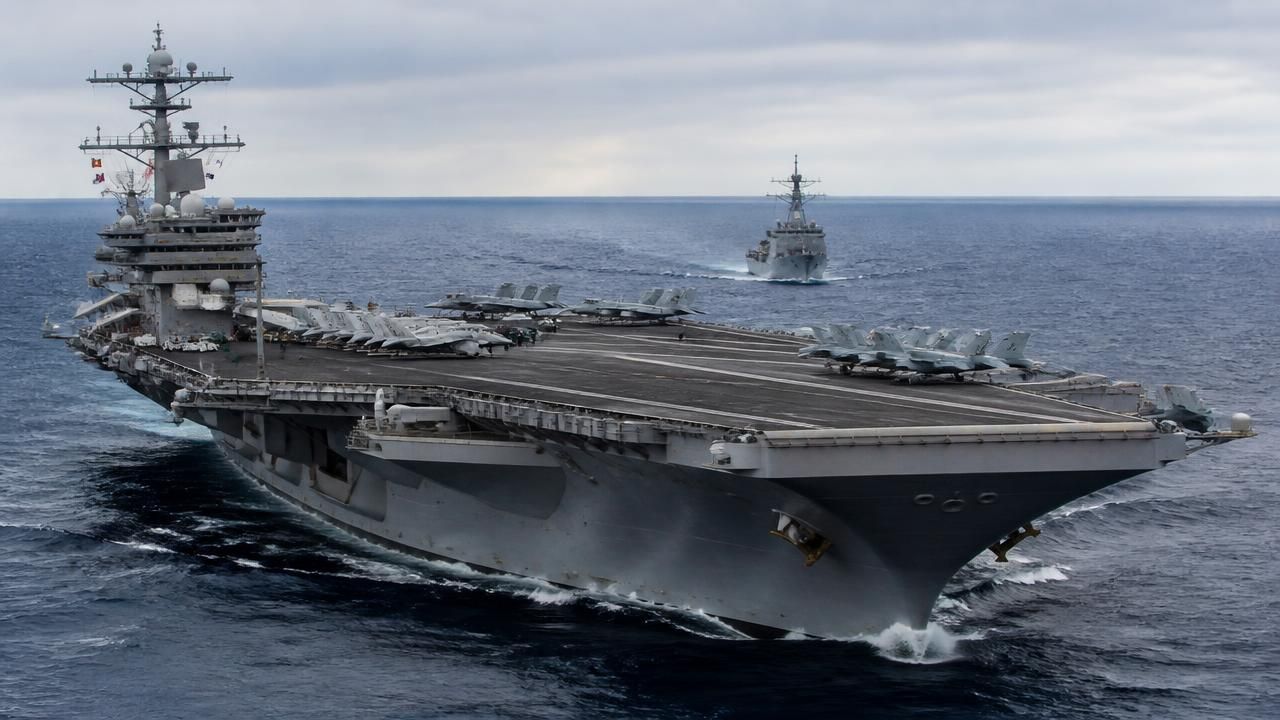
The U.S. Navy is dispatching the aircraft carrier USS George Washington to the Middle East, a move that comes amid mounting reports of deteriorating conditions aboard the long-deployed USS Abraham Lincoln, including mental health struggles and supply shortages. The decision marks a significant operational shift as the Navy seeks to address the welfare of its sailors while maintaining a formidable presence in the region.
A Deployment Under Strain
The USS Abraham Lincoln, a Nimitz-class carrier based in San Diego, has been deployed to the Middle East for an extended period, far exceeding its original schedule. Over the past months, sailors aboard the Lincoln have reported arduous working conditions, including 18-hour workdays, a critical shortage of spare parts, and a decline in mental health and morale. France24, citing sailor interviews, described conditions as "dire," while NBC News noted "poor conditions" for troops. These reports have fueled concerns among military families, lawmakers, and advocacy groups about the sustainability of such prolonged deployments.
"Our sailors are the backbone of the fleet, and their well-being must be a top priority. It is unacceptable that they are being stretched to the breaking point," said Rep. Joe Courtney (D-Conn.), who has called for a formal investigation into the conditions aboard the Lincoln.
The Lincoln's extended stay, originally intended as a short deployment, was repeatedly extended to maintain U.S. naval presence in the region amid ongoing tensions with Iran and other security challenges. But the cumulative toll on the crew became increasingly apparent, with sailors describing a lack of access to basic supplies and limited mental health support.
The George Washington's Mission
In response, the Navy has ordered the USS George Washington, a forward-deployed carrier based in Yokosuka, Japan, to head toward the Middle East. The George Washington is expected to assume station, allowing the Lincoln to finally return to its home port in San Diego. NPR reported that the Pacific-based carrier has begun its transit, while Pentagon officials have described the move as a "normal rotation" designed to preserve continuity of operations.
The George Washington is a Nimitz-class carrier with a crew of approximately 5,000 sailors and an air wing comprising F/A-18 Super Hornets, EA-18G Growlers, and other aircraft. Its deployment underscores the Navy's ability to flexibly manage carrier assets across the globe, even as it juggles maintenance backlogs and operational demands in the Pacific and Atlantic.
Calls for Accountability
The news has sparked bipartisan scrutiny. The Hartford Courant reported that Connecticut Rep. Joe Courtney, ranking member of the House Armed Services Seapower and Projection Forces subcommittee, is seeking a probe into the conditions on the Lincoln. "We need a full accounting of what happened and what steps the Navy is taking to prevent this from happening again," Courtney said in a statement.
Various outlets have framed the story differently. NPR and CBS News focused on the operational response, while France24 and NBC News emphasized the human toll. The Independent highlighted the sailors' complaints, and the San Diego Union-Tribune noted the local connection to the Lincoln's home port. Ahram Online, an Egyptian outlet, gave the story international reach, underscoring the global interest in U.S. naval operations.
Historical Context and Strategic Implications
The situation echoes past incidents of morale crises in the U.S. Navy, including the 2017 collisions involving the USS Fitzgerald and USS John S. McCain, which led to sweeping reforms in shipboard training and sleep habits. More recently, the Navy has struggled to balance a high operational tempo with maintenance backlogs, and the Lincoln's deployment has become a case study in the limits of extended carrier presence.
- The Navy maintains a carrier presence in the Middle East as a cornerstone of its power-projection strategy, often rotating carriers from the Atlantic and Pacific.
- Extended deployments of 9-10 months are common, but the Lincoln's is on track to exceed 10 months, well beyond typical endurance.
- The George Washington's arrival will temporarily give the U.S. two carriers in the region, a rare and powerful signal of military readiness.
Strategic analysts note that the timing is critical, as the U.S. continues to engage with regional allies and monitor threats from Iran and non-state actors. "Sending a fresh carrier is not just about sailor welfare; it's about maintaining credible combat power," said Dr. Susan Miller, a naval affairs expert at the Center for Strategic and Budgetary Assessments. "The Navy cannot afford to have a fatigued crew on station if deterrence fails."
What's Next
The George Washington is expected to arrive in the Middle East within the coming weeks, at which point the Lincoln will begin its transit back to San Diego. For the crew of the Lincoln, the news offers a glimmer of hope after months of uncertainty. "We're all ready to go home," one sailor told NBC News on condition of anonymity, citing fear of retaliation. "The morale has been low, but this news lifts our spirits."
The Navy, meanwhile, faces broader questions about its deployment model. While carrier rotations are essential for a global navy, the high demand for presence in the Middle East, combined with a limited fleet of 11 carriers, means that such crises may recur unless the service addresses the root causes of burnout. The investigation demanded by lawmakers could pave the way for new policies on deployment lengths, mental health resources, and supply chain resilience.
For now, the sight of the George Washington steaming west is a reminder that the U.S. military can adapt to immediate needs, but the long-term health of the force remains a work in progress. As the Lincoln finally heads home, its sailors carry with them the scars of a grueling deployment—and the hope that their service will not be forgotten.