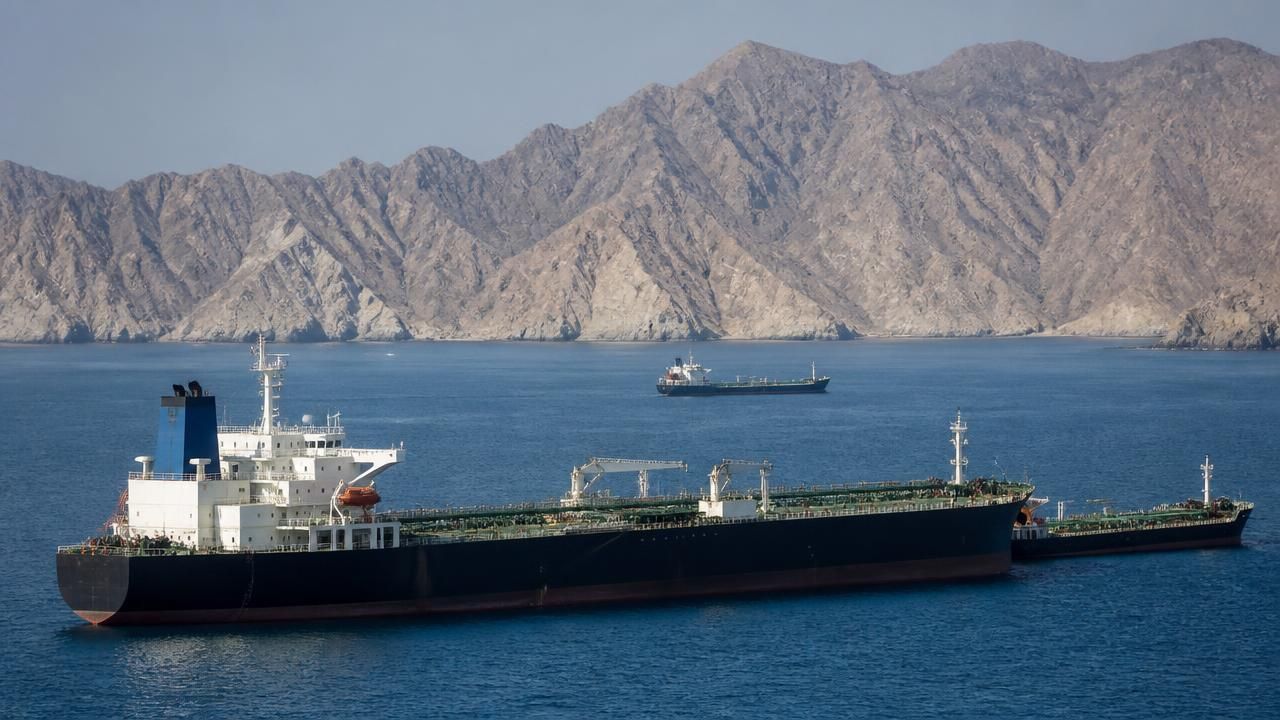
The Strait of Hormuz, a narrow waterway between Iran and Oman through which nearly a fifth of the world's oil passes, has become the epicenter of a high-stakes energy chess game. With Iran's threats to close the strait escalating amid a widening conflict, Gulf states are racing to reroute their crude exports and build alternative infrastructure that could permanently reduce dependence on the world's most vulnerable oil chokepoint.
Record exports and dark-transit tactics
Despite the risks, oil continues to flow. Gulf oil exports jumped in June led by record shipments from the United Arab Emirates, according to Reuters. The UAE's Abu Dhabi National Oil Co. (ADNOC) has gone further, offering to shuttle Iraqi crude through the strait for Asian refiners using what Bloomberg describes as its "dark-transit playbook" — a method involving ship-to-ship transfers and temporarily disabling vessel tracking systems to evade detection.
"Using its dark-transit playbook to transport Basrah and other crude to refiners in Asia," according to people familiar with the matter.
The tactic underscores how far Gulf producers are willing to go to maintain market share. Iraq exported 10 million barrels of oil through the Strait of Hormuz in April alone, and its production, though declining, remains crucial to global supply. Meanwhile, the UAE's Fujairah port, located on the Gulf of Oman outside the strait, has become a vital export hub, allowing Emirati crude to bypass Hormuz entirely.
Pipeline race: Building around the bottleneck
As tensions have escalated, the strategic imperative to bypass the strait has moved from contingency planning to urgent construction. CNN reports that "Iran weaponized the Strait of Hormuz. Now its neighbors are building around it." Both Iraq and the UAE are advancing pipeline projects to provide alternative export routes.
Iraq is reviving plans for a Mediterranean pipeline that would carry crude from its southern fields to Turkey's Ceyhan port, a project that has been stalled for decades. Chevron and ConocoPhillips, two American energy giants operating in Iraq, are pushing the country to accelerate these efforts. Iraqi officials have also discussed a new pipeline to the Red Sea through Saudi Arabia, though regional politics complicate that route.
The UAE, for its part, already operates the 350,000-barrel-per-day Habshan-Fujairah pipeline, which links its onshore oil fields to the Gulf of Oman. The pipeline's capacity is being expanded, and the country is investing in a new crude storage terminal at Fujairah. Fertilizer producer Fertiglobe, a UAE company, is even exploring truck and rail exports to reduce its exposure to Hormuz shipping.
What else is on the table?
- Saudi Arabia's East-West Pipeline runs from its eastern oil fields to the Red Sea port of Yanbu and can carry up to 5 million barrels per day — enough to bypass Hormuz for most Saudi exports.
- Iraq has considered a spur connecting to Saudi Arabia's network, but security and political hurdles remain.
- Qatar, which exports LNG through Hormuz, is expanding its lower-zone gas field and studying alternative routes, though no pipeline alternative exists for its LNG tankers.
Market fallout: Oil prices spike, but Fitch calls closure temporary
The threat to Hormuz has already jolted energy markets. Oil prices soared to levels not seen in years as the conflict intensified, with PBS reporting that the war in Iran has sent crude futures skyrocketing. A prolonged closure of both Hormuz and the Bab el-Mandeb strait — a scenario some analysts call "Oil Shock 2.0" — would be catastrophic, potentially pushing prices past $150 per barrel.
Yet not all analysts are bearish. Fitch Ratings released a note suggesting that a closure of the Strait of Hormuz is likely temporary and that the impact on oil prices would be limited, arguing that the world has sufficient strategic reserves and that alternative pipelines can absorb some of the volume. Reuters, meanwhile, reported that Kuwait and the UAE might be next to cut oil output if the crisis deepens, indicating a coordinated response among Gulf producers to manage supply.
The divide in outcomes was captured by Reuters: "Hormuz closure divides the fortunes of Middle Eastern oil states." The UAE, with its Fujairah port and pipeline network, is better positioned to weather a closure than Iraq or Qatar. Saudi Arabia can also route exports westward through the Red Sea, though the Bab el-Mandeb strait at the southern end of the Red Sea poses its own risks.
Iran's leverage and the limits of bypass
However, experts warn that pipelines and ports cannot fully neutralize Iran's threat. CNBC notes that "Oil pipelines around the Strait of Hormuz won't end the threat Iran poses to Middle East crude exports." Iran has demonstrated its ability to target tankers and facilities across the region. Its navy and Revolutionary Guard possess anti-ship missiles, mines, and drone technology that could strike Fujairah or the Red Sea ports. The sheer volume of oil that must transit daily — roughly 20 million barrels, or 20% of global consumption — means any disruption, even short-lived, would send shockwaves through markets.
The geopolitical dimension is equally complex. The Iranian sanctions evasion network and the Gulf's opaque oil trade add further layers of risk. Analysts at MEI emphasize that the region's oil flows are intertwined with sanctions violations and murky shipping practices, making the true picture of exports difficult to assess.
A strategic shift with long-term consequences
The current crisis is accelerating a decade-long trend toward diversifying export routes. From Iraq's mothballed pipelines to the UAE's Fujairah expansion, Gulf states are investing billions to reduce their reliance on a single waterway. Even if Hormuz never closes, the strategic landscape is changing. Shipping tycoons are already cashing in, with one tanker magnate reportedly earning a $120 million windfall from buying vessels as freight rates soared.
As the Middle East Forum's Amit Mor noted, the future of Middle East trade corridors goes "Beyond Hormuz." The question now is whether the infrastructure and political will can keep pace with the speed of geopolitical crisis.
For the global economy, the stakes could not be higher. Every barrel of oil that avoids Hormuz is a small victory for energy security — but the transition will be neither quick nor easy.