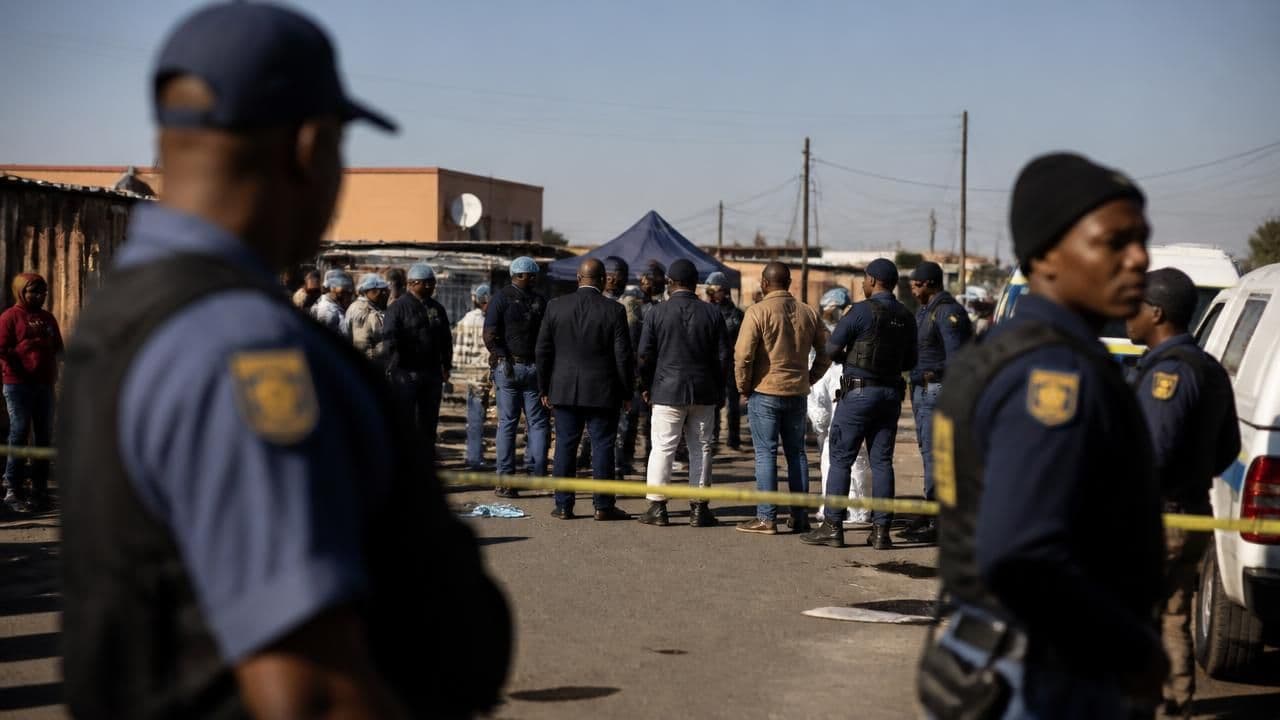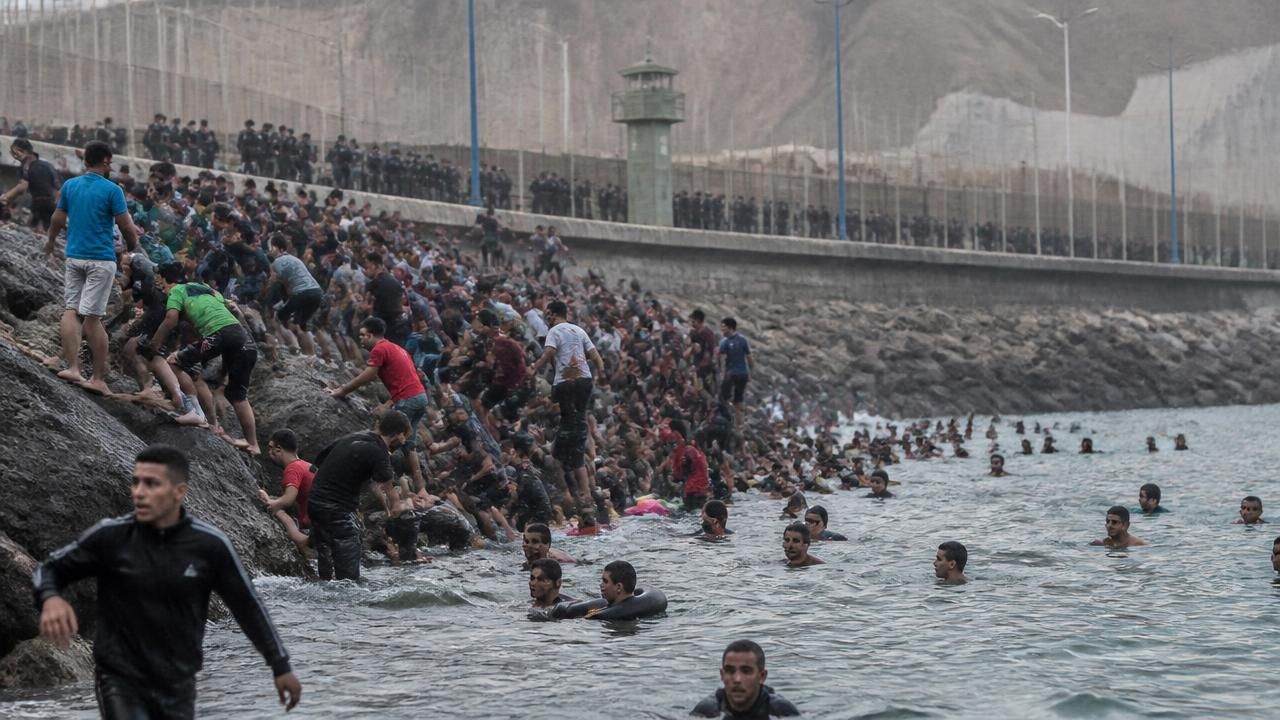
The sleepy Spanish enclave of Ceuta, a tiny piece of Europe on Africa's northern coast, became the epicenter of a geopolitical storm in May 2021. Over the course of two days, thousands of people — many of them Moroccan, including hundreds of unaccompanied children — surged across the border, some swimming along the rocky coast, others wading, climbing, or paddling inflatable rafts. Spain's government said the number of arrivals reached 8,000 by May 18, while later estimates from Moroccan authorities put the total at more than 60,000 attempts, though many were turned back. The event instantly transformed into a diplomatic crisis between Madrid and Rabat, a humanitarian emergency for the migrants, and a test of the European Union's fractured border policy.
A Border Overwhelmed
Ceuta, along with its sister enclave Melilla, has long been a flashpoint for irregular migration into Europe. But the scale of the May 17–18 surge was unprecedented in recent memory. Spanish emergency services described a chaotic scene: crowds of people scrambling over rocky breakwaters, swimming through cold water, and some even using inflatable kids' toys to reach Spanish territory. Spanish police initially fired rubber bullets and tear gas, drawing criticism from human rights groups, before a harder line was abandoned amid the sheer volume of arrivals.
- Most of the migrants were Moroccan, though a small number came from sub-Saharan African countries.
- Spanish authorities reported that around 2,000 arrivals were unaccompanied minors.
- By the end of the week, hundreds had been sent back to Morocco, but many remained in makeshift holding centers in Ceuta.
The Diplomatic Trigger
Why did Morocco suddenly appear to open its borders? The commonly cited trigger was Spain's decision to allow Brahim Ghali, the leader of the Polisario Front seeking Western Sahara's independence, to be treated for COVID-19 in a Spanish hospital. Morocco claims Western Sahara as its own territory, and Madrid's move infuriated Rabat. Although Morocco denied any direct connection to the migration surge, analysts saw it as deliberate pressure.
As one expert told News.az, “Morocco is sending a very clear message that it can control the flow of people whenever it wants. It is using migration as a political weapon.” Morocco's foreign ministry insisted it was a “spontaneous” movement, but few in Madrid believed that.
Rumors and Conspiracy Theories
The New York Times reported on a wave of unproven speculation that Morocco had been encouraged by the United States and Israel, possibly as part of a coordinated regional maneuver. Experts, however, dismissed those rumors as reflecting the region's convoluted politics rather than hard evidence. “When something like this happens, people look for hidden hands,” one analyst told the Times. “But the simplest explanation is that Morocco is angry with Spain and showed it.” That anger, rooted in the Western Sahara dispute, has a long history: Spain, which once ruled Western Sahara as a colony, has shifted its stance under pressure from Europe and the UN.
The Human Cost
Behind the diplomacy are real families enduring anguish. The Bozeman Daily Chronicle reported that Moroccan families were desperately searching for missing loved ones in the days after the surge. Many young men and boys disappeared into Spanish detention facilities or were deported without communication. Human rights groups warned that unaccompanied minors were especially vulnerable. One mother told the Chronicle, “My son told me he was going to Europe, and now no one knows where he is. I have been calling every number I can find.” Spanish authorities eventually pledged to process claims for asylum and to identify minors, but confusion persisted.
A Political Storm Fueled by Social Media
BBC News reported that the crisis quickly became a political storm, amplified by social media. Far-right parties circulated distorted videos of “invaders,” while nationalist influencers called for the military to shoot at migrants. Meanwhile, Spain's prime minister, Pedro Sánchez, faced a conservative backlash at home. In a televised address, he blamed “mafias that traffic in human beings” for organizing the crossings. He also attacked other EU member states for what he called a “selfish” response to Spain's plea for help. “Europe cannot turn its back on an external border of the Union,” Sánchez said, according to BBC.
The EU's initial response was halting. Some member states offered solidarity, but others refused to take in any of the migrants, exacerbating tensions. NBC News noted that the episode tested the EU's ability to manage external borders collectively. While Brussels called for a joint approach, deep divisions remained between frontline states like Spain, Greece, and Italy, and northern countries skeptical of migration.
Morocco’s Crackdown
Morocco’s official stance was that it was not responsible for the surge, but the kingdom nonetheless moved to punish those who facilitated it. Arab News reported that a Moroccan court sentenced seven taxi drivers to prison for transporting migrants to the border area, a ruling a union described as “harsh” and disproportionate. Human rights groups saw the move as Morocco attempting to prove its border-control credentials while avoiding blame for the crisis. Morocco also recalled its ambassador from Madrid, severing an important diplomatic channel, and demanded Spain explain Ghali’s presence.
A History of Pressure
This was not the first time migration was used as leverage between Morocco and Spain. The two countries have a tangled history: Spain holds Ceuta and Melilla as Spanish territories, which Morocco has long claimed. In past disputes, Moroccan authorities have relaxed border controls or looked the other way as a bargaining chip. The Western Sahara conflict remains unresolved after decades of UN-brokered talks, and Morocco's recent normalization of ties with Israel, under U.S. pressure, has shifted regional dynamics. The absence of a UN solution, analysts say, makes future incidents likely.
What Lies Ahead
The immediate crisis ebbed, but its implications are far-reaching. Spain sent troops to the border to boost security, a move that drew both praise and condemnation. The EU faces renewed calls for a comprehensive migration pact, but also rising nationalism. Meanwhile, the humanitarian needs of those who crossed remain. As BBC correspondent Bethany Bell observed, “The sea between Morocco and Spain may be calm again, but the political currents are treacherous.” With the diplomatic relationship between Madrid and Rabat in a deep freeze and thousands of people still caught between two worlds, the Ceuta surge is a stark reminder of how quickly borders can fracture — and how unresolved colonial legacies can erupt into modern crises.