In a single day's edition, The New York Times delivers stories from across the planet, each a thread in the tapestry of contemporary life. While no single event dominates, together they reflect humanity's struggle to adapt, negotiate, and persevere. From air-conditioned vests in sweltering East Asian cities to the return of a former Pakistani prime minister, these dispatches reveal both the urgency of the present and the weight of history.
East Asia's High-Tech Heat Defense
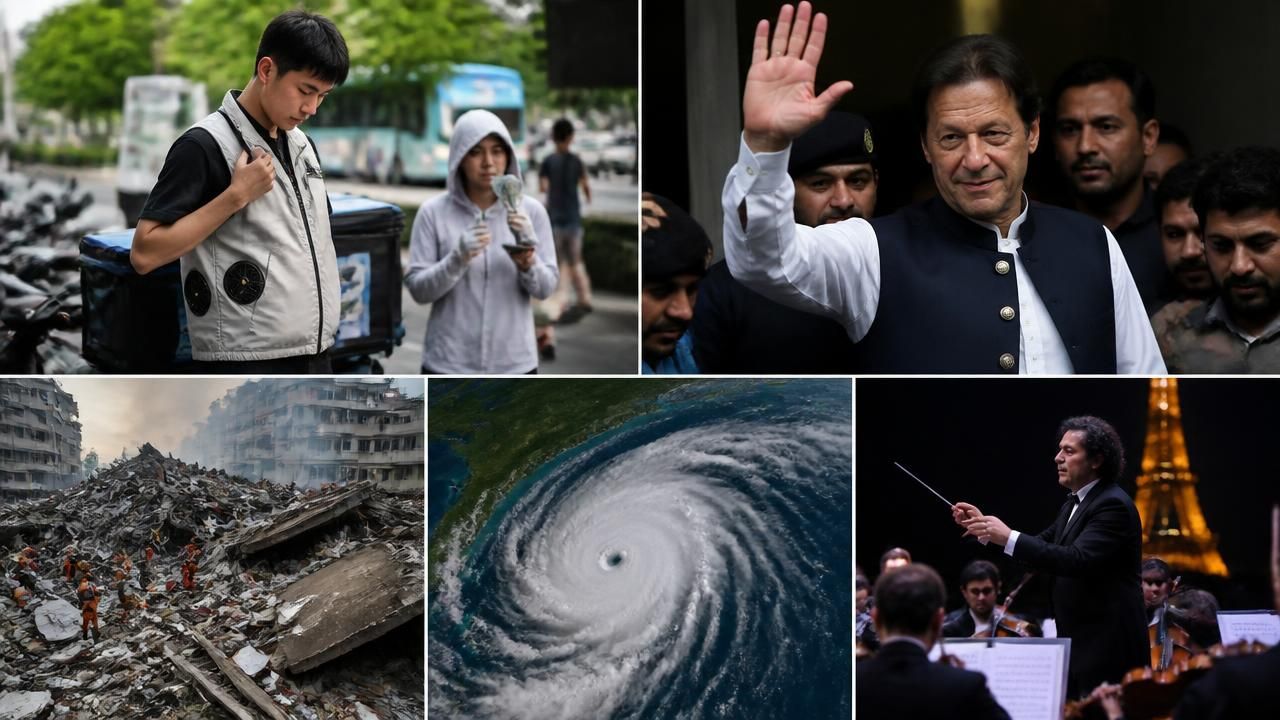
As global temperatures soar, governments in East Asia are rolling out futuristic cooling devices—making them central to public health adaptation. Among the innovations highlighted are air-conditioned vests, portable "refrigerators for humans," and hand-held fans that leverage semiconductor technology to generate a chilling breeze. These are not mere consumer gadgets; they are becoming essential tools in the fight against deadly heat waves, which are exacerbated by climate change and the urban heat island effect. Officials are integrating such devices into heat adaptation plans, recognizing that extreme heat poses a severe threat to outdoor workers, the elderly, and vulnerable communities.
The science behind these gadgets is as fascinating as their application. By using thermoelectric effects—the same principles underlying computer chip cooling—compact fans can achieve significant temperature drops with minimal energy. Meanwhile, "human refrigerators" (essentially wearable cooling units) are being tested for use in construction and emergency services. As one analyst notes, these innovations signal a shift from merely forecasting heat to engineering solutions that allow people to thrive in rising temperatures.
Political Theater and Diplomacy
The political arena offers no less drama. In 2017, President Trump's visit to Beijing included a stop at an ancient temple—a moment rich in symbolic resonance for U.S.-China relations. The site, steeped in centuries of history, served as a backdrop for delicate diplomacy, though the visit's deeper implications were debated by observers. Similarly, late-night host Jimmy Kimmel sarcastically dubbed Trump's Iran deal withdrawal "The Retreaty of Versailles," drawing a sharp historical parallel to the treaty that reshaped the post-World War I order. Such commentary reflects the polarized perceptions of Trump's foreign policy, which also included a memorable air-kiss with a European leader—a gesture whimsically noted as showing his "softer side."
Across the globe, Pakistan's political landscape shifted in 2023 with Nawaz Sharif's return, aiming for a splashy comeback after years of exile. His arrival was met with both fanfare and skepticism, as the country grappled with economic crises and political instability. Meanwhile, China's removal of crosses from two more churches in 2014 highlighted the ongoing friction between state control and religious freedom—a story that continues to resonate in international discourse.
Nature's Fury and Historical Echoes
In the Philippines, a strong earthquake struck the southern region in 2019, leaving Communities rattled and underscoring the region's vulnerability to seismic activity. The event prompted reminders of the need for robust disaster preparedness, especially in a country that sits on the Pacific Ring of Fire. Just a year earlier, a NYT retrospective reflected on the Korean War, a "forgotten" conflict that nonetheless shaped the modern geopolitical order. The article argued that the war's legacy—the division of the peninsula, the rise of U.S. military commitments, and the specter of nuclear confrontation—remains a powerful force in Asia today. Together, the earthquake and the historical analysis remind us that both nature and memory shape the present.
Culture and Entertainment
Amid the serious headlines, culture offered its own diversions. A 2017 review of the action genre cheekily asked if there was room for yet another hero alongside Jack Reacher and Jason Bourne—a testament to Hollywood's enduring love affair with lone-wolf protagonists. And in 2016, a piece on a roller coaster track praised its precision engineering, likening the ride to a symphony of thrills that demands exacting design. These stories, while lighter, underscore the human craving for excitement and the artistry that goes into creating it.
A World Interconnected
What unites these disparate tales? Perhaps it is the resilience of the human spirit. From deploying semiconductor-powered fans to survive extreme heat, to navigating the complexities of global diplomacy, to bracing for earthquakes and honoring the lessons of history, people everywhere are adapting to an unpredictable world. The New York Times' coverage, in presenting these stories side by side, invites readers to see the connections—and the contrasts—that define our era. As we face the future, the ability to synthesize such varied experiences into a coherent understanding will be more important than ever.