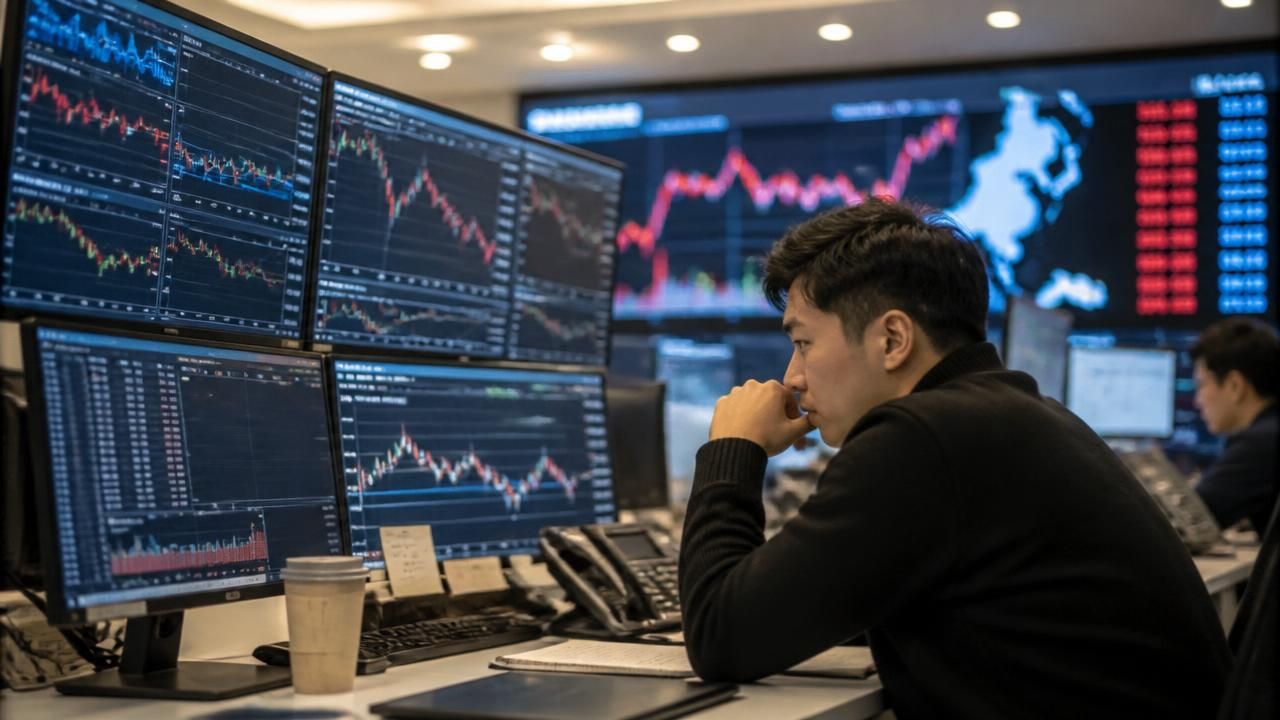
The most extreme phase of South Korea’s stock-market turmoil may be over, as a historic selloff has flushed out leveraged positions and regulatory curbs have sharply reduced trading in the riskiest products. The KOSPI’s wild swings—driven in large part by leveraged exchange-traded funds (ETFs) and other derivative instruments—are now ebbing, according to Bloomberg Markets. Meanwhile, ripple effects are being felt across regional tech indices, including India’s NIFTY IT, underscoring the interconnectedness of Asian financial markets.
At the heart of the recent turbulence is a phenomenon that market analysts are calling the “dog wagging the tail”: leveraged products, rather than underlying fundamentals, have been dictating the direction of the broader market. In South Korea, these products—designed to amplify daily returns, often by 2x or 3x—created a feedback loop of buying and selling that exacerbated both upward momentum and downward panic. When the KOSPI began to slide, leveraged ETFs forced institutional selling to rebalance, which accelerated the drop and triggered further volatility.
The Historic Selloff and Its Aftermath
The selloff, which occurred over a period of intense global market stress, saw the KOSPI experience its sharpest declines in years. According to Bloomberg, the worst of the panic appears to have passed, as the liquidation of leveraged positions has largely run its course. This “flush-out” is a necessary, if painful, process that clears excess speculation and resets valuations to more sustainable levels.
Data from South Korea’s exchange shows that trading volumes in leveraged and inverse ETFs have plummeted since regulators stepped in. The curbs, which included tighter margin requirements and position limits, have effectively sidelined the most speculative traders. One market strategist noted, “The regulatory intervention was swift and decisive. It didn’t stop the crash, but it prevented a systemic failure.”
“Leveraged products don’t just reflect market moves; they amplify them. In a downturn, they can become a vicious cycle that spirals out of control.” — Senior analyst at a Seoul-based brokerage
The concept of leveraged products “wagging the dog” is not new, but the Korean episode is a stark reminder of how quickly these instruments can dominate market behavior. A single leveraged ETF can account for a disproportionate share of daily trading volume, and when volatility spikes, the rebalancing flows overwhelm the market’s natural liquidity.
Regulatory Curbs and Market Stabilization
South Korean financial authorities moved quickly to curb the excesses. They imposed temporary restrictions on leveraged ETF trading, raised margin requirements, and even considered banning certain products outright. These measures, while controversial, have effectively cooled the speculative fever. Trading in the riskiest leveraged products has plunged by as much as 80% from the peak, according to exchange data.
“The regulators are walking a tightrope,” says a professor of finance at Korea University. “They want to prevent a full-blown crisis without crushing legitimate hedging activity. So far, they’ve managed to stabilize the ship, but the question is whether the calm will last.”
The timing of the intervention was critical. With global markets already on edge due to geopolitical tensions and central bank policy uncertainty, a prolonged Korean meltdown could have had severe contagion effects across Asia. By flushing out the leveraged excess, the authorities have likely averted a deeper crisis, but the scars on investor confidence remain.
Ripple Effects Across Asia: The NIFTY IT Connection
The volatility in Seoul did not stay within Korea’s borders. Asian tech stocks, which are highly sensitive to global risk sentiment, felt the tremors. In India, the NIFTY IT index—which tracks the country’s largest software and technology companies—saw increased fluctuations as investors shifted positions reactively. “What happens in Seoul matters for Mumbai, because both markets are dominated by global institutional investors who treat them as interchangeable risk assets,” explains a portfolio manager at an Indian asset management firm.
The NIFTY IT, like its Korean counterparts, is heavily influenced by global tech cycles and currency movements. While India’s IT sector is fundamentally different from Korea’s consumer electronics-heavy market, the cross-border flow of capital means that a risk-off event in one market quickly triggers a reallocation in others. The Korean episode highlighted these correlations, reminding investors that diversification across emerging markets does not always shield against regional shocks.
What’s Next for Investors?
With the worst of the leveraged flush-out likely behind, analysts are cautiously optimistic that the KOSPI can stabilize. However, volatility may remain elevated for some time as markets digest the impact of regulatory changes and adjust to a new equilibrium. For investors, the episode is a cautionary tale about the risks of leverage, particularly in concentrated, retail-driven markets like South Korea.
“The phrase ‘this time is different’ should always be a red flag,” warns a veteran market observer. “Leverage is a tool, but when it becomes the tail that wags the dog, it can wreak havoc. The Korean market is now rebalancing, but the lessons apply globally—including to India’s NIFTY IT, where retail participation and derivative activity are growing.”
As the global financial system becomes increasingly interconnected, events like the KOSPI volatility spike serve as important stress tests. Regulatory curbs in one country can have immediate knock-on effects elsewhere, but they also demonstrate that coordinated action can stave off the worst outcomes. For now, the flush-out has worked, but the underlying tensions—geopolitical, monetary, and structural—remain unresolved.
Key Takeaways
- The KOSPI’s historic selloff was amplified by leveraged ETFs, leading to a “wag the dog” scenario where derivatives drove the market.
- South Korean regulators imposed curbs on leveraged products, causing trading volumes to plunge and helping to stabilize the index.
- The volatility rippled across Asia, impacting indices like India’s NIFTY IT, which saw heightened fluctuations as investors globally reassessed risk.
- The episode underscores the dangers of leverage in retail-heavy markets and the importance of regulatory vigilance in maintaining financial stability.
Looking ahead, investors should watch for further regulatory adjustments in South Korea and monitor how leveraged product flows evolve. The flush-out may be complete, but the memory of this volatile period will linger, shaping market behavior and regulatory policy for years to come.