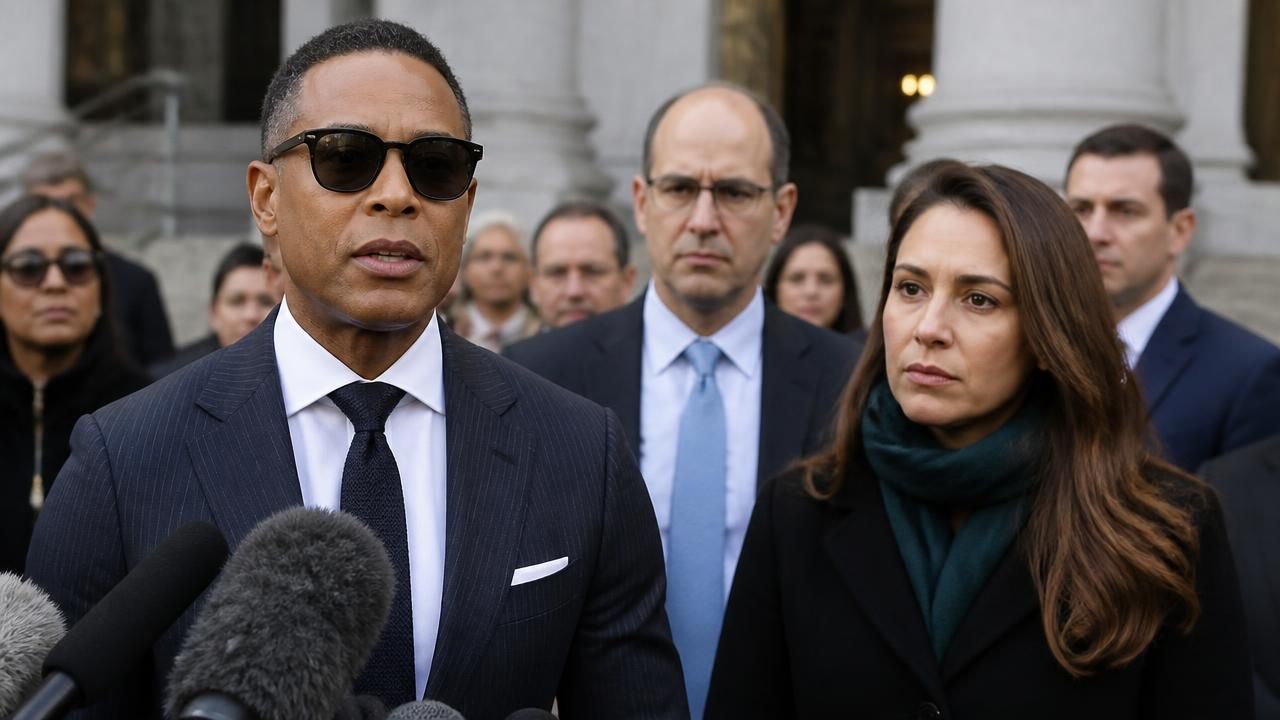
Don Lemon, the former CNN anchor, has asked a federal judge to dismiss criminal charges stemming from a protest outside a St. Paul, Minnesota church, arguing that the Justice Department's prosecution is vindictive and politically motivated. In a motion filed this week, Lemon's lawyers contended that prosecutors "acted on the president's animus by filing unprecedented charges against a journalist for doing his job."
The case, which has drawn national attention, also involves independent journalist Georgia Fort, who filmed an ICE protest at the same church and is separately seeking dismissal of federal charges. Both cases have become flashpoints in a broader debate about whether the Trump administration is weaponizing the Justice Department against its perceived enemies.
The St. Paul Church Protest Case
The charges stem from a demonstration outside the church, where protesters gathered to oppose Immigration and Customs Enforcement (ICE) actions. According to court filings, Lemon was present as a journalist covering the event, but prosecutors have alleged that he crossed the line from reporting to participating. The exact nature of the alleged offense remains contested, but the charges were brought under the federal Freedom of Access to Clinic Entrances (FACE) Act, a law most commonly used to protect abortion clinics from blockades and obstruction.
Legal experts, including those at Lawfare, have noted the unusual application of the FACE Act in this context. "The FACE Act was designed to protect reproductive health facilities, not churches or protest sites," said one legal analyst, speaking on condition of anonymity. "Using it against journalists covering a protest is a significant departure from past practice." This novelty is central to the defense's argument that the prosecution is unprecedented and targeted.
Selective and Vindictive Prosecution Claims
In their motion to dismiss, Lemon's legal team argued that the government's decision to charge him was both selective and vindictive. Selective prosecution occurs when a defendant is targeted based on race, religion, or other protected characteristics, while vindictive prosecution occurs when the government punishes someone for exercising their legal rights, such as free speech. Here, the defense contends that President Trump's well-documented animosity toward Lemon, who has repeatedly criticized him on air, was the driving force.
"The government has acted on the president's animus by filing unprecedented charges against a journalist for doing his job," the motion reads. "No reasonable prosecutor would have brought these charges absent the president's personal interest."
Georgia Fort, an independent journalist, has made similar arguments in her own motion, describing the charges as retaliation for her coverage of ICE activities. Fort's attorneys have also pointed to comments from the president and his allies suggesting that journalists who cover protests against administration policies should be punished.
A Pattern of Retribution
The Lemon and Fort cases are not isolated incidents. The Justice Department under the current administration has launched an array of legal actions against its critics and political rivals, leading former officials and legal scholars to warn of a systemic breakdown. Recent developments include:
- A new indictment against former FBI Director James Comey, a frequent target of the president's ire.
- A renewed effort to subpoena journalists at The New York Times, which the paper is fighting in court, alongside Trump's refiled $15 billion defamation lawsuit against the Times.
- An investigation into the foundation of financier George Soros, a conservative bogeyman.
- The hiring of a pardoned January 6 rioter who had threatened police officers.
- A reported attempt to use terrorism laws against Mexican officials.
These actions have drawn sharp criticism from civil liberties groups and former Justice Department officials. "This is not law enforcement; it is retribution," said a former federal prosecutor. "The department is being used to settle scores and intimidate those who exercise their First Amendment rights."
Even judges have pushed back. In one case, a federal judge quashed a Justice Department subpoena related to a 2020 election inquiry, ruling that it appeared to be motivated by political considerations. In another, The New York Times won a reprieve from a subpoena targeting its journalists.
Framing the Story: Retribution vs. Rule of Law
The administration and its supporters frame these actions as part of a legitimate effort to enforce the law and root out corruption. They point to allegations of wrongdoing by figures like Comey and Soros and argue that no one is above the law. For them, the DOJ is finally holding the powerful accountable after years of alleged bias against the president.
However, critics argue that the pattern undermines the rule of law. "When the Justice Department selectively targets the president's enemies, it transforms the criminal justice system into a political weapon," said a constitutional law professor. "That is precisely what the framers feared." This sentiment has fueled public protests, including the recent 'No Kings' demonstrations that erupted amid the government shutdown, where protesters chanted against what they see as authoritarian overreach.
Implications for Press Freedom
The Lemon case, in particular, has significant implications for press freedom. Journalists are regularly present at protests and civil disobedience actions, and charging them for simply doing their jobs could have a chilling effect. The Society of Professional Journalists and other media advocacy groups have filed amicus briefs supporting Lemon and Fort, arguing that the prosecutions violate the First Amendment.
"The camera is not a crime," said a representative for one press freedom organization. "Charging journalists for covering a protest criminalizes the recording of events that are in the public interest."
If the motions to dismiss are granted, the cases would end quickly. But if the courts allow the prosecutions to proceed, they could set a dangerous precedent, allowing future administrations to punish journalists with whom they disagree. As one observer put it, "This is a test of whether the courts will stand up to political interference in the justice system."