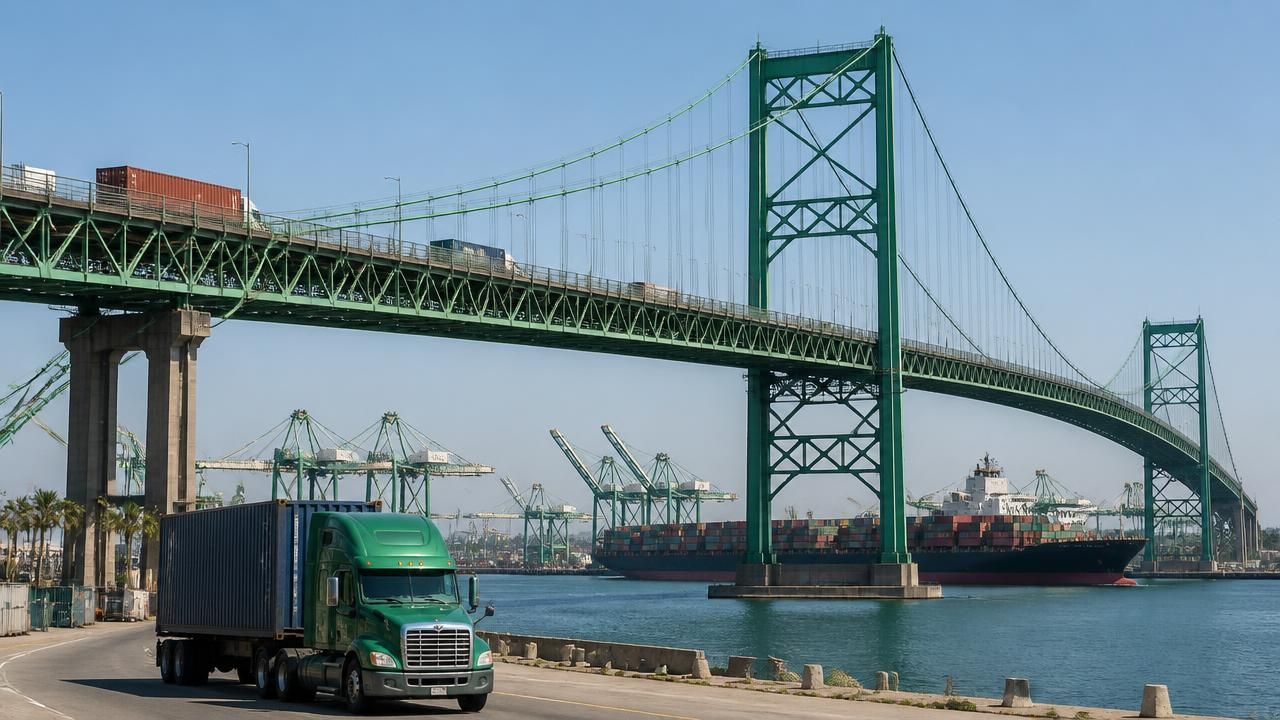
The Port of Los Angeles, the nation's busiest seaport, is embarking on one of its most ambitious infrastructure projects in decades: the replacement or major overhaul of the iconic Vincent Thomas Bridge. On [date], Mayor Karen Bass, along with state and local officials, announced a new partnership with the California State Transportation Agency (CalSTA) and Caltrans to shape the future of the bridge, a vital link for cargo trucks and commuters alike. The collaboration aims to protect the port's competitiveness, ensure the safe passage of ever-larger container ships, and sustain thousands of jobs that depend on the harbor's efficiency.
An Aging Icon and Its Critical Role
The Vincent Thomas Bridge, a green suspension span connecting San Pedro to Terminal Island, has stood for over 50 years—recently celebrated for its half-century in service. It carries State Route 47 and serves as the primary artery for trucks moving cargo between the ports of Los Angeles and Long Beach. But its vertical clearance of 185 feet is no longer sufficient for the newest generation of ultra-large container vessels, which can tower above the existing span. The bridge's cantilevered road deck also requires frequent repairs, and its seismic resilience is outdated.
According to the Port of Los Angeles, the bridge is nearing the end of its useful life. A previous plan to raise the deck during a maintenance project was nixed after engineering studies showed it would be too costly and disruptive. That decision, reported by the Daily Breeze, reopened the conversation about a full replacement—a conversation that has now evolved into a formal partnership.
Partnership and Vision
The new agreement between the Port of LA, CalSTA, and Caltrans establishes a framework for studying and eventually constructing a new bridge. Port officials emphasize that the project is not merely about replacing a span; it's about future-proofing the nation's supply chain. In a statement, Mayor Bass said the partnership would "protect competitiveness, cargo, and careers"—a phrase echoed across multiple official announcements. Port of Los Angeles CEO Gene Seroka, who has been vocal about trade uncertainties and supply shocks, called the bridge "a critical chokepoint" that must be modernized to handle larger ships and increased cargo volumes.
The announcement comes as California invests nearly $5 billion in local road and transport projects, with the bridge likely to be a candidate for significant state funding. The state has already committed resources to studying the replacement, and officials project a timeline of at least a decade for design, environmental review, and construction—a long, costly road, as local media have repeatedly noted.
Community Concerns and Environmental Impact
While port and state leaders tout economic benefits, many San Pedro residents and local activists are wary. A Los Angeles Times headline captured the friction: "A bridge too far? Vincent Thomas plans put Port of LA at odds with locals." Concerns include increased truck traffic, noise, air pollution, and the visual impact of a taller, wider structure. The community has also raised questions about the cost—estimates range from $2 billion to $4 billion—and the potential for prolonged detours and closures. The Daily Breeze has detailed a series of planned weekend closures and nighttime repairs, causing frustration among commuters.
In response, the partnership promises extensive public engagement. Community meetings are scheduled to roll out updates on the project, including detour plans and design alternatives. "We are committed to a transparent process that hears the community's voice," a Caltrans spokesperson said. Environmental review will examine air quality, marine life, and neighborhood disruption—a process that could take years.
Trade Pressures and Port Growth
The urgency behind the project is amplified by global trade dynamics. As Bloomberg reported, importers are rushing goods into the nation's two busiest ports ahead of potential new tariffs, pushing up ocean transport costs and adding to economic uncertainty. The Port of Los Angeles and neighboring Port of Long Beach have experienced record cargo volumes in recent years, and both are investing heavily to keep pace. Long Beach's new CEO laid out a vision for growth at the State of the Port speech, while Los Angeles approved a $3.4 billion budget for 2026-27, with major outlays for infrastructure.
The larger-ship trend is unstoppable. Maersk and MSC have deployed vessels with capacities exceeding 24,000 TEUs, and these mega-ships require deeper channels and higher bridges. The existing bridge's 185-foot clearance is a barrier for some designs, forcing carriers to route or wait. A new bridge, likely with a clearance of 240 feet or more, would signal that Los Angeles is serious about remaining the gateway of choice for transpacific trade.
Beyond the Bridge: A Waterfront Reinvention
The bridge project is part of a broader transformation of the Los Angeles waterfront. In San Pedro, the West Harbor development is taking shape—a $500 million mixed-use project featuring restaurants, shops, and a record-breaking Ferris wheel. The first structure is already rising, and officials say the venue will open its first phase this summer, bringing new life to the harbor. Meanwhile, the Port of LA is advancing a new terminal designed to handle cleaner, larger ships, and it just completed the Pier 400 on-dock rail project to reduce truck congestion. At the Port of Long Beach, construction is gearing for the massive Pier B rail yard, which will further shift cargo to efficient rail transport.
Environmental initiatives are also moving forward. A $31 million grant from the California Air Resources Board will fund emissions-reduction technology on two harbor craft, and a hybrid passenger vessel has joined the Harbor Breeze Cruises fleet serving both ports. These projects align with the state's climate goals and the ports' commitment to zero-emissions operations by 2035.
What Happens Next
For now, the partnership will conduct a feasibility study and begin the lengthy environmental review process. Key milestones include selecting a preferred bridge design, securing funding for the estimated multi-billion-dollar cost, and obtaining approvals from regulatory agencies. The earliest possible start of construction is likely in the late 2020s, with completion not expected until the mid-2030s. In the meantime, the existing bridge will continue to operate, with periodic closures for maintenance—including a planned partial closure for nighttime repairs later this month, which will test the patience of local drivers.
As the project moves forward, the tension between economic ambition and community livability will remain front and center. The new partnership is designed to manage that tension, but its success will depend on transparency and trust. For a region that is the Pacific gateway for American trade, getting this bridge right is not optional—it is existential.