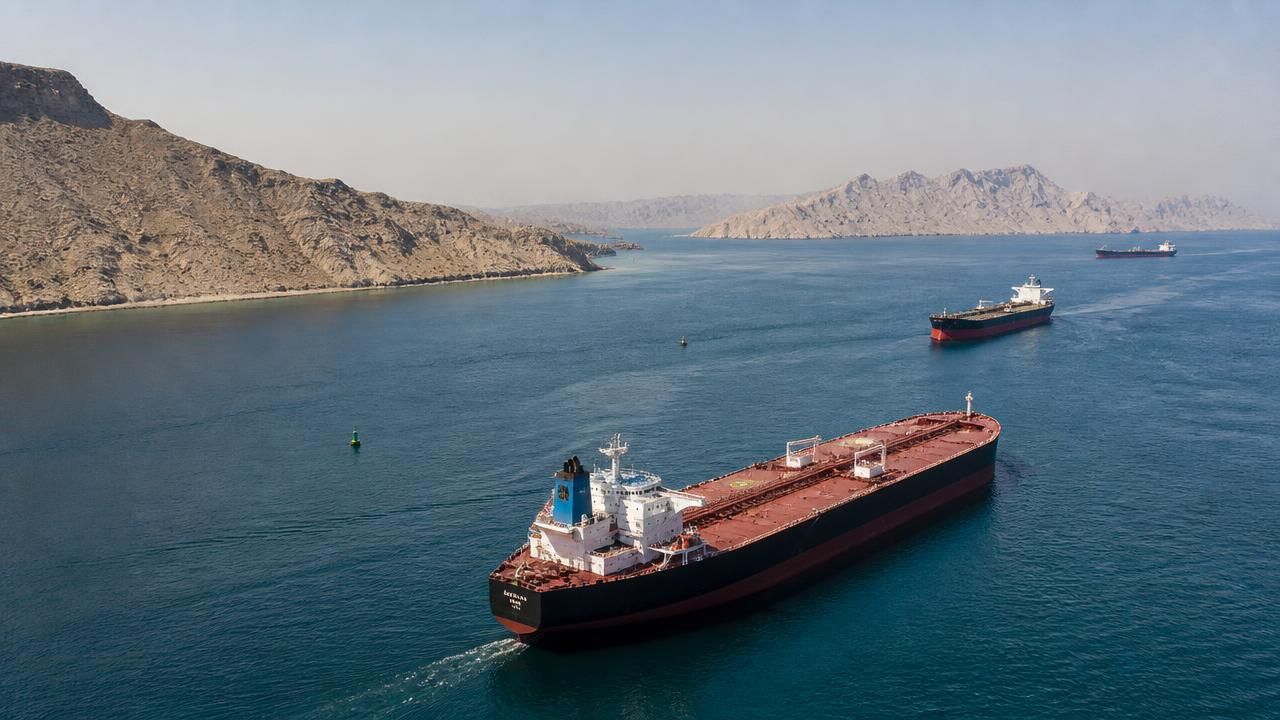
The narrow Strait of Hormuz, a vital artery for global oil shipments, finds itself at the center of a new geopolitical tremor. According to local media reports, Iran is seeking to bar US and Israeli ships from the waterway as part of a proposed agreement with Oman. The deal, which would also require compensation from 'hostile countries' before they are allowed to transit, has the potential to reshape maritime security and energy markets. Bloomberg's Abeer Abu Omar reported the development, citing local media sources.
Who: The Islamic Republic of Iran and the Sultanate of Oman are the key parties. The United States and Israel are the targeted nations. What: Iran wants to include a provision in a bilateral deal with Oman that would prohibit US and Israeli vessels from passing through the Strait of Hormuz. Additionally, other 'hostile' countries would need to pay compensation before being granted passage. When: The reports surfaced recently, though details of the ongoing negotiations have not been officially confirmed by either government. Where: The Strait of Hormuz, a 21-mile-wide waterway between the Persian Gulf and the Gulf of Oman, and the diplomatic channels between Tehran and Muscat.
Strategic Importance of the Strait
The Strait of Hormuz is one of the world's most critical chokepoints. According to the U.S. Energy Information Administration, roughly one-fifth of global petroleum consumption passes through it, with about 21 million barrels per day in 2022. Any disruption would send shockwaves through energy markets. The waterway is the only sea passage from the Persian Gulf to the open ocean, making it indispensable for oil exports from Saudi Arabia, Iraq, Kuwait, the UAE, and Qatar, as well as Iran itself.
Iran's strategic calculus has historically included threats to close the Strait. In 2019, after the US withdrew from the nuclear deal, Iran briefly seized oil tankers. In recent years, there have been periodic incidents. However, an actual closure has never been attempted, as it would draw massive retaliation from the United States and its allies. The strait's depth and width mean that any mining or blockade would be quickly countered by naval forces.
The Proposed Iran-Oman Deal
Oman has long maintained neutral diplomatic ties with both Iran and the West, often serving as an intermediary in regional conflicts. It is a monarchy with close historical and cultural links to Iran, yet it also enjoys a strong relationship with the United States and the United Kingdom. This places Oman in a unique position to host negotiations. The proposed deal, as reported, would formalize restrictions on certain shipping lanes, but the mechanics remain unclear.
'Iran's leaders are master negotiators. They float maximalist demands to gain concessions elsewhere. The real question is whether Oman will accept a version of this that is symbolic but not actionable,' says Hassan Al-Nasser, a professor of international relations at Qatar University.
Compensation Scheme
The demand for compensation from 'hostile countries' is a novel twist. Analysts suggest Iran might be seeking to create a toll system for passage, offering a waiver in exchange for economic benefits or diplomatic recognition. However, such a scheme would likely violate the United Nations Convention on the Law of the Sea (UNCLOS), which guarantees transit passage through straits used for international navigation. Iran is not a signatory to UNCLOS, but many other nations, including the US, are.
Global Implications and Reactions
The implications for global oil markets are substantial. If the deal were implemented, shipping costs and insurance premiums for tankers would soar. Oil prices could spike, affecting global inflation. The US has enough strategic petroleum reserves to mitigate short-term disruption, but prolonged interference would be severe. The financial sector would also face uncertainty, with ship charter rates and energy futures reacting almost immediately.
Reactions from the US and Israel have not been officially announced. Historically, Washington has considered any interference with shipping in the Strait as a red line. Israel, which operates naval assets in the region, is unlikely to accept restrictions without a response. The US Navy maintains a presence in the region, and any escalation could lead to a military confrontation.
Expert perspectives highlight the unlikelihood of full implementation. 'It's a negotiating tactic, not a realistic policy,' says Dr. Maria Chen, a geopolitical analyst at the Atlantic Council. 'Iran knows it cannot unilaterally close the Strait without triggering a war. But by proposing this with Oman, they are testing the waters and creating a narrative of resistance.' Retired Rear Admiral John Miller adds, 'The compensation angle is novel. It might be a way for Iran to extract economic benefits without a full closure, essentially taxing passage. But the US Navy would likely provide escorts, and the dispute would escalate.'
Diplomatic and Economic Context
Iran faces severe sanctions, domestic unrest, and a struggling economy. The proposed deal could serve to rally domestic support and increase its leverage in broader negotiations over its nuclear program. Oman, meanwhile, relies on trade with Europe and Asia and is unlikely to alienate the West. Diplomatic sources suggest that the Sultanate might accept a watered-down version of the proposal, perhaps a declaration of intent rather than a binding treaty.
- The Strait of Hormuz carries about 21 million barrels of oil per day, roughly a fifth of global consumption.
- The US and Israel have conducted joint naval exercises in the region, signaling readiness.
- Iran has historically backed away from fully closing the strait, but has used it as a tool in negotiations.
- Oman's foreign policy is based on mediation and neutrality, making it a credible but cautious partner.
Conclusion
As the world watches, the Strait of Hormuz remains the fulcrum of global energy security. This proposed deal is yet another reminder that in the Persian Gulf, political maneuvering can have outsized consequences for the global economy. For now, the plan is just a report, but the message is clear: Iran seeks to reshape the rules of the passage. Whether Oman will lend its weight to such a controversial plan remains uncertain, but the mere possibility of restrictions at such a vital chokepoint demands close attention from policymakers and markets alike.