The Philippine economy grew at its slowest pace in over a decade during the second quarter, excluding the pandemic-induced contraction, official data confirmed on Thursday. The unexpected slowdown has rattled policymakers and analysts alike, as persistent global headwinds, particularly the protracted Middle East conflict, stoked inflation and dampened both consumer spending and investment.
According to the Philippine Statistics Authority, gross domestic product (GDP) expanded by a mere 3.4% year-on-year in the April-to-June period, sharply below the 5.8% growth recorded in the first quarter and far off the government's full-year target of 6.0% to 7.0%. This marks the weakest quarterly performance since the 2008-2009 global financial crisis, excluding the pandemic years of 2020-2021 when the economy contracted.
The release caught markets off guard, as a Reuters poll of economists had forecast a 5.1% expansion, expecting a modest pickup from the previous quarter. Instead, the economy stalemated under the weight of accelerating inflation and a sharp slowdown in demand, raising fresh questions about the country's economic resilience amid geopolitical turmoil.
Middle East Conflict: An Unexpected Drag
While the Philippine economy has historically been insulated from overseas conflicts, the ongoing Middle East crisis has had a disproportionate impact this time, primarily through higher energy prices and disrupted supply chains. The conflict, which escalated in late May with direct strikes on key shipping routes in the Red Sea, has caused freight costs to soar and delayed deliveries of critical raw materials.
“The Philippines is a net importer of energy, and the sustained geopolitical tensions have pushed domestic fuel prices to record highs, squeezing household budgets and eroding purchasing power,” said Maria Cristina Ramos, an economist at the Asian Institute of Management in Manila. “The ripple effects are now visible in slowed consumption and hesitant investment,” she added in a phone interview.
“The Middle East conflict is not a distant worry for us; it has directly translated into higher pump prices, higher electricity rates, and ultimately, lower consumer confidence.”
— Maria Cristina Ramos, Economist, Asian Institute of Management
Inflation in the Philippines rose to an average of 4.6% in the second quarter, up from 3.8% in the first quarter, with food and transport costs leading the surge. This has forced the Bangko Sentral ng Pilipinas (BSP) to keep its benchmark interest rate elevated, currently at 5.75%, which in turn has made borrowing costlier for both households and enterprises.
Consumption Weakens, Investment Stalls
Consumer spending, which accounts for over 70% of the Philippine GDP, grew by just 2.9% in the quarter, a sharp slowdown from the 5.1% expansion in the previous three months. The decline was most pronounced in discretionary spending categories such as restaurants, recreation, and personal care.
Meanwhile, fixed capital formation—a key measure of investment—contracted by 1.2% year-on-year, marking the first drop since the depths of the pandemic. Business owners, facing elevated input costs and uncertain demand, have opted to hold off on expansion plans. The construction sector, a major driver of investment, posted a 3.5% decline as private construction projects stalled.
“The investment picture is concerning because it reflects a lack of confidence in the near-term outlook,” noted Fernando Aldaba, a professor of economics at the University of the Philippines. “We need to see both policy support and a stabilization of external conditions for investment to recover.”
Exports and Remittances Offer a Silver Lining
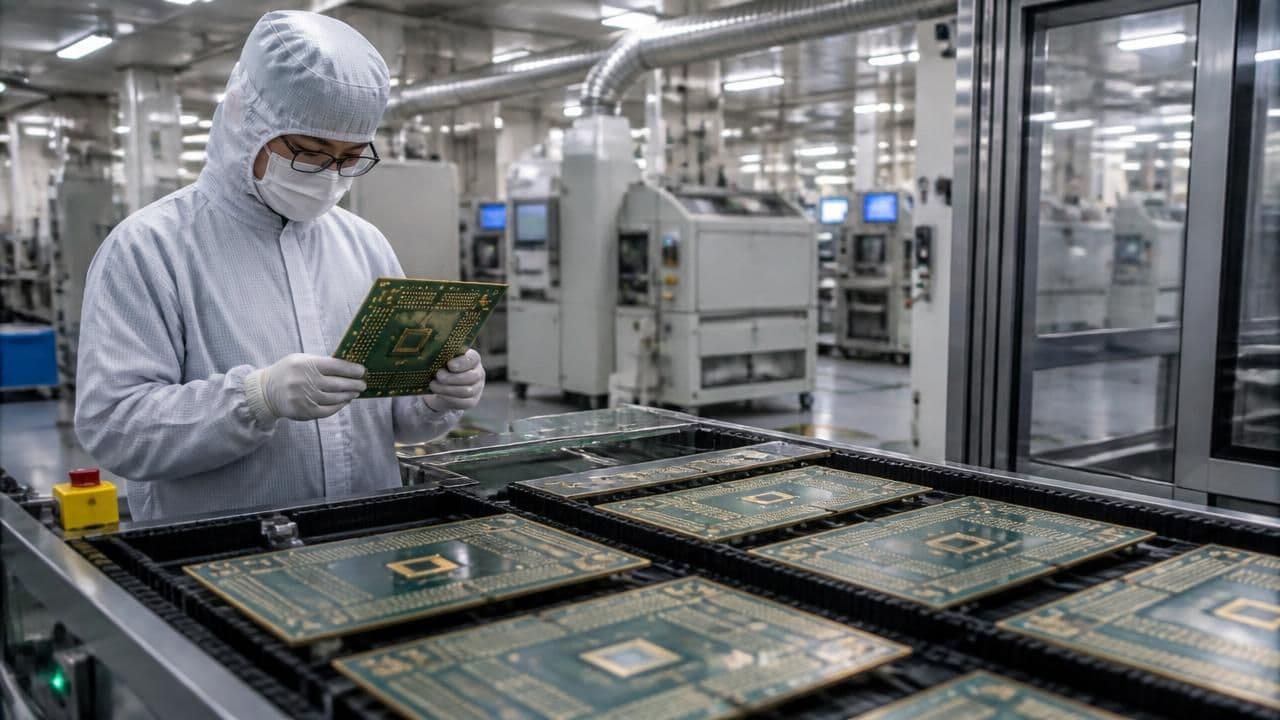
On a more positive note, merchandise exports and remittances from overseas Filipino workers provided some support to the economy. Exports of electronics and agricultural products increased, benefiting from high global demand for semiconductors, while cash remittances grew at a steady 3.1% annually.
However, analysts warn that these factors may not be enough to offset the domestic demand slump. “The Philippines is still heavily reliant on domestic consumption, and with inflation eating into real income, the engine of growth is sputtering,” said Aldaba.
Government Responds: Fiscal and Policy Measures
Following the data release, Finance Secretary Ralph Recto acknowledged the shortfall but expressed optimism for a second-half recovery. The government has announced a multi-pronged stimulus package, including targeted cash transfers for low-income families, subsidies for public transport, and a temporary reduction in tariffs on imported food items to ease inflationary pressures.
The BSP, for its part, has signaled a potential shift to a more accommodative stance in the fourth quarter if inflation shows sustained signs of easing. However, the central bank remains wary of cutting rates too soon, given the uncertain global oil price trajectory.
“We are prepared to use all policy tools to bring the economy back to its potential growth path. The fundamentals remain strong, and we expect a rebound in the coming months.”
— Ralph Recto, Finance Secretary
Historical Context: The Philippine Economy's Resilience
The Philippines has been one of Asia's fastest-growing economies over the past decade, averaging 6.0% to 6.5% annual growth in the pre-pandemic years. Its resilience has been attributed to a young workforce, a growing middle class, and substantial infrastructure investment under the “Build, Better, More” program.
Yet, this latest slowdown echoes previous vulnerabilities. In 2009, the economy grew by just 1.1% as the global financial crisis disrupted trade and remittances. The current situation, while not as severe, underscores the country's exposure to external shocks, particularly its reliance on imported energy and global supply chains.
Comparing with regional peers, the Philippines' 3.4% growth lags behind Vietnam's 6.2% and Indonesia's 4.9% for the same period, though it beats Thailand's 2.0%. This mixed regional performance highlights a broader trend of weakening trade and geopolitical fragmentation.
Implications and Outlook
The slowdown has significant implications for policy, poverty reduction, and the labor market. A sustained growth misstep could hamper job creation, given that the Philippine population grows by roughly 1.5 million people annually. The National Economic and Development Authority (NEDA) estimates that the economy needs to grow at least 6.0% to meaningfully reduce poverty.
“If the current trend persists, we could see the poverty reduction gains of the past few years reversed,” said NEDA Director General Arsenio Balisacan. “We are closely monitoring the situation and will adjust policies as needed.”
Economists now project full-year growth to settle between 4.5% and 5.5%, significantly below the government's target. A further escalation of the Middle East conflict, or a spike in oil prices, could push growth even lower.
What to Watch For
- Inflation data for the upcoming months, especially food and energy components.
- BSP's policy meeting in October for any signals of rate cuts.
- Government stimulus implementation to see if it can buffer household incomes.
- Oil markets and the trajectory of the Middle East conflict.
- Global investor sentiment and its impact on portfolio flows.
In a broader context, the Philippine experience serves as a reminder of how geopolitical events can permeate economic borders. For an economy that relies on openness—trade, remittances, and capital flows—external shocks are a constant challenge. The path forward will require both nimble domestic policy and a concerted pursuit of peace on the international stage.
As the nation looks ahead to the second half, the question remains whether this is a temporary dip or a structural slowdown. Most analysts lean towards the former, citing the government's fiscal space and the likelihood of an eventual de-escalation in the Middle East. Yet, until then, Filipino businesses and consumers are likely to remain in a cautious holding pattern, bracing for more bumpy times.