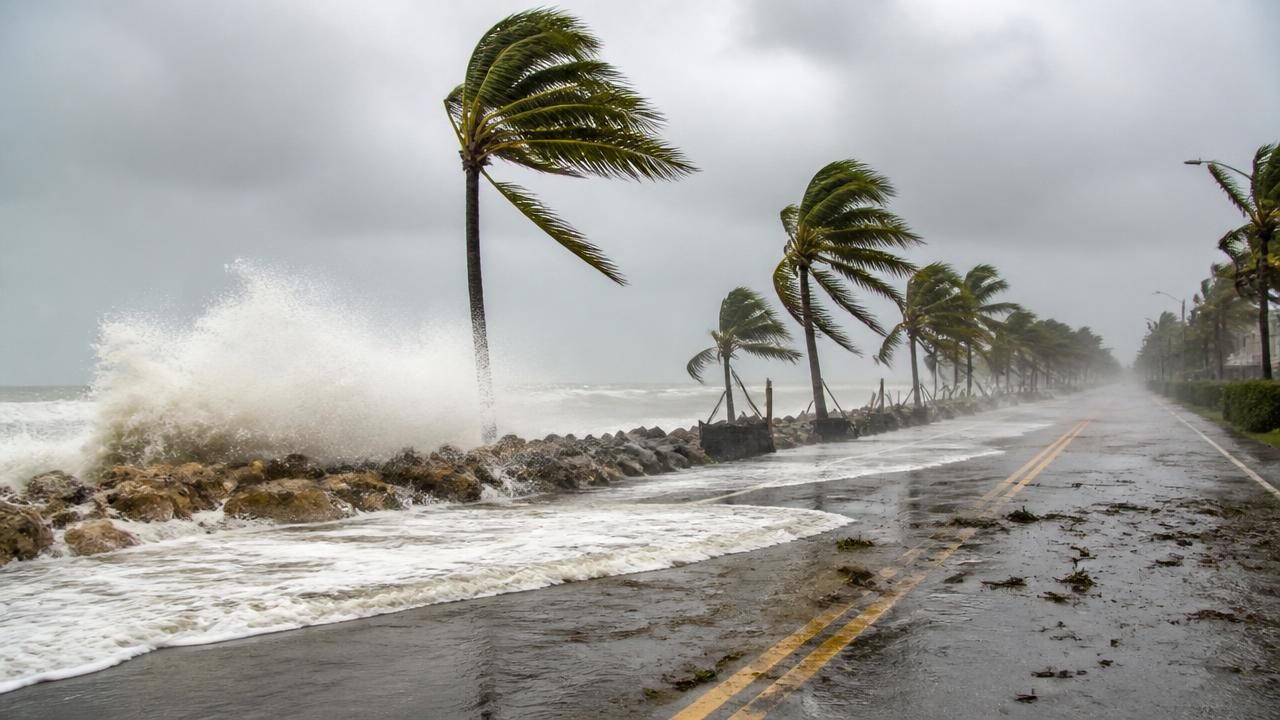
In a landmark demonstration of artificial intelligence's growing power in meteorology, Google DeepMind's latest weather model, WeatherNext, has accurately predicted the track and rapid intensification of Hurricane Melissa — giving forecasters up to an extra day of warning compared to conventional systems. The model, which will be open-sourced, is being hailed as a transformative tool for tropical cyclone prediction, even as researchers acknowledge they do not fully understand how it achieves such skill.
A Breakthrough in Hurricane Forecasting
During the 2025 Atlantic hurricane season, WeatherNext consistently outperformed the world's most reliable operational forecast systems, according to multiple sources including Nature and CNN. For Hurricane Melissa, the AI model predicted the storm's perilous rapid intensification days in advance, a feat that eluded physics-based models. New Scientist reported that the AI provided an extra day of lead time ahead of deadly cyclones, a margin that can save lives and property.
"This is an impressive AI model," said a Nature analysis, highlighting WeatherNext's ability to predict both a storm's track and intensity using lower-resolution weather data than traditional models require.
The model's success is not an isolated case. The Weather Network noted that AI models helped predict 2025's huge hurricanes, while CNN went further, declaring that the best hurricane forecasts of 2025 came from an AI model. These claims are supported by operational forecasters at the National Hurricane Center (NHC), who have increasingly integrated AI tools into their workflow.
How WeatherNext Works
Unlike conventional numerical weather prediction models that solve complex physical equations, WeatherNext uses machine learning to recognize patterns in historical and real-time weather data. It ingests global atmospheric fields — including temperature, humidity, wind, and pressure — and directly outputs forecasts of cyclone position and intensity. The model is remarkably efficient: it can run on a single computer in under a minute, whereas traditional models require supercomputers and hours of computation.
One of the most striking aspects is that WeatherNext achieves this accuracy using lower-resolution data. As Wired reported, researchers don't yet fully understand how the model makes its predictions — a common black-box problem in deep learning. This opacity has sparked debate among meteorologists about trust and interpretability, but the empirical results are hard to argue with.
GraphCast and the Evolution of AI Weather Models
WeatherNext builds on DeepMind's earlier successes, including GraphCast, which Nature previously reported "beats world-class weather forecasting system." GraphCast, already used for global forecasting, demonstrated that AI could match or exceed traditional models on medium-range forecasts. WeatherNext extends this to tropical cyclones, incorporating probabilistic elements that estimate a range of possible outcomes — a feature highlighted in Nature's research on "Probabilistic weather forecasting with machine learning."
DeepMind's official blog posts describe WeatherNext as part of a broader effort "supporting better tropical cyclone prediction with AI." The company frames the technology as a complement to existing forecasting tools rather than a replacement.
The View from the National Hurricane Center
The NHC has been slower to adopt AI operationally, but the 2025 season accelerated the process. Weather.gov's page on AI in hurricane forecasting notes that machine learning models are now being used to supplement traditional guidance, particularly for intensity forecasts where physics-based models historically struggle. Forecasters at the NHC and private sector firms, such as WeatherTiger's Michael Lowry, have embraced these new tools.
Lowry's forecasts for Hurricane Melissa, which he expected to "rapidly strengthen into a major hurricane this weekend," closely mirrored WeatherNext's predictions. He later noted that during the height of hurricane season, "not a storm in sight" — an unusual calm that AI models had helped predict weeks in advance, according to some analysts.
A Quiet Revolution in Weather Prediction
The broader impact of AI on weather forecasting extends far beyond hurricanes. As Yale e360 reported, "A.I. Is Quietly Powering a Revolution in Weather Prediction." Models like Microsoft's Aurora are predicting air pollution worldwide, while DeepMind's probabilistic systems are improving medium-range forecasts. The Seattle Times noted that Google introduced an AI agent that "aces 15-day weather forecasts," a horizon once thought impossible.
This is not just about better forecasts; it's about resilience. Research.google.com's article "From research to climate resilience" argues that AI-driven weather prediction is essential for adapting to climate change, where extreme events like hurricanes are becoming more intense. The open-sourcing of WeatherNext will allow countries with limited computing resources to access state-of-the-art tools, democratizing weather prediction.
Challenges and Criticisms
Despite the enthusiasm, experts caution that AI models are not a panacea. They require vast amounts of training data, which can be biased toward well-observed regions. They also lack the physical constraints that make traditional models interpretable, raising the risk of plausible but wrong predictions. As Wired put it, "researchers don't yet fully understand how it does this," a sentiment echoed by many in the field.
Nevertheless, the evidence from 2025 is compelling. Forecasters armed with AI tools provided earlier and more accurate warnings, potentially saving lives during Hurricane Melissa and other storms. The question now is how quickly operational agencies can integrate these models into their decision-making processes while maintaining human oversight.
The Future of Hurricane Forecasting
DeepMind's achievement marks a turning point. The combination of AI's speed, accuracy, and accessibility is transforming meteorology from a purely physics-based discipline into a data-driven science. As forecasters at the Virgin Islands Daily News noted, "as hurricane season begins, forecasters armed with new tools" are better prepared than ever.
With WeatherNext set to be open-sourced, the entire global forecasting community will be able to build on this breakthrough. The next major hurricane may be met with warnings not days, but potentially weeks in advance — thanks to the quiet revolution in AI weather prediction.