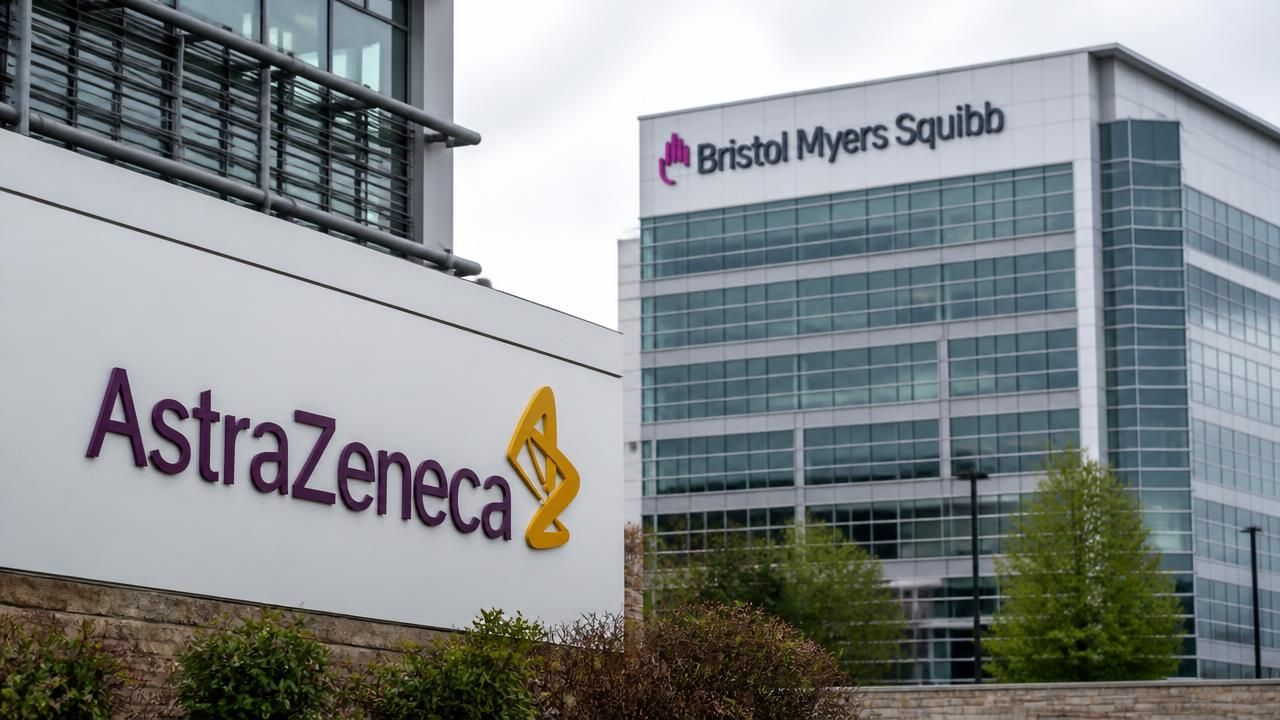
The pharmaceutical industry was sent into a tailspin on Monday after Bloomberg reported that AstraZeneca had explored acquiring Bristol Myers Squibb (BMS) in what could have been the largest healthcare deal in history. At a reported $400 billion, the potential combination would have united two of the world's most prominent drugmakers and reshaped the competitive landscape. Yet within hours, the story took a sharp turn as a senior source flatly denied that any discussions had taken place, leaving investors and analysts scrambling for clarity.
A Megadeal That Shook Markets
According to Bloomberg, AstraZeneca approached BMS about a merger in recent weeks, a move that would have dwarfed all prior pharma consolidations. The Financial Times echoed the report, citing people familiar with the matter who put the potential value at around $400 billion (£300 billion). Such a deal would have surpassed the previous record—Pfizer's $160 billion acquisition of Warner-Lambert in 2000, adjusted for inflation—and created a company with combined annual revenues exceeding $120 billion.
News of the talks triggered an immediate market reaction. AstraZeneca's London-listed shares fell as much as 7% on the FTSE 100, wiping billions off its market value. In contrast, BMS shares jumped on the New York Stock Exchange as investors speculated about a premium in any takeover. The divergence underscored a fundamental difference in perception: AstraZeneca investors balked at the prospect of a massive, debt-laden acquisition, while BMS shareholders saw a potential exit from a period of portfolio decline.
“There never was a deal to be done,” said a senior source briefed on the matter, dampening the speculative frenzy.
Reuters later confirmed that a senior source had dismissed the merger talks, saying, “No discussions” were ongoing. The denial led AstraZeneca shares to rebound slightly, but the damage to sentiment had already been done. By mid-session, the company had slipped to third place among UK-listed companies by market capitalization, behind Shell and Unilever, according to The Guardian.
Investors Question Strategic Logic
The market's skepticism was rooted in a fundamental mismatch of strategic positions. AstraZeneca has enjoyed a remarkable run under CEO Pascal Soriot, with a pipeline of oncology drugs and a successful COVID-19 vaccine that boosted its profile. Its growth trajectory has made it one of the most valuable pharmaceutical companies in Europe, and its stock has soared over the past decade.
BMS, meanwhile, is facing a more uncertain future. The company's key immunotherapies, Opdivo and Yervoy, are losing patent protection, and its recent $74 billion acquisition of Celgene has yet to deliver the expected synergies. BioSpace noted that BMS stands to gain the most from a merger, as its eroding portfolio would benefit from AstraZeneca's robust pipeline. But for AstraZeneca, the deal would represent a risky departure from its successful strategy of organic growth and targeted acquisitions.
“Winning Formula” Under Threat
In an opinion piece for The Guardian, financial editor Nils Pratley argued that AstraZeneca should resist the allure of a mega-merger. “AstraZeneca has a winning formula that has delivered for shareholders and patients alike,” he wrote. “Why gamble it on a $400 billion deal that would stretch its balance sheet and distract management from the pipeline that is driving its success?” His view was echoed by several City analysts, who described the potential merger as “perplexing” and “value-destructive.”
The reluctance is not just about price. A deal of this scale would face intense regulatory scrutiny, particularly in the US and Europe, where antitrust authorities have grown increasingly wary of consolidation in the pharmaceutical sector. Even if the companies received approval, integrating two vast global organizations with different cultures and research priorities would be a monumental challenge.
Revenue Leadership and Competitive Pressures
Proponents of the deal pointed to the sheer scale of the combined entity. Drug Discovery Trends noted that a merged AstraZeneca-BMS would lead the industry in revenue until around 2030, surpassing current leader Eli Lilly and rival Pfizer. With blockbuster drugs like AstraZeneca's Tagrisso and Imfinzi, alongside BMS's Eliquis and Opdivo, the combined portfolio would span oncology, cardiovascular, and immunology, giving it unmatched market muscle.
The speculation also highlighted broader pressures in big pharma. As patent cliffs loom and pricing scrutiny intensifies, companies are seeking scale to negotiate better terms and fund expensive R&D. The rumored talks reflect a trend of megadeals in the sector, including Pfizer's $43 billion acquisition of Seagen and Merck's $10.8 billion deal for Prometheus Biosciences. Yet analysts argue that the AstraZeneca-BMS combination is fundamentally different, because it would be a merger of equals rather than a strategic bolt-on.
No Deal, But Questions Remain
By Tuesday, the firestorm had largely subsided. AstraZeneca declined to comment, and BMS issued a terse statement saying it does not comment on market rumors. But the episode has exposed deep divisions in investor sentiment. AstraZeneca's share price remains below its pre-speculation level, reflecting concerns that management may be tempted by empire-building. BMS, meanwhile, has seen its stock rise, suggesting some investors hope the talks were real.
In the absence of concrete negotiations, the industry is left to ponder the “what if.” Would regulators have accepted such a seismic shift in the pharma landscape? Would shareholders have approved? And could the combined company have delivered enough innovation to justify its size?
For now, the answer appears to be no. As one senior healthcare banker put it, “This was a fleeting moment of market excitement that revealed how much pharma is struggling to define its next chapter. The underlying challenges—patent expiries, pricing pressure, and the need for breakthrough science—remain unresolved.”
The episode serves as a reminder that in the high-stakes world of pharmaceuticals, rumors can move billions in market value in minutes, even when the outcome is a dead end. For AstraZeneca, the message from investors is clear: stick to the science. For BMS, the search for a strategic future continues.