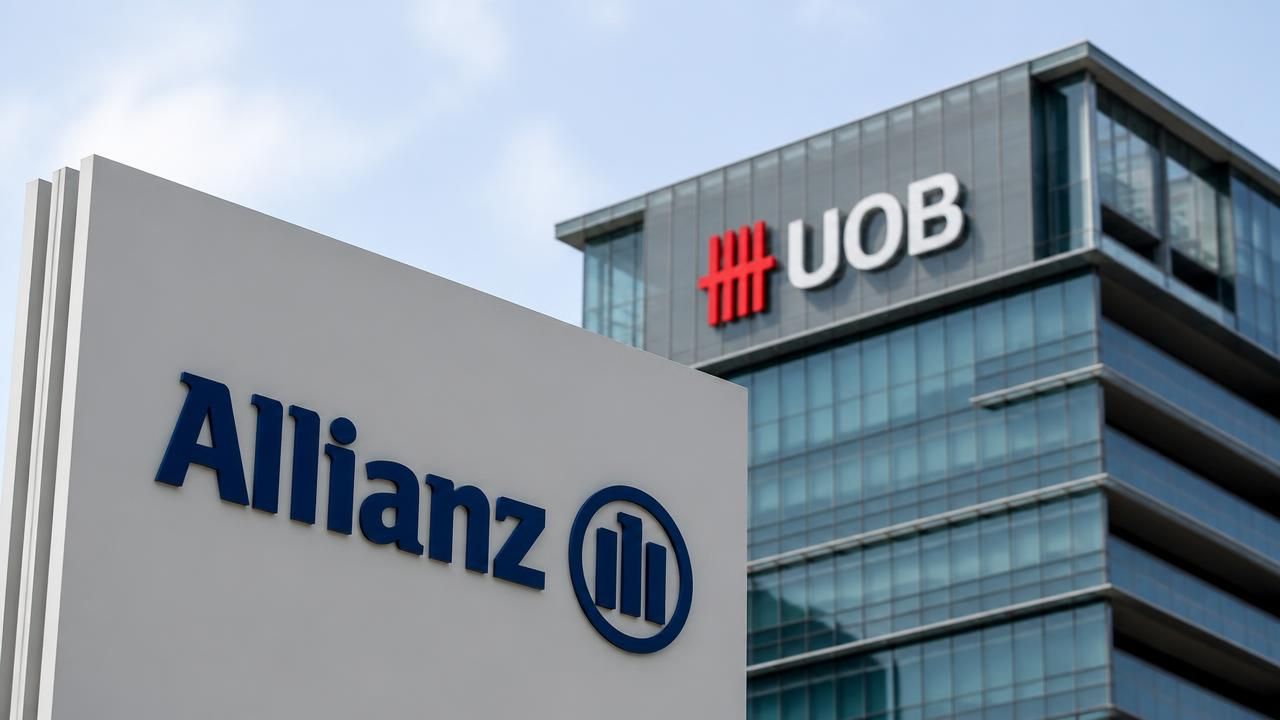
German insurer Allianz SE has agreed to acquire the asset management business of Singapore's United Overseas Bank (UOB) for approximately $434 million, in a move that underscores its ambition to become a leading player in Asia Pacific's rapidly growing wealth management market. The transaction, announced through Allianz's investment arm Allianz Global Investors (AllianzGI), marks one of the insurer's most significant strategic moves in the region under Chief Executive Officer Oliver Baete.
A Strategic Push Into Asia
The acquisition of UOB Asset Management (UOBAM) is the latest in a series of aggressive expansion steps by Allianz as it seeks to diversify beyond its mature European home market. According to Bloomberg, the deal is Allianz's second major acquisition in recent days, highlighting the company's intent to scale up in Asia. While Allianz did not disclose the other transaction, industry sources suggest it is part of a broader effort to reposition its investment arm for faster-growing economies.
For AllianzGI, the purchase will significantly expand its presence in Southeast Asia, a region where middle-class wealth is expanding rapidly. The acquisition adds UOBAM's network of distribution relationships and on-the-ground investment teams in key markets including Singapore, Malaysia, Thailand, and Vietnam. This aligns with AllianzGI's stated objective of accelerating its growth trajectory in Asia Pacific, as highlighted in the company's official announcement.
UOB's Shift to Core Wealth Management
For UOB, the divestment is part of a deliberate strategy to focus on its core banking franchise. The bank, one of the largest in Southeast Asia, has been doubling down on wealth management services for its high-net-worth clients. As MSN News reports, UOB is "shedding" its asset management arm "to focus on wealth management," a sector that offers higher margins and cross-selling opportunities with its private banking business.
"This transaction allows UOB to sharpen our focus on our core strengths in banking and wealth management, while ensuring that UOB Asset Management continues to thrive under the ownership of a global asset manager," a senior UOB executive reportedly said.
The sale price of approximately $433.5 to $434 million represents a strategic premium for a business that manages a diversified portfolio of equity, fixed income, and multi-asset strategies across the region. UOBAM had carved out a niche in ASEAN markets, and its integration into AllianzGI is expected to create enhanced investment capabilities and product offerings for clients.
What This Means for the Asia Pacific Asset Management Industry
The deal comes at a time when asset managers globally are seeking scale to compete with Vanguard, BlackRock, and other industry giants. But in Asia, the competitive landscape remains fragmented, with regional banks often owning their asset management subsidiaries. Allianz's move could trigger a wave of consolidation, as other global insurers and asset managers look to acquire or partner with regional players.
One notable angle, highlighted by Hubbis, is the deal's potential impact on Vietnam's wealth management market. UOBAM has a significant presence in Vietnam, a country with a booming economy and an emerging affluent demographic. By acquiring UOBAM, AllianzGI is positioning itself to capture a share of this fast-growing market, which is expected to see substantial inflows into mutual funds and discretionary mandates over the next decade.
Different Framings of the Deal
How the story is being told depends on the outlet. Bloomberg frames the acquisition through the lens of CEO Oliver Baete's aggressive growth strategy, noting that he is "targeting Asia" as a key driver of future earnings. MSN, on the other hand, leads with UOB's strategic retreat, emphasizing how the bank is "focusing on wealth management" as its core priority. The official Allianz website highlights the "accelerated growth path" for AllianzGI, while trade publications like Fund Selector Asia simply report the agreement as a significant industry event.
These perspectives are not contradictory; rather, they capture two sides of the same transaction. For Allianz, it is an opportunity to buy distribution and local expertise at a reasonable price. For UOB, it is a chance to simplify its business model and return capital to shareholders.
Deal Mechanics and Regulatory Outlook
The transaction is subject to customary regulatory approvals, and the parties have not announced a specific closing date. However, industry analysts expect it to close by mid-2025, given the prominence of both organizations and their respective regulatory standing. UOBAM will likely be rebranded under the Allianz banner, following a transition period to ensure seamless client service.
- Who: Allianz Global Investors (buyer), United Overseas Bank (seller), UOB Asset Management (target).
- What: Acquisition of UOBAM's business and operations.
- When: Announced recently; closing expected after regulatory approvals.
- Where: Headquarters in Singapore, with regional presence across Asia Pacific.
- Why: Allianz seeks Asia growth; UOB focuses on core wealth banking.
- How: Cash deal valued at approximately $434 million.
Looking Ahead
For Allianz, this acquisition is not just about assets under management; it is about relationships. UOBAM has deep ties with distribution networks across ASEAN, including banks, insurance companies, and independent financial advisers. AllianzGI can leverage these relationships to sell its broader range of products, including alternative investments and pension solutions.
At the same time, UOB will continue to offer its clients access to investment funds, but now through Allianz's global platform. This "open architecture" approach is becoming increasingly common among banks that no longer wish to maintain manufacturing capabilities, preferring instead to curate third-party products for their clients.
The Allianz-UOB deal is a textbook example of how global asset managers are reshaping their footprints to capture Asian wealth. It remains to be seen how competitors will respond, but one thing is clear: the battle for Asia's asset management market just became more intense.