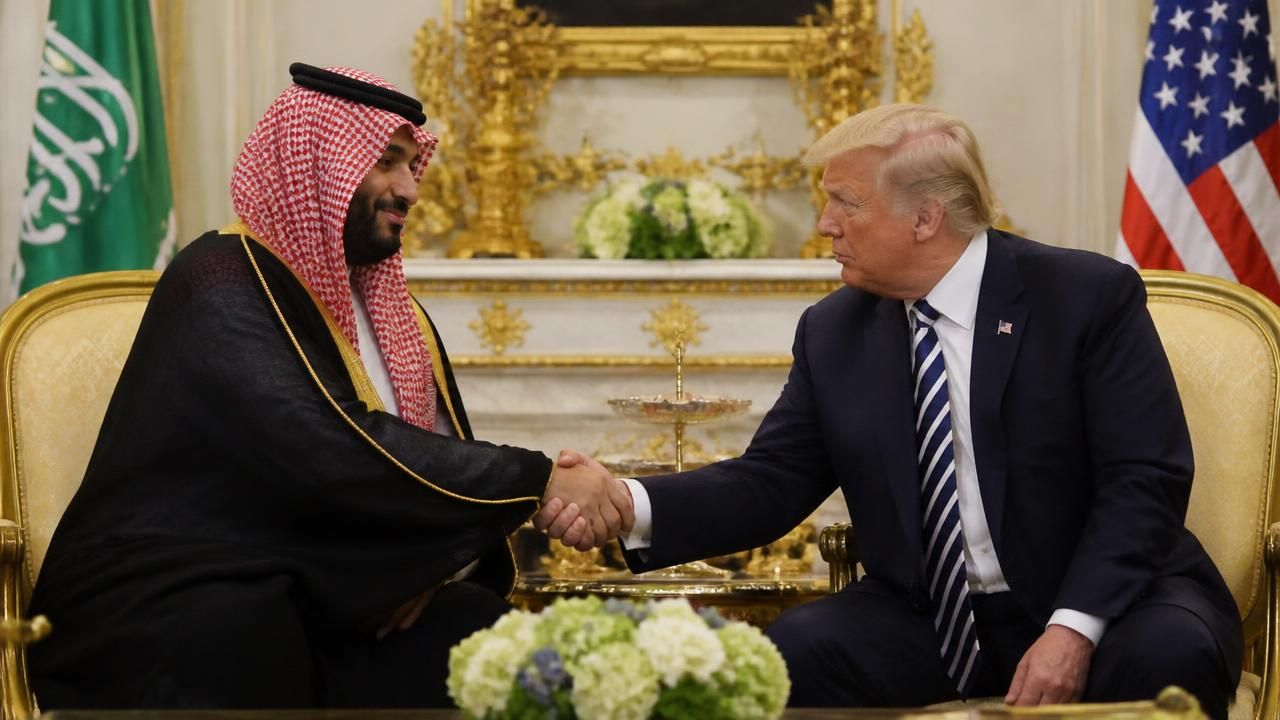
In a dramatic geopolitical pivot, the Trump administration has approved a landmark nuclear cooperation deal with Saudi Arabia, a move that breaks with decades of US non-proliferation policy and could redraw the strategic map of the Middle East. The agreement, first reported by The Wall Street Journal, requires Riyadh to recognize Israel but drops longstanding American demands for strict safeguards against nuclear weapons development. The announcement comes as the Pentagon separately moves to add high-energy laser weapons to the US Army arsenal, a shift toward futuristic defense systems to counter the growing threat of drone attacks.
A Landmark Shift in Non-Proliferation Policy
For nearly half a century, the United States has insisted that any country receiving American nuclear technology for energy must forgo enrichment and reprocessing capabilities—the dual-use processes that can produce fuel for both reactors and bombs. Saudi Arabia, however, has long resisted these restrictions, seeking a civilian program that could keep open the option of enrichment. The new deal, according to the BBC, "jettisons longstanding US demands," effectively granting Riyadh the leeway Washington once denied to virtually all other partners.
"This is a big win for the Kingdom," said a senior Saudi official quoted by The Wall Street Journal, highlighting the strategic prize that the United States has now conceded.
NBC News confirmed the formal signing, describing it as a "landmark nuclear agreement." The deal is expected to pave the way for US companies to construct nuclear power plants in Saudi Arabia, a nation that has abundant oil but seeks to diversify its energy mix and free up more crude for export. For the Trump administration, the agreement is also a lever to cement a broader anti-Iran alliance in the region, one that increasingly includes Israel.
Recognition of Israel and the Broader Regional Deal
President Trump has made clear that the nuclear pact is intertwined with deeper diplomatic normalization. "Saudis must recognise Israel for nuclear deal," Trump said, linking the two issues in an unprecedented way. While the exact terms remain under wraps, diplomatic sources indicate that the agreement includes concrete steps toward formal Saudi-Israeli recognition, building on the Abraham Accords and the quiet military and intelligence cooperation that has already blossomed between Riyadh and Jerusalem.
This linkage is a major departure from prior US policy, which treated nuclear transfers and Israeli-Saudi normalization as separate tracks. Critics argue that tying them together could backfire, entangling the non-proliferation agenda with volatile regional politics. But supporters see it as a realistic acknowledgment that security guarantees—not just technology—are what drive states like Saudi Arabia to meet US demands.
Iran's Nuclear Non-Compliance: A Complicating Factor
The backdrop to the deal is a troubling new report from the International Atomic Energy Agency (IAEA). BBC News reported that the global watchdog has found Iran failing to meet its nuclear obligations, specifically regarding enrichment purity and unresolved questions about undeclared sites. This non-compliance has escalated tensions across the Gulf, giving Saudi Arabia a justification for seeking its own nuclear infrastructure as a hedge against a potentially breakout-capable Iran.
The timing is crucial. The US-Saudi agreement could spur a renewed debate about the fragility of the Treaty on the Non-Proliferation of Nuclear Weapons (NPT). If Saudi Arabia enriches uranium, its regional rival Iran may feel even less constrained. Conversely, Washington may view the Saudi deal as a way to reassure Gulf allies while the US pivots to the Indo-Pacific, relying on allies like Australia and Japan to contain China.
Laser Weapons: The Pentagon's Answer to Drones
In a parallel defense story, Wired reports that the US Army is finally set to integrate laser weapons into its official arsenal. The Pentagon is preparing to sign a first-of-its-kind contract for "Enduring High Energy Lasers," which would mark directed energy as a permanent capability, not just a research experiment. This development stems from the urgent need to counter low-cost drones that have been used against American forces in the Middle East and elsewhere, including by Iran-backed militias.
Laser systems offer the promise of nearly unlimited magazines—as long as they have power, they can shoot down drones at the speed of light, with each engagement costing only a few dollars. The addition of these weapons reflects a broader technological arms race, one that mirrors the nuclear and missile dynamics in the Gulf. Notably, the same region that is the focus of the Saudi nuclear deal is also the proving ground for these futuristic interceptors.
How the Media Is Framing It
Different outlets have emphasized distinct angles of this multi-layered story:
- The Wall Street Journal frames the nuclear deal primarily as a diplomatic and commercial win for the Kingdom, highlighting business opportunities for US firms and strategic alignment against Iran.
- BBC News stresses the erosion of long-established US demands, warning that the deal could undermine global non-proliferation norms and trigger a regional arms race.
- NBC News focuses on the domestic US political calculus, noting the deal's alignment with the Trump administration's 'America First' approach and its push for deals with Gulf states.
- Wired covers the laser weapons story as an example of how technology is transforming military power, a story set against the backdrop of unmanned and increasingly autonomous warfare.
Implications and Uncertainties
These two developments—one in strategic diplomacy, the other in defense technology—signal a new era of military and political competition. The US-Saudi nuclear deal could have profound consequences for the balance of power in the Middle East, potentially forcing Iran, Israel, and other Gulf states to reconsider their own research and enrichment programs. Yet the details remain opaque: Will Saudi Arabia actually build enrichment facilities? Will the IAEA be given full oversight? And will Congress, which must review any such agreement under the Atomic Energy Act, raise procedural objections?
Meanwhile, the Pentagon's embrace of laser weapons is a move that could reshape both offense and defense in future conflicts. The same technology that protects bases from drones might one day be used on ships to shoot down incoming missiles, or on satellites to blind adversaries. But it also raises questions about weapons that operate at the push of a button, crossing boundaries between defensive and offensive use.
As the world watches the Iranian nuclear crisis unfold, the US-Saudi deal and the rush to laser defense are reminders that the rules of the game are being rewritten. The old certainties of non-proliferation and conventional warfare are giving way to a more fluid and dangerous balance, where diplomacy and technology intertwine in unpredictable ways.