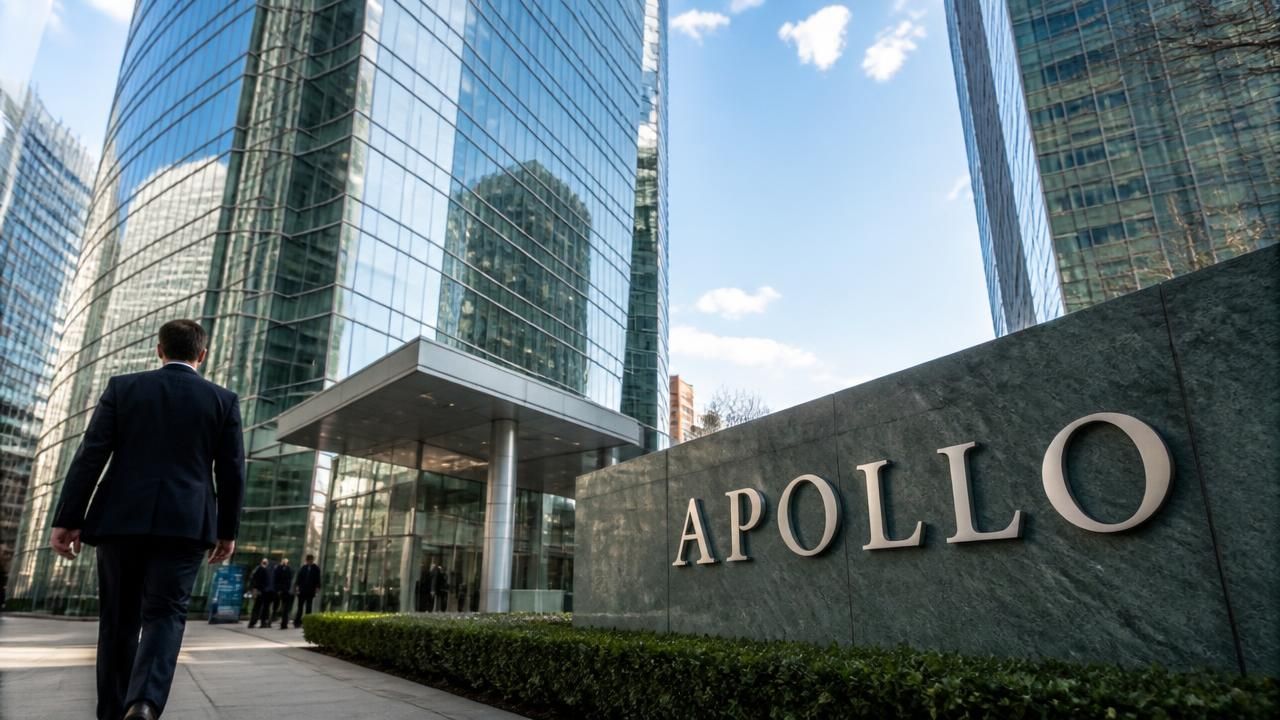
Apollo Global Management’s $1.02 billion investment in a joint venture with Starwood Real Estate Income Trust (SREIT) marks one of the largest single capital injections into a distressed commercial property vehicle in recent memory. The deal, reported by Bloomberg, underscores a growing trend among alternative asset managers: deploying massive sums into beaten-down real estate while simultaneously capitalizing on surging demand for data centers and other modern property types.
A Lifeline for SREIT
Starwood Real Estate Income Trust, a publicly registered non-listed REIT sponsored by Starwood Capital, has struggled to provide liquidity to investors as redemption requests mounted amid high interest rates and weak commercial property valuations. Apollo’s investment, structured as a joint venture, gives SREIT a capital infusion to stabilize its balance sheet and potentially fund new acquisitions. The move is a classic distressed-investing play, says industry observers: buy into a well-established platform at a cyclical low, then benefit from the eventual recovery.
For Apollo, the reasoning is twofold. First, it gains exposure to a diversified portfolio of commercial real estate—including multifamily, industrial, and office properties—at attractive prices. Second, the joint venture structure allows Apollo to leverage Starwood’s management expertise while keeping its own operational overhead low. This is not Apollo’s first foray into property; the firm has been aggressively expanding its real estate credit and equity businesses over the past decade.
“The commercial real estate market is at an inflection point, and the strongest capitalized investors are moving in,” said a market strategist familiar with the deal. “Apollo’s billion-dollar bet is a signal that the bottom may be near for certain asset classes.”
Data Centers: The M&A Darling of 2024
While Apollo’s investment targets traditional property types, the broader alternative asset space is increasingly dominated by data centers. According to datacenterdynamics.com, 2024 was a record-breaking year for data center mergers and acquisitions. Private equity firms, infrastructure funds, and even pension funds have piled into digital infrastructure, attracted by stable, inflation-linked cash flows and the exponential growth of cloud computing and artificial intelligence.
The data center boom has created a stark divergence within commercial real estate. While office and retail valuations have slumped, data center assets are trading at premium multiples. This has prompted traditional real estate investors to rebrand themselves as “digital infrastructure” players. Several large REITs have pivoted their portfolios toward data centers, and standalone data center operators have become acquisition targets. Apollo itself has invested in data centers through its infrastructure arm, but its Starwood JV is primarily focused on conventional real estate—suggesting that the firm is hedging its bets across the spectrum.
Hotels Rebound with Record Deals
Another bright spot in alternative real estate is hospitality. Hotel investment today reported that $3.3 billion in US hotel deals closed in the second quarter of 2025 alone, a sign of renewed confidence in travel and tourism. Investors are particularly attracted to limited-service and extended-stay properties, which have shown resilience even during economic downturns.
Across the Atlantic, hotel acquisition activity is also heating up. The same publication noted that a joint venture led by L+R is emerging as the front-runner to acquire Dalata, one of Ireland’s largest hotel groups. Dalata operates a portfolio of high-quality urban hotels, and a successful bid would be one of the largest hospitality deals in European history. The competition underscores how hotel assets—once seen as too volatile—are now prized for their post-pandemic recovery potential.
Global Investors Diversify Into Alternatives
The appetite for alternative real estate is not limited to US firms. In South Korea, institutional investors have been aggressively expanding their exposure to alternative assets. A recent survey by KED Global identified 42 favorite alternative asset managers among Korean investors, ranging from global real estate specialists to private equity giants. These investors are increasingly allocating capital to overseas data centers, logistics hubs, and hotel portfolios to diversify away from traditional bonds and equities.
Korean investors are particularly attracted to assets with long, index-linked leases, which provide predictable income in a low-yield environment. This has led to intense competition for core-plus and value-add opportunities, pushing some domestic investors to take on higher leverage or partner with global managers like Apollo and Starwood. The survey highlights that brand recognition and operational track record are the most important criteria for Korean investors when selecting partners.
Implications for the Real Estate Market
The confluence of Apollo’s SREIT investment, record data center M&A, hotel deal pipelines, and cross-border capital flows points to a fundamental reshaping of the real estate investment landscape. Rather than a uniform recovery, we are seeing a barbell effect: ultra-modern assets like data centers and select hotels attract premium pricing, while older office and retail properties trade at sharp discounts.
This bifurcation is likely to persist as interest rates remain elevated and refinancing maturities approach. Many owners of legacy assets will need rescue capital, creating opportunities for well-heeled investors like Apollo. Meanwhile, the demand for digital infrastructure is expected to keep growing, fueled by AI workloads and cloud migration. The key for investors is to choose the right segment—and the right partner.
- Apollo’s $1.02B JV with Starwood REIT targets distressed commercial real estate.
- Data center M&A set records in 2024, drawing massive private equity interest.
- US hotel deals reached $3.3B in Q2 2025, with L+R vying for Dalata in Europe.
- South Korean institutions are increasingly allocating to alternative real estate, with 42 top managers shortlisted.
As the market cycles through its current correction, the winners will be those who can see beyond the immediate distress and position themselves for the next expansion. Apollo’s move is a powerful statement that the bottom is near for at least some segments of commercial real estate—and that the future of the asset class lies in a blend of traditional and technology-driven properties.