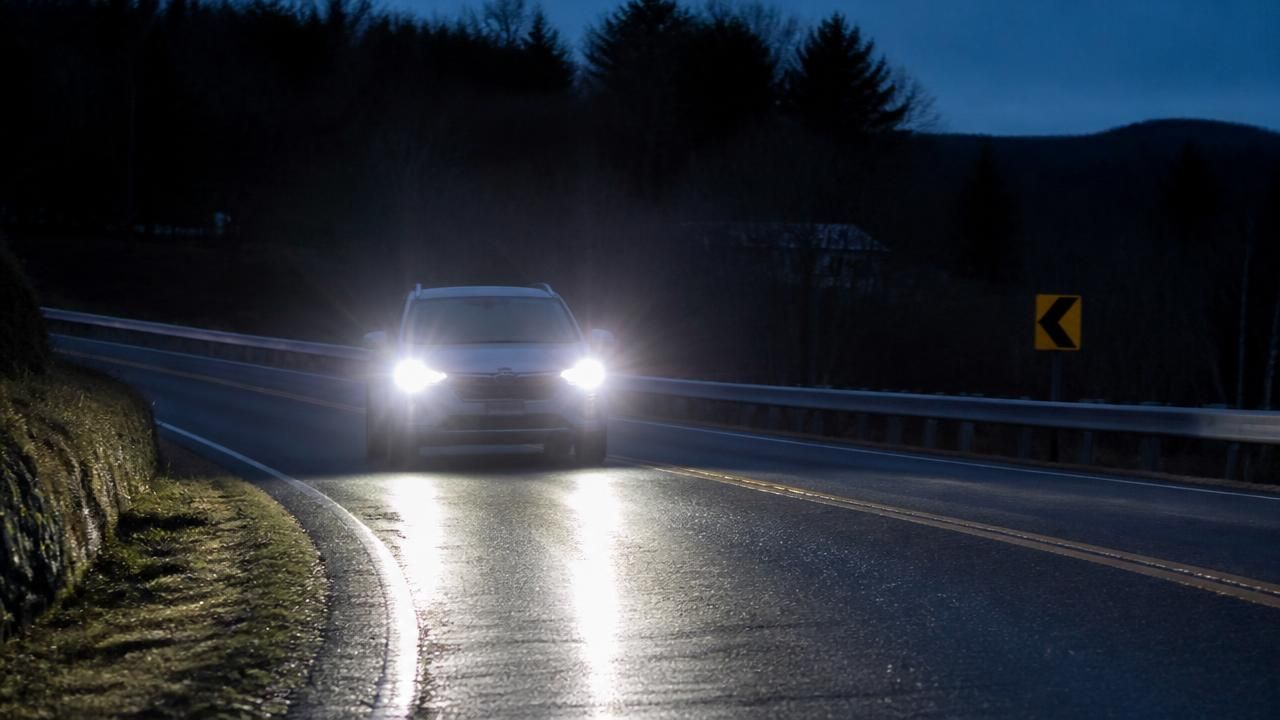
Anyone who has driven at night in recent years knows the feeling: a modern crossover crests a hill in the oncoming lane, and for a split second the cabin floods with cold-white light, leaving temporary spots dancing before your eyes. What was once a rare annoyance has become a defining feature of nighttime driving. From casual commuters to professional truckers, drivers are complaining that car headlights have become dangerously bright—and evidence suggests they are right.
This is not simply a matter of drivers leaving high beams on. The reality is rooted in a technological shift that has transformed automotive lighting from the warm, dim glow of halogen bulbs to the intense, blue-white output of LEDs. As one Ars Technica writer put it, modern automotive lighting has entered its own “lumen arms race.” The result is a growing safety concern that has caught the attention of regulators, eye surgeons, and lawmakers on both sides of the Atlantic.
The Growing Glare Problem
Complaints about headlight glare have risen sharply in recent years. In the UK, the BBC reports that complaints about dazzling headlights have increased significantly, prompting a government review as part of the country’s Road Safety Strategy. Meanwhile, in the United States, a AAA survey found that blinding headlight glare from oncoming traffic is increasingly frustrating drivers, with many saying the problem is getting worse. The issue has become so pressing that Representative Marie Gluesenkamp Perez of Washington has urged Congress to set new federal headlight standards, calling the current situation “a plague of headlight brightness.”
“It’s only a matter of time before dazzling car LED headlights cause fatal crashes,” warned a top eye surgeon in an interview with This is Money, highlighting the potential consequences of unregulated brightness.
The problem is not limited to the US and UK. In Australia, drivers are asking whether LED headlights are even legal, with one drive.com.au headline declaring, “There needs to be restrictions.” Even in India, a Mongabay piece explored “the dark side of bright lights,” noting the global reach of the issue.
Why Headlights Got Brighter
The shift from halogen to LED headlights is the primary driver of increased brightness. Halogen bulbs, which have been standard for decades, produce a warm, yellowish light and are relatively dim. LEDs, by contrast, emit a much whiter, more intense light that more closely resembles daylight. This improves visibility for the driver but at a cost: the same brightness that illuminates the road also dazzles oncoming traffic.
Several factors compound the problem. The growing popularity of SUVs and pickup trucks means that headlights sit higher and aim more directly into the eyes of drivers in lower vehicles. Additionally, modern headlights are often poorly aimed—either due to improper factory settings or because drivers don’t realize they need adjustment. As Vox explains, even small misalignments can turn a properly bright light into a blinding one. And while automatic high-beam systems are designed to dim when they detect oncoming cars, they sometimes fail or are overridden by aggressive settings.
Some experts argue that this is partly an American problem. A WTTW report notes that US regulations currently allow for significantly brighter headlights than those permitted in Europe, where stricter standards and mandatory auto-leveling systems help reduce glare. “It’s a regulatory mismatch,” said one lighting engineer. “In Europe, they prioritize not dazzling other drivers. In the US, we prioritize maximum output for the driver.”
Safety Concerns and Expert Warnings
The human eye is not designed for such intense, concentrated light at night, particularly for older drivers. As AARP points out, older adults are especially vulnerable to glare, with the lens of the eye becoming less transparent with age, causing light to scatter and create halos.
- Vision impairment: Glare can reduce contrast sensitivity, making it harder to see pedestrians, animals, or road edges after an oncoming car passes.
- Disability glare: Bright light scatters inside the eye, temporarily reducing visual acuity and increasing the risk of a crash.
- Recovery time: After a vehicle passes, it can take several seconds for the eyes to readjust—seconds that matter on a busy highway.
An eye surgeon told This is Money that the trend is “inevitable” to cause fatalities if left unchecked, while the BBC notes that older drivers are disproportionately affected, sometimes avoiding nighttime driving altogether. “I used to love driving at night, now I dread it,” one reader told Yahoo News, echoing the sentiment of many.
Regulatory Action and Industry Response
In response to mounting complaints, the UK government has announced a formal review of headlight glare as part of its Road Safety Strategy. “We know that headlight glare is a real concern for many road users,” a Department for Transport spokesperson said. “This review will look at the impact of modern headlights and whether further action is needed.”
Across the Atlantic, Representative Gluesenkamp Perez has written to the National Highway Traffic Safety Administration (NHTSA) urging it to finalize a rule on adaptive driving beam headlights—a technology that can automatically adjust beam patterns to reduce glare while maximizing visibility. The technology is already legal in Europe but has been held up in the US by outdated regulations.
“The federal government has not updated headlight standards since the 1960s,” Perez said in a statement. “Drivers are being blinded because manufacturers are playing by rules that were written before LED technology even existed.”
Automakers, for their part, argue that LED headlights are safer for the driver and that glare complaints are often due to misalignment or misuse. They point to new developments like matrix LED systems that can shield individual zones of light to avoid dazzling other cars. But these systems remain rare in the US market and are not required by law.
A Related Incident: White House UFC Lights
The issue of blinding lights extends beyond headlights. In a bizarre twist, pilots flying into Reagan National Airport in Washington, D.C., reported being nearly blinded by the bright lights of a UFC fight hosted at the White House. According to MeidasNews, the event’s temporary lighting rigs created a glare that interfered with landing approaches. The incident underscores how unregulated artificial lighting can pose risks in unexpected ways—and how the same principles of glare and visual disruption apply whether the source is a car or a stadium light.
What Can Be Done?
While a quick fix is unlikely, experts recommend several measures to alleviate the problem:
- Check and adjust your headlights: Many vehicles have misaligned headlights. A simple adjustment can reduce glare without sacrificing visibility.
- Use fog lights sparingly: In clear conditions, fog lights can add to glare for other drivers.
- Consider adaptive headlights: When buying a new car, look for models with automatic leveling and adaptive beam technology.
- For older drivers: Keep windshields clean, have eyes checked regularly, and consider anti-reflective coating on glasses.
Ultimately, the debate over headlight brightness is a classic trade-off between individual benefit and collective safety. As a Vox analysis notes, “the technology that helps you see can blind the person approaching you.” Until regulators catch up with technology, drivers on both sides of the road will have to navigate the glare as best they can.