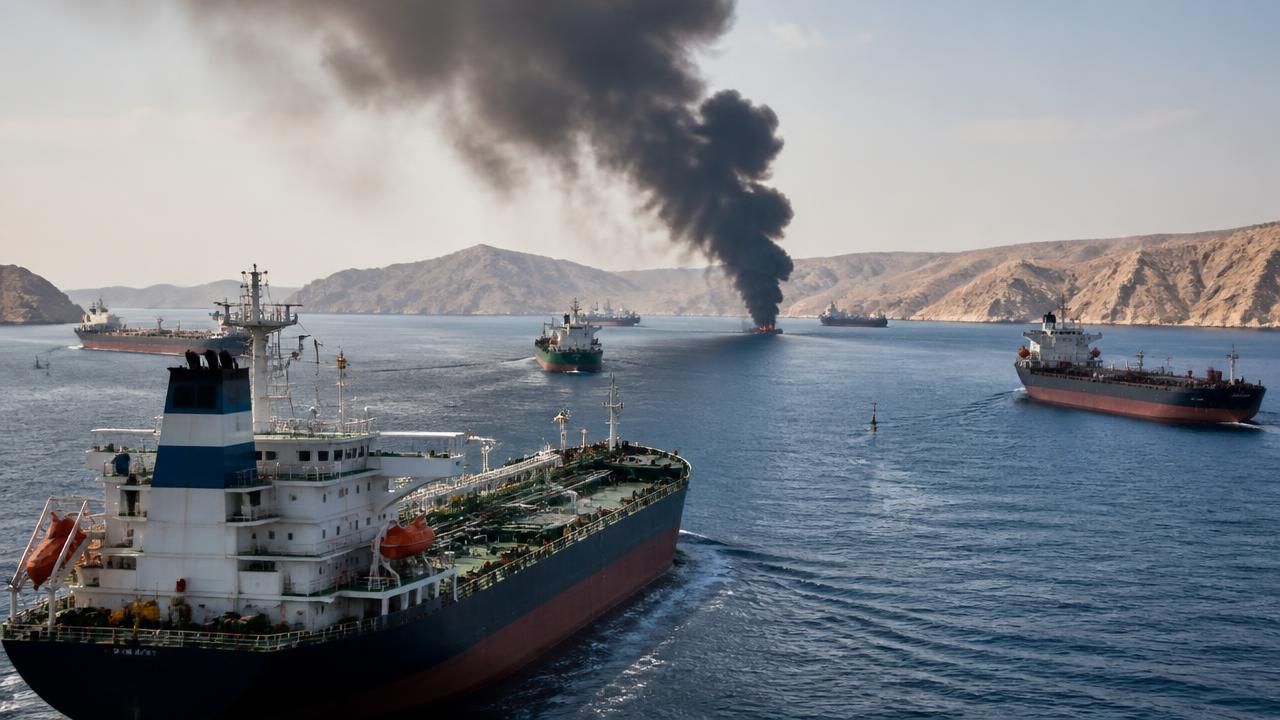
The Strait of Hormuz, the world’s most critical oil chokepoint, has become the epicenter of a brewing global energy catastrophe. With tanker attacks escalating, diplomatic threats flying, and key shipping lanes effectively shut to commercial traffic, the crisis is sending shockwaves through oil markets, international supply chains, and government planning from Washington to Sri Lanka. As of mid-July 2026, the waterway that carries roughly 20% of global petroleum consumption—and nearly a quarter of liquefied natural gas—is no longer a reliable route, and analysts are divided on whether the world is facing a short-term trading shock or a structural transformation of energy geopolitics.
What’s Happening: A Chokepoint Under Fire
The current crisis escalated sharply in spring 2026, when U.S.-Iranian hostilities spilled into the narrow strait. Iranian missiles struck oil tankers in the waterway, killing at least one sailor, according to the United Arab Emirates. In response, the U.S. and its allies imposed stricter naval patrols, while Iran threatened to close the strait entirely. Oil and LNG tankers have gone dark—switching off transponders to avoid detection—and maritime risk firms warn of a “worst-case scenario” as attacks on shipping intensify.
By late June, the International Energy Agency (IEA) issued a stark warning: global energy security is at risk if the strait does not reopen within weeks. The agency’s chief said the “clock is ticking,” underscoring the urgency facing import-dependent economies. The United Nations Conference on Trade and Development (UNCTAD) echoed these fears, highlighting disruptions to global trade and development, while UN News raised alarms about a looming food crisis tied to fertilizer and grain shipping interruptions.
Oil Market Whiplash: Price Spikes and Hidden Gluts
Oil prices initially spiked on every attack and threat, with Brent crude briefly touching $140 a barrel in early July. But the response has been paradoxical. Reuters reports that the oil futures curve now points to a near-term glut as Hormuz flows rise—partly because producers like the UAE have ramped output to record levels (doubling pre-crisis production) and because some tankers have been diverted or are idling at anchor. “The market is pricing in a supply interruption that hasn’t fully materialized in physical terms,” noted Samantha Dart, Co-Head of Global Commodities Research at Goldman Sachs, in a Bloomberg interview. “If the strait reopens, we could see a violent repricing downward; if it stays closed, the structural deficit will dominate.”
That tension between futures and physical barrels is at the heart of analyst disagreement. Axios reports a worst-case scenario of $200 oil if Hormuz remains closed, while Cathie Wood of ARK Invest has warned that prices could plunge 50% as demand destruction accelerates. TheStreet highlighted her contrarian view, while InvestorPlace suggested buying certain energy stocks on the volatility. Paul Krugman, writing on his Substack, argued that “the physical reality of tight supply will soon overtake financial speculation,” predicting that the crisis is “about to get physical.” Yet DiscoveryAlert pointed out that physical oil premiums have actually collapsed, suggesting that, for now, supply is getting through.
Beyond Oil: Food, Fertilizer, and Flights
The crisis extends far beyond crude. The Strait of Hormuz is also a vital corridor for LNG, petrochemicals, and dry-bulk commodities such as fertilizers. France24 and the World Economic Forum warn that the disruption is already affecting global food security, as fertilizer shipments from the Gulf are delayed or rerouted. The UN’s Food and Agriculture Organization has expressed concern about price spikes in wheat and rice in import-dependent regions. The next food crisis is “already in motion,” according to WEF analysts.
Consumer impacts are beginning to appear. Sri Lanka became the first country to adopt a four-day workweek to conserve fuel, as reported by The Olive Press. In the Philippines, fuel prices are expected to drop by up to 9.50 pesos per liter next week, reflecting the conflicting dynamics of global supply and local subsidies. Meanwhile, airlines are facing higher jet fuel costs, and some carriers have begun reducing frequencies on long-haul routes. The Guardian detailed how governments are urging citizens to drive slower, work from home, and even ditch ties to reduce air-conditioning loads.
Historical Echoes: 1973 and Lessons Not Learned
Comparisons to the 1973 oil embargo are everywhere. BBC and The Friday Times both note that the current crisis may dwarf that earlier shock, not least because the world’s strategic reserves are at multi-decade lows. US oil reserves have fallen to levels not seen since the Reagan administration, according to 247WallSt. “The 1973 crisis taught us to diversify, but we’ve allowed ourselves to become dependent on a single chokepoint again,” said an energy historian quoted by Marketplace. The 1970s oil crisis led to economic stagflation and permanent changes in energy policy; today, experts fear a similar structural break if the strait stays closed.
“The next Strait of Hormuz crisis could be even worse than the last ones, because the global spare capacity buffer has eroded,” warned a Chatham House analyst. “We are one miscalculation away from a systemic shock.”
Geopolitical Realignment and Bypass Efforts
The crisis has accelerated efforts to bypass the strait altogether. Gulf producers are dusting off pipeline projects: Saudi Arabia is reportedly offering oil buyers an alternate Red Sea route, and Chevron is weighing a new Iraqi pipeline to avoid Hormuz. UAE oil output at an all-time high is partly being exported via the Fujairah pipeline, which bypasses the strait. China, too, is expanding its land-based import routes through Pakistan and Myanmar, as DW noted. But these alternatives have limits. Kazakhstan, a major pipeline exporter, is “not winning” from the crisis because its capacity is already maxed out, according to The Astana Times.
President Trump, meanwhile, has escalated rhetoric, threatening to impose tolls on any ship traversing the strait—an idea that Bruegel researchers dismiss as unrealistic but which underscores the administration’s frustration. Trump has told allies to “go get your own oil,” reflecting a sharp divide between Washington and its traditional partners. Gulf states, according to Reuters, are pressing the US to “neutralize Iran for good,” a demand that risks widening the conflict.
Outlook: Expert Disagreement Shapes Policy
Where does oil go from here? Goldman Sachs warns that a supply glut could follow any resolution, while the IEA insists the immediate danger is undersupply. Morningstar offers three scenarios ranging from a quick reopening to a prolonged closure that pushes prices to $150–$200. Forbes argues that the market has “canceled” the Hormuz risk before a ceasefire is even secured, suggesting complacency. Krugman counters that financial traders are underestimating the physical disruption.
What is clear is that the global energy economy has entered a period of extreme volatility. The Strait of Hormuz crisis is not just a supply story; it is a demand story, a geopolitical story, and a test of whether international cooperation can prevent a self-inflicted economic wound. As UNCTAD warned, the cost to global trade could reach into the trillions if the strait remains closed for months. The 1973 embargo eventually ended, but its consequences reshaped the world for decades. The same could happen now—and the clock is indeed ticking.