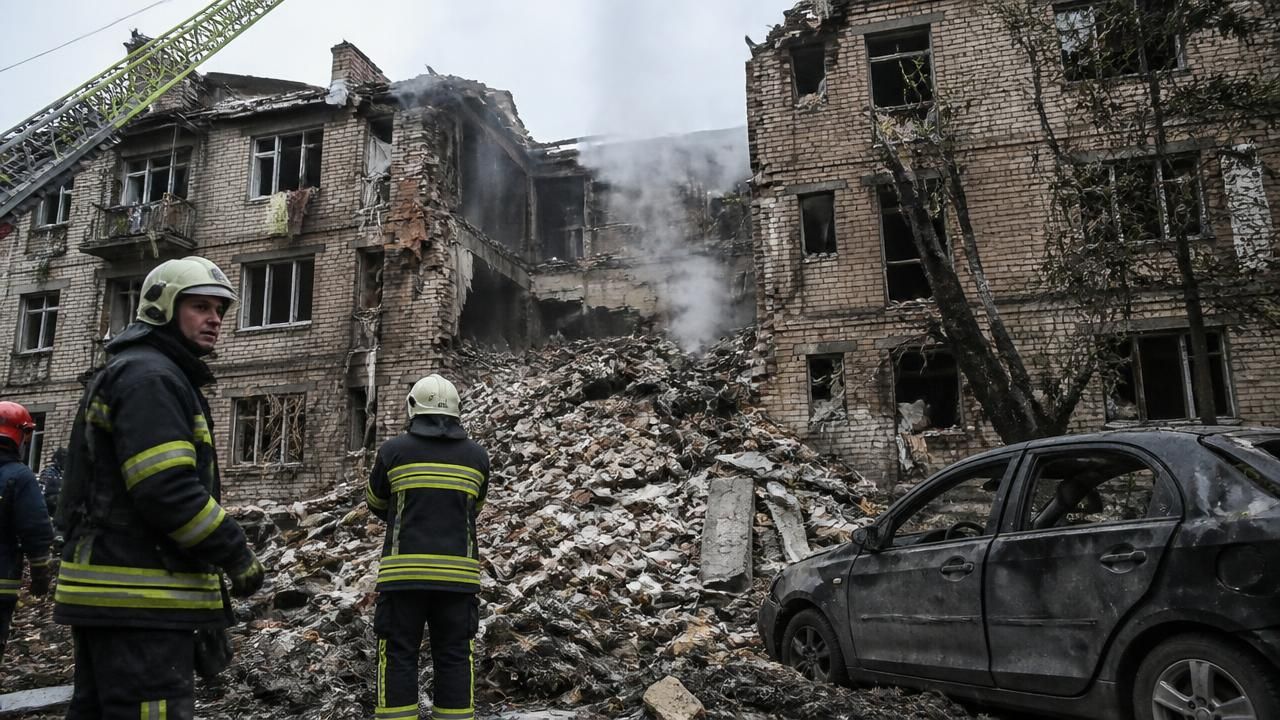
A devastating overnight Russian barrage of ballistic missiles and drones tore into five districts of Kyiv before dawn Saturday, killing at least nine people and wounding dozens more. The attack, which also sparked a fire at a historic monastery and damaged the Lithuanian embassy, came as President Donald Trump appeared to walk back a promised boost to Ukraine's missile defense systems, leaving Kyiv more vulnerable to Russian aerial assaults.
The strikes were among the heaviest on the Ukrainian capital in weeks. Ukrainian emergency services reported that rescue operations continued through the morning, with at least nine bodies recovered from the rubble of residential buildings. The Lithuanian embassy confirmed that its chancery building had been damaged in the attack, though no embassy staff were reported injured, according to Yahoo News.
Ukrainian officials said the attack combined ballistic missiles launched from Russian territory with waves of Iranian-designed Shahed drones. Air defense systems intercepted dozens of incoming projectiles, but several penetrated, causing widespread destruction. The Kyiv City Military Administration said five districts were hit, including Shevchenkivskyi, Solomianskyi, and Dniprovskyi.
Historic Monastery Set Ablaze
Among the structures damaged was the historic Kyiv Pechersk Lavra monastery, a UNESCO World Heritage site. The Moscow Times reported that the barrage set parts of the monastery ablaze, though the main cathedral and iconic bell tower were spared. Emergency crews extinguished the flames before they could spread further. The monastery is one of the most important Orthodox Christian sites in Eastern Europe and has deep symbolic significance for both Ukrainians and Russians.
The attack on the monastery drew immediate condemnation from Ukrainian officials, who accused Russian forces of deliberately targeting cultural heritage. Satellite imagery and ground footage verified by news organizations showed blackened walls and scorched rooftops on several auxiliary buildings.
NATO Scrambles After Debris Falls in Poland
The cross-border fallout of the assault extended beyond Ukraine. NBC News reported that NATO scrambled fighter jets after a Russian missile or debris fell on Polish territory near the border with Ukraine. Polish authorities confirmed that an object crashed in the Lublin Voivodeship, but no injuries were reported. NATO officials said the alliance was monitoring the situation and had briefly increased air patrols. This incident echoed missile debris incidents in Poland in November 2022 and March 2023, which tested NATO's collective-defense commitments.
Poland, a NATO member and staunch ally of Ukraine, has experienced numerous violations of its airspace by Russian missiles and drones in recent months. Polish military officials said the object that landed was likely a downed drone or missile fragment rather than an intact warhead. Nonetheless, NATO reportedly scrambled combat aircraft to track subsequent Russian strikes near the alliance's eastern flank.
Trump Backs Off Air-Defense Pledge
Compounding Ukraine's grief was the sudden reversal by President Trump, who earlier this week had promised a major expansion of U.S. missile-defense support for Kyiv. According to NPR and The New York Times, Trump had said the United States would provide additional Patriot batteries and interceptor missiles to help protect Ukrainian cities from Russian ballistic missiles. But on Saturday, after the attack, White House officials clarified that the pledge was "aspirational" and subject to ongoing budget negotiations. Ukraine's leadership expressed deep disappointment.
"We need air defense systems now, not promises," said Ukrainian Foreign Minister Andrii Sybiha, as cited by Kurdistan24. "Every hour of delay costs Ukrainian lives." Ukrainian President Volodymyr Zelenskyy, in his nightly address, reiterated that "it is not enough to condemn terror; you must stop it," calling on allies to lift restrictions on long-range strikes and accelerate weapons deliveries.
The timing of Trump's retreat was particularly painful for Kyiv. The overnight barrage was one of the most lethal since the summer, and Ukrainian air defenses intercepted only about half of the incoming ballistic missiles, according to preliminary military estimates. Experts say that without additional Patriot systems, Ukraine cannot effectively protect its cities from Russian hypersonic and ballistic missiles.
Ukrainian Drones Strike Tula Region
Ukraine did not limit its response to diplomacy. The Moscow Times reported that Ukrainian drone strikes on the Tula region in western Russia killed three people and damaged a fuel depot. The strikes occurred just hours after the Russian attack on Kyiv, suggesting a quick retaliatory operation by Ukrainian forces. Tula is home to the KBP Instrument Design Bureau, a Russian defense contractor producing artillery systems and anti-aircraft missiles.
Ukrainian officials rarely confirm strikes inside Russia, but military analysts say Ukraine has increasingly used long-range drones to target military infrastructure far beyond its borders. The Tula strike demonstrates Kyiv's ability to project force, even as it struggles with defensive capabilities.
Framing Differences Across Media
International coverage of the overnight events highlighted different angles. Western outlets emphasized the humanitarian toll and Trump's policy reversal, framing the attack as a consequence of inadequate military aid. Russian state media, by contrast, focused on Ukrainian drone strikes and characterized Moscow's barrage as "retaliatory" for previous Ukrainian attacks. Independent outlets like The Moscow Times sought to contextualize the escalation within the broader war, noting that both sides are pushing to gain leverage before possible cease-fire talks.
The New York Times underscored the political implications in Washington, noting that Trump's backpedaling could strain relations with NATO allies just as they debate Ukraine funding. NPR highlighted the strain on Ukrainian air defenses, quoting unnamed Pentagon officials who admitted that the U.S. cannot continue supplying interceptors at current rates without new congressional appropriations. Meanwhile, Pakistan Today and other international wire services focused on the Poland incident, tying it to concerns about NATO's Article 5 guarantee.
Civilian Toll and Resilience
The human cost of the attack was evident in the streets of Kyiv. Emergency workers sifted through debris as residents searched for missing loved ones. Medical centers reported at least 40 wounded, including three children. The death toll could rise, officials warned.
Despite the horror, Kyiv residents demonstrated their now-familiar resilience. "We heard the explosions and ran to the basement," one resident told reporters on the ground. "When we came out, our neighbor's house was gone. But we will stay. Where else should we go?"
The attack follows a pattern of Russian winter campaigns targeting energy infrastructure and civilian areas. After several months of relative calm, this escalation suggests Moscow is testing Ukraine's air-defense resources and the resolve of its Western backers. As Ukraine braces for further strikes, the urgent question remains whether allied commitments will translate into tangible air-defense capability before the next wave arrives.
Nine dead in Kyiv, a historic monastery in flames, embassy damage, and a missile fragment in Poland—this single night encapsulated the brutal realities of a war that continues to spill across borders. The world watches to see how Washington's shifting stance will alter the course of the conflict.