Bloomberg's weekly "Pointed" quiz invites risk-takers to test their news knowledge — and this week's markets served up plenty of material. The convergence of AI dealmaking, credit concerns, and geopolitical flashpoints kept traders on edge, from Wall Street trading floors to oil hubs in the Middle East. Here is how the storylines unfolded across Bloomberg's coverage.
The AI Money Machine
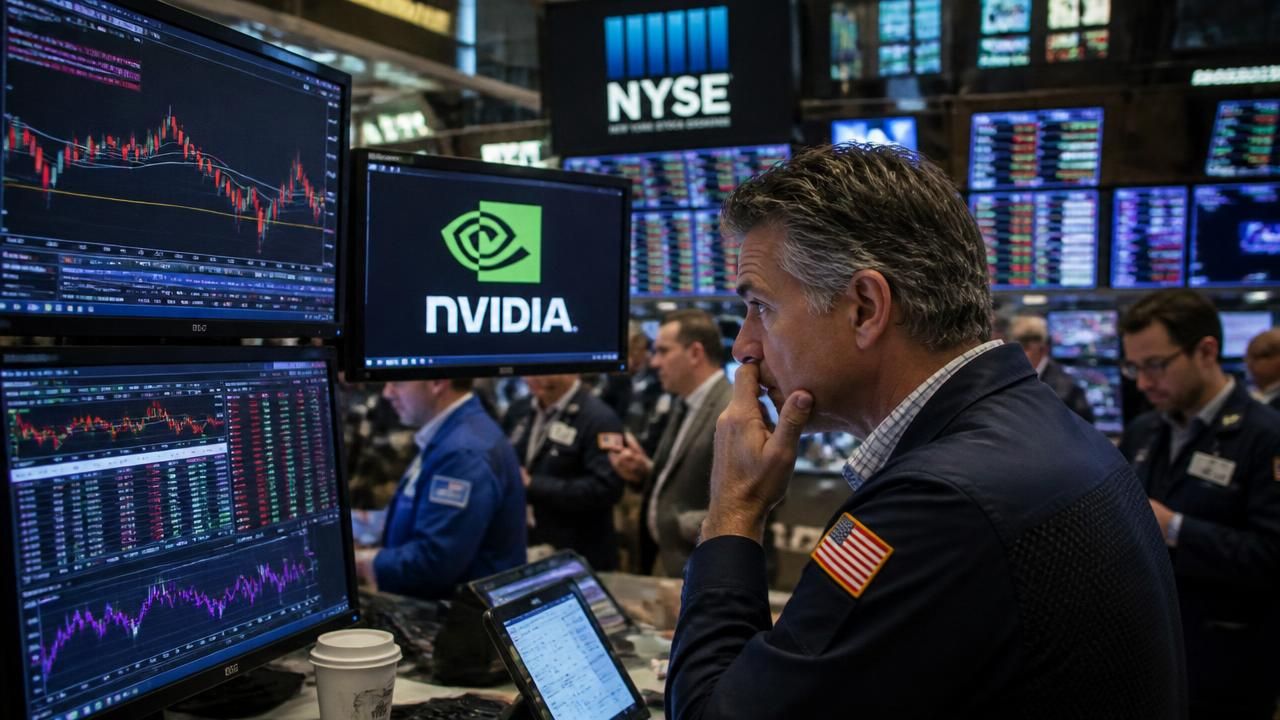
Artificial intelligence continued to dominate capital markets. Bloomberg reported that Nvidia (NVDA) is in talks to back OpenAI's $500 billion data center lease, a potential mega-deal that would tie the chipmaker even more tightly to the AI boom. Meanwhile, cloud-computing provider CoreWeave delivered earnings that its CEO called "transformational," signaling that demand for AI infrastructure remains explosive.
But not everyone is convinced the rally is sustainable. China's Zhipu AI received its first "short" call from a major research shop after a staggering 1,100% surge, and venture capitalist Vinod Khosla warned of an AI "greed cycle." At the same time, the UAE and Saudi Arabia are racing to upskill their workforces for an AI-driven economy, per Bloomberg's Charife segment.
- Nvidia in talks to back OpenAI's $500B data center lease.
- CoreWeave's CEO calls earnings "transformational."
- Zhipu AI gets lone "short" call after 1,100% rally.
- Khosla warns of AI "greed cycle."
Credit and Rates: Warnings and Resilience
On the credit front, JPMorgan's Jamie Dimon warned of "cracks" after the Tricolor auto lender bust, while Barclays' Toublan argued there is "no immediate implosion" in credit. Morgan Stanley's Lisa Shalett cautioned that semiconductor stocks are overbought, and veteran strategist Jim Paulsen said "this is still a very vulnerable marketplace." Citadel's Ken Griffin weighed in on the recent market selloff and remote work dynamics.
"No immediate implosion in credit," said Barclays' Toublan, even as Dimon flagged emerging cracks in consumer lending.
Central bank watchers zeroed in on inflation. Bloomberg's MLIV team noted that "this market is very scared about US CPI," while Fed's Austan Goolsbee discussed inflation risk, rates, and the balance sheet. Dallas Fed's Lorie Logan said she favors rule changes to shrink the Fed's balance sheet further.
Oil and Geopolitics
The Middle East remained a key risk. Houthi rebels said they targeted tankers in the Red Sea, while the US and Iran agreed to halt attacks ahead of talks — though a former US ambassador suggested Trump may end the ceasefire soon. Oil stockpiles are nearing a "danger zone," according to one Bloomberg headline, but analysts were split: some see risk of a bigger decline, while others like Tchilinguirian remain constructive on higher prices. Continental warned that the Middle East conflict could hit profit.
Policy and Political Economy
Politics intersected with markets worldwide. India's student unrest is testing Prime Minister Modi; Venezuela's Maduro is in US custody; Australia is tackling property tax breaks in its budget; the US Senate blocked immigration plans; Trump is considering no taxes for first responders; London Mayor Sadiq Khan reflected on 10 years of wins and losses. A former NATO ambassador stressed that US-Europe relations must be healed, and Italy's SACE commented on EU involvement in the Russia-Ukraine crisis.
Corporate and Earnings Moves
Corporate headlines were equally busy. Goldman Sachs broke its own stock-trading revenue record again, Intel is betting big on CPU demand, and Novo Nordisk raised its forecast as its Wegovy pill fueled sales. Apple is turning to a vapor chamber to cool the iPad Pro, and EQT called Japan the single most attractive buyout market. Mastercard's Ling Hai discussed international expansion, Kurt Geiger's CEO talked US expansion, and Jay Z toasted a new stake in Ace of Spades champagne. Vue's boss declared "cinema is back."
Other Highlights
SpaceX is expected to make its IPO filing public today; CME launched single-stock futures; Anduril began making uncrewed fighters; Ukraine's drone warfare is redefining battlefield dynamics; Autodesk introduced its new virtual assistant AVA; Al Gore discussed his political journey and climate economics; OSL Group eyes a global stablecoin payments platform; Evercore and Morgan Stanley dealmakers talked AI deals; and IAG's CEO addressed consumer markets in Asia. Bloomberg also asked who should pay for graduate school, revealed how Nouriel Roubini manages his own money, and explored whether India's stock market is a bubble about to burst.
The week's coverage underscores a market that is simultaneously buoyant and brittle. As Bloomberg's "Pointed" quiz reminds us, confidence can be as important as knowledge. For now, investors are betting that AI and resilient earnings can withstand credit stress and geopolitical shocks — but the margin for error is thin.