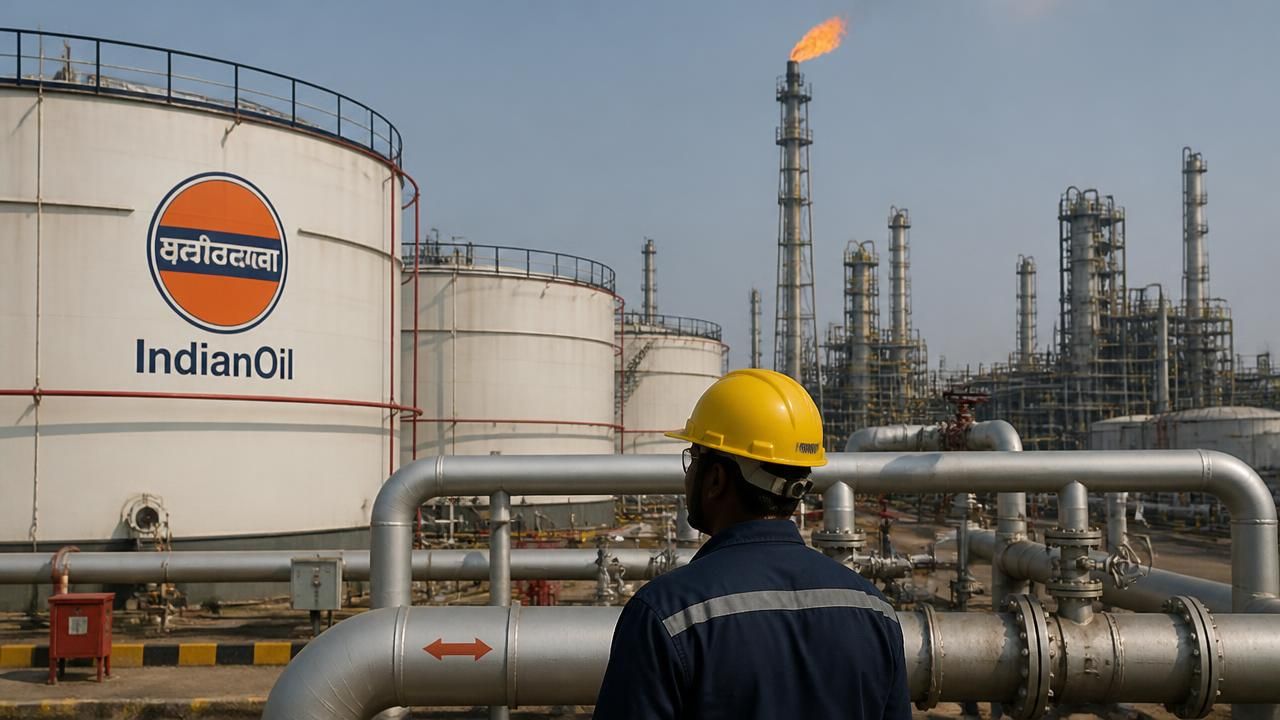
Indian Oil Corp. — the country’s largest fuel retailer — bought a record share of its crude oil from the spot market in the April-June quarter, a direct consequence of the US-Iran conflict that upended supplies from the Middle East. The shift underscores how geopolitical turmoil is forcing even the region’s biggest buyers to abandon long-established procurement strategies.
The announcement, first reported by Bloomberg Markets, comes as India’s state-owned refiners scramble to secure cargoes after attacks on tankers near the Strait of Hormuz and the tightening of US sanctions on Iranian oil exports choked off traditional supply routes. Indian Oil’s move toward spot purchases — where cargoes are bought for immediate delivery rather than under long-term contracts — reflects a broader urgency across India’s refining sector to diversify away from a region that has grown increasingly volatile.
Middle East Supply Chain Under Siege
Iran’s April attacks on UAE tankers and the subsequent US military buildup in the Persian Gulf have sent shockwaves through global energy markets. Spot Mideast crude prices strengthened sharply in the aftermath, according to Reuters, as traders priced in the risk of further disruptions. For India, which depends on the Middle East for nearly 60% of its crude imports, the danger is existential.
“This is a wake-up call for Indian refiners,” said a senior industry analyst familiar with the matter. “The assumption that Middle Eastern supplies are always available at short notice has been broken. Spot buying gives flexibility, but it comes with price risks.”
“The shift shows how geopolitical turmoil is forcing even the region’s biggest buyers to abandon long-established procurement strategies.” — Bloomberg Markets
Indian Oil Corp. has not disclosed the exact percentage of spot purchases in the quarter, but sources familiar with the matter describe it as a “record share” for the company. This marks a dramatic departure from its usual practice of relying on term contracts with national oil companies from Saudi Arabia, Iraq, and the UAE.
India’s Diversification Drive
The urgency extends beyond a single quarter. MSN reports that India is now planning to cut its structural reliance on Middle Eastern oil and “tap the spot market” as a permanent feature of its procurement architecture. The strategy involves ramping up imports from the Americas, West Africa, and the Asia-Pacific region, while also increasing the use of strategic petroleum reserves.
For a nation that has historically prized the stability of long-term contracts, this pivot is significant. It also aligns with India’s diplomatic efforts to balance relationships with both the United States and Iran. The latter has offered India discounted crude in the past, but US sanctions have made such purchases legally untenable. Indian refiners have already slashed Iranian imports to zero, replacing them with spot cargoes from Iraq, Saudi Arabia, and the US.
Market and Currency Fallout
The shift is not without collateral damage. The Indian rupee fell 28 paise to close at 96.53 against the US dollar, its weakest level in recent months, as traders bet that India’s crude import bill would soar amid higher spot premiums and a stronger dollar. A weaker rupee further inflates the cost of imported crude, squeezing India’s current account deficit and adding to domestic fuel price pressure.
Meanwhile, spot Mideast crude prices have not just strengthened — they have become more volatile. Reuters reported that the attacks on UAE tankers led to a sharp jump in Dubai crude benchmarks, with the spot premium over term prices widening to its highest level in years. Indian refiners, by moving to the spot market, are effectively accepting this volatility in exchange for flexibility.
Broader Implications for Global Energy Flows
India’s moves are being watched closely by other Asian buyers, including Japan and South Korea, which also depend heavily on Gulf supplies. If the world’s third-largest oil importer shifts a significant share of its purchases to the spot market, it could fundamentally alter pricing dynamics in the region. Term contracts, once seen as the bedrock of energy security, are losing their appeal in an era of US-imposed sanctions, military skirmishes, and tanker seizures.
For Indian consumers, the immediate effects are less visible but real: the country’s refining costs are rising, and fuel prices may need to adjust if the rupee continues to slide. Government officials, however, argue that diversification is a necessary insurance policy.
“We cannot put all our eggs in one basket. The geopolitical situation is fluid, and we must be prepared for every eventuality.” — A senior Indian oil ministry official (paraphrased)
The long-term strategic realignment is already underway. Indian Oil Corp. has issued more tenders for US and West African crude grades than ever before, and private refiners like Reliance Industries have followed suit. The April-June quarter, market analysts note, may be remembered as the moment when Indian oil procurement entered a new, more uncertain era.
What’s Next?
- Indian refiners are likely to increase spot purchases from the Atlantic Basin and Latin America, especially Brazilian and US Gulf Coast grades.
- The government may accelerate plans to fill its strategic petroleum reserve with cheaper non-Middle Eastern crude.
- The rupee’s trajectory will be closely tied to oil prices, with the RBI potentially intervening to smooth volatility.
As the Middle East crisis continues to evolve, India’s shift away from regional dependence is a pragmatic response to a reality many importers are just beginning to confront. The era of cheap, guaranteed crude from the Gulf is not over, but its dominance is being challenged — and the spot market’s sudden allure is the clearest sign yet that the rules of the game have changed.
Reporting for this article drew on Bloomberg, Reuters, and MSN syndicated sources, reflecting a range of perspectives from market analysts, government insiders, and regional energy experts.