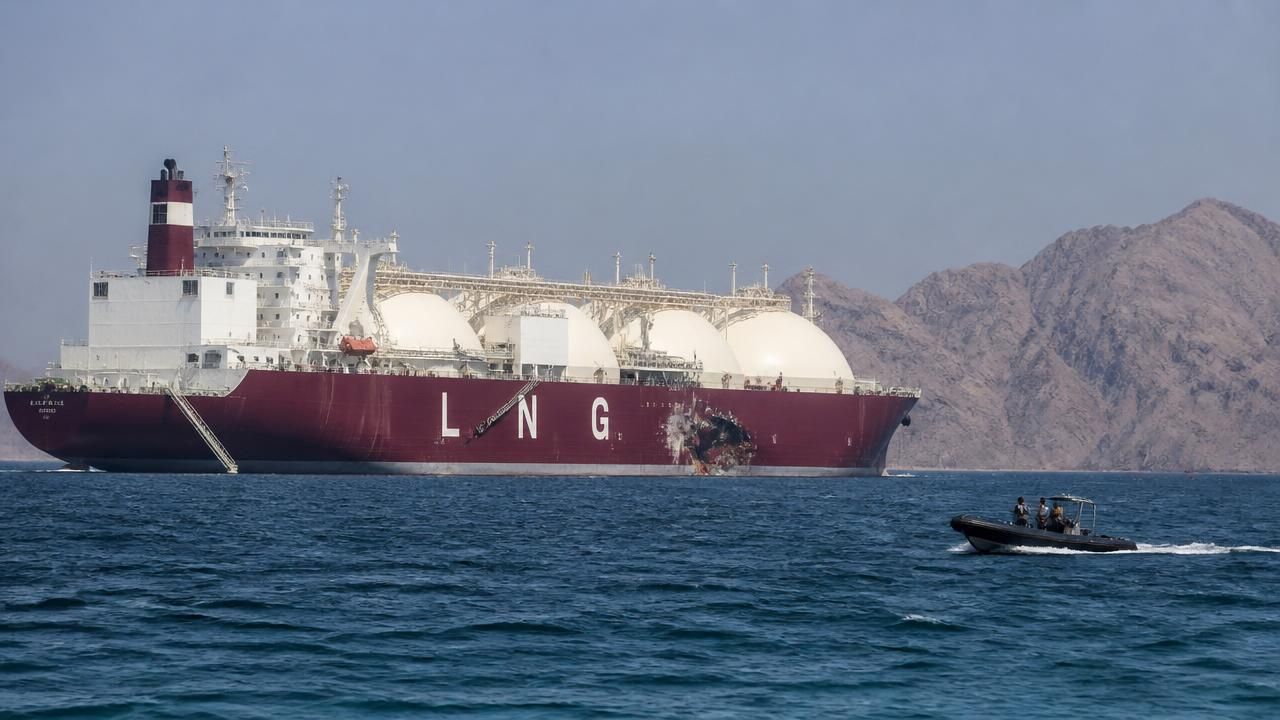
A liquefied natural gas (LNG) tanker carrying a cargo from Qatar was struck by a projectile while transiting the strategic Strait of Hormuz, according to security intelligence firms and ship tracking data. The incident, which triggered a distress call and briefly halted the vessel's journey, has reignited concerns about the safety of one of the world's most critical energy chokepoints and pushed oil and gas prices higher.
The tanker, controlled by QatarEnergy, was hit near the coast of Oman, with reports suggesting a missile or projectile strike. The vessel subsequently exited the strait — the first QatarEnergy LNG carrier to do so in nearly three weeks — but was left damaged and awaiting salvage, according to maritime sources and multiple news outlets. The attack marks a significant escalation in the ongoing shadow conflict between the United States, Iran, and their respective allies, with the Strait of Hormuz emerging as a flashpoint.
The Incident: A Distress Call and a Damaged Vessel
The attack unfolded as the LNG tanker transited the narrow waterway connecting the Persian Gulf with the Gulf of Oman. Vessel tracking data compiled by Bloomberg and security intelligence firms showed the ship was struck by a projectile, later described by some reports as a missile. The Indian Express reported that the crew issued a series of distress calls — “Mayday, mayday…” — moments after the impact, signaling the severity of the situation. Although the crew was reportedly safe, the vessel sustained damage significant enough to require salvage assistance.
The tanker eventually managed to leave the Strait of Hormuz, marking the first time a QatarEnergy-controlled LNG vessel has successfully navigated the passage in nearly three weeks, according to MSN and oedigital.com. However, its condition remained precarious. “Damaged Qatari LNG tanker awaits salvage after strike as Hormuz risks escalate,” read one headline, underscoring the lingering danger even after the ship reached safer waters.
Who Is Behind the Strike?
No group has formally claimed responsibility for the attack, but the strike near Oman aligns with a pattern of maritime assaults in the region. The incident follows the June 17 memorandum of understanding between the United States and Iran, which was meant to ease tensions. Yet, as an MSN analysis noted, “What has happened since the US-Iran MoU on June 17?” suggests that the agreement has done little to halt attacks on shipping, with the situation in the Strait of Hormuz deteriorating.
Iran has historically threatened to close the strait in response to perceived threats, while the U.S. has deployed naval forces to protect commercial traffic. The targeting of a Qatari LNG carrier is particularly notable, as Qatar is a close ally of the United States and a major LNG supplier. The strike could be seen as an attempt to pressure Western economies dependent on Qatari energy exports, though analysts caution against jumping to conclusions without clear attribution.
Market Reaction: Oil and Gas Prices Tick Up
The attack immediately reverberated through energy markets. According to ProtoThema English, oil and gas prices rose slightly following news of the missile strike. While the uptick was modest, it underscored the fragility of supply chains that depend on the Strait of Hormuz, which carries roughly 20% of global oil consumption and a significant share of LNG trade.
OilPrice.com reported that “Oil and LNG Tankers Go Dark Again as Hormuz Crisis Deepens,” referring to the practice of ships switching off their Automatic Identification System (AIS) transponders to avoid detection. This “going dark” maneuver is increasingly common in high-risk areas but complicates tracking and heightens uncertainty for insurers and traders. The rerouting of vessels and the potential for further attacks threaten to raise shipping costs, delay deliveries, and ratchet up insurance premiums for tankers operating in the region.
Broader Context: A Waterway Under Pressure
The Strait of Hormuz has long been a flashpoint in Middle Eastern geopolitics. The 2019 attacks on tankers and the 2020 U.S. drone strike that killed Iranian General Qasem Soleimani brought the region to the brink of crisis. More recently, Iran has been accused of seizing commercial vessels, while the U.S. and its allies have conducted naval exercises to deter aggression. The Qatari LNG tanker incident, however, marks the first confirmed strike on an LNG carrier during the current escalation, raising fears that no energy export is safe.
Qatar is one of the world’s largest LNG exporters, and its shipments to Asia and Europe are vital for energy security. The fact that a Qatari vessel was targeted may compel QatarEnergy to reassess its routing protocols or even suspend transits through Hormuz temporarily. Such a move would have cascading effects on global gas supplies, particularly as Europe seeks to reduce its reliance on Russian gas.
What Experts Are Saying
Maritime security analysts have warned that the incident could lead to a tightening of insurance terms for vessels transiting the strait. The “war risk” premium for tankers may climb, making it more expensive to ship oil and gas through the waterway. Some experts argue that the attacks are deliberately calibrated to disrupt global energy flows without triggering a full-scale conflict, allowing Iran or its proxies to exert pressure without inviting a massive U.S. response.
“The distress call and the damage to the tanker highlight the real-world consequences of geopolitical brinkmanship. This is not a simulation; it’s the new normal for shipping in the Persian Gulf.”
Others note that the U.S.-Iran MoU, while intended to de-escalate, may have emboldened certain actors to test the limits. The absence of a decisive response to previous attacks could encourage further provocations, making the strait even more dangerous.
Implications for Global Energy and Shipping
The strike on the Qatari LNG tanker is a stark reminder of the vulnerabilities inherent in global energy supply chains. Key implications include:
- Higher Shipping Costs: Insurance premiums for tankers using the Strait of Hormuz could rise sharply, with war-risk coverage becoming mandatory for many operators.
- Supply Disruptions: LNG deliveries, especially to Asian buyers like Japan and South Korea, may face delays as carriers reroute or wait for safer passage.
- Price Volatility: Oil and gas prices are likely to remain sensitive to any further incidents, with traders pricing in a sustained risk premium.
- Military Escalation: The U.S. Navy may increase its escort operations, but that alone cannot guarantee safety without a broader diplomatic solution.
LNG Shipping Goes Dark
OilPrice.com’s report that tankers are again turning off their transponders adds an element of opacity that could make it harder for the international community to monitor the situation. While going dark reduces the risk of being targeted, it also complicates search and rescue operations and makes it easier for attacks to go unnoticed until damage is reported — as appears to have happened in this case.
Outlook: A Precarious Path Forward
The damaged Qatari LNG tanker’s successful exit from the Strait of Hormuz is a relief, but it is not a resolution. The vessel still requires salvage, and the broader security environment remains highly volatile. With the U.S.-Iran MoU showing little tangible progress, and with no clear culpability established for the strike, the risk of further incidents looms large.
For consumers, the immediate effect on gasoline and heating bills may be modest, as markets have absorbed the news with a slight uptick. But if attacks continue — or intensify — the world could face a more significant energy shock, reminiscent of the oil crises of the 1970s. The Strait of Hormuz is a lifeline for global energy, and this incident underscores just how fragile that lifeline has become.
As one shipping analyst put it, “Every tanker that transits Hormuz is now a potential target. The question is not if another attack will happen, but when.” With the situation still evolving, the world watches, hoping that diplomacy can outpace the sabers rattling in the Gulf.