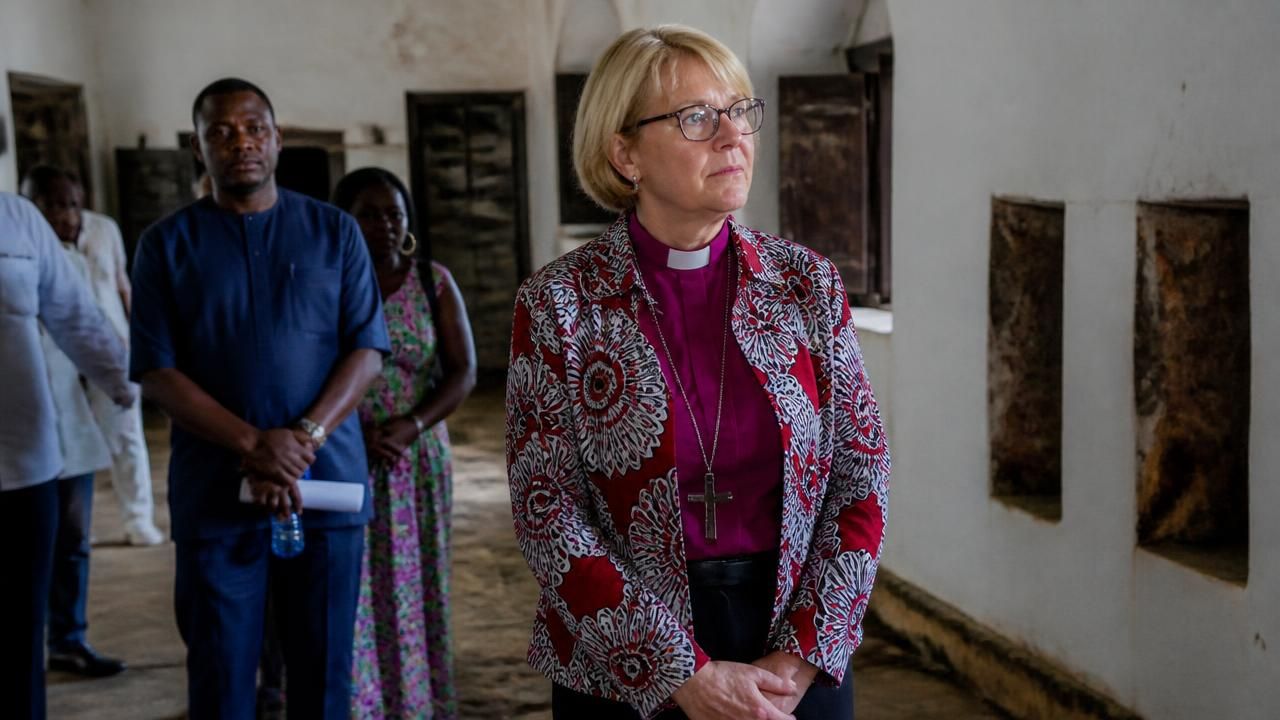
The Archbishop of Canterbury, Sarah Mullally, stood inside the haunting walls of Ghana's Cape Coast Castle on a visit that carried the weight of centuries. There, at one of the most infamous sites of the transatlantic slave trade, she voiced deep "lament" for the Church of England's historic entanglement in chattel slavery and reaffirmed her backing for a controversial £100 million fund aimed at communities affected by enslavement.
A Fortress of Human Tragedy
Cape Coast Castle, built in the 17th century by Swedish traders, later passed through Danish and Dutch hands before being seized by the British in 1664. It served as a major holding pen for thousands of enslaved Africans who were confined in dark, suffocating dungeons before being shipped across the Atlantic into a lifetime of forced labor. Today, the castle is a UNESCO World Heritage Site and a solemn reminder of the brutality that fueled colonial economies.
Mullally's presence on Ghanaian soil was deeply symbolic. The Church of England has acknowledged profiting from the slave trade, and calls for reparative action have intensified in recent years. The £100m fund, first proposed as part of that reckoning, was at the center of the Archbishop's public remarks. She described the initiative as embodying the Christian principle of repentance, insisting that faith demands concrete action, not just words.
Controversy and Defiance
The fund has not been without controversy. Critics have questioned both its size and the Church's priorities, while some newspapers have framed it in headline terms such as "slavery payouts" and "vow to repent." On this trip, Mullally appeared to double down on the commitment, pushing back against the notion that the Church should look away from its past. Her stance underscores a broader institutional shift within the Church of England to confront uncomfortable truths about its legacy.
Antiracism in the Pulpit
The Archbishop's visit aligns with a related initiative unfolding in London, as reported by The Guardian. Anglican clergy are reportedly being encouraged to incorporate antiracism into their sermons, a move designed to carry the Church's reckoning beyond a single moment or fund. By urging congregants to examine racism and the remnants of slavery in modern society, church leaders hope to transform institutional apology into sustained grassroots change.
A Wider Global Reckoning
The events in Ghana and London reflect a broader global movement to revisit colonial and slave-trading histories. Around the world, institutions, governments, and corporations are being pressed to account for their connections to systemic exploitation. The Church of England's actions form part of this larger landscape of reckoning and repair.
In a separate but poignant world story, author Taslima Nasreen made headlines this week by returning to Kolkata, India, after 19 years of exile. Nasreen, a Bangladeshi writer known for her outspoken secularism and criticism of religious extremism, called the return an emotional homecoming. While her journey is distinct from the Church's slavery reparations debate, it echoes themes of displacement, identity, and the struggle for reconciliation that are unfolding globally.
Together, these narratives—from the slave dungeons of West Africa to the pulpit of London and the streets of Kolkata—illustrate how the past continues to shape the present. For the Archbishop, the path forward is clear: acknowledgment, repentance, and a tangible willingness to repair what was broken.