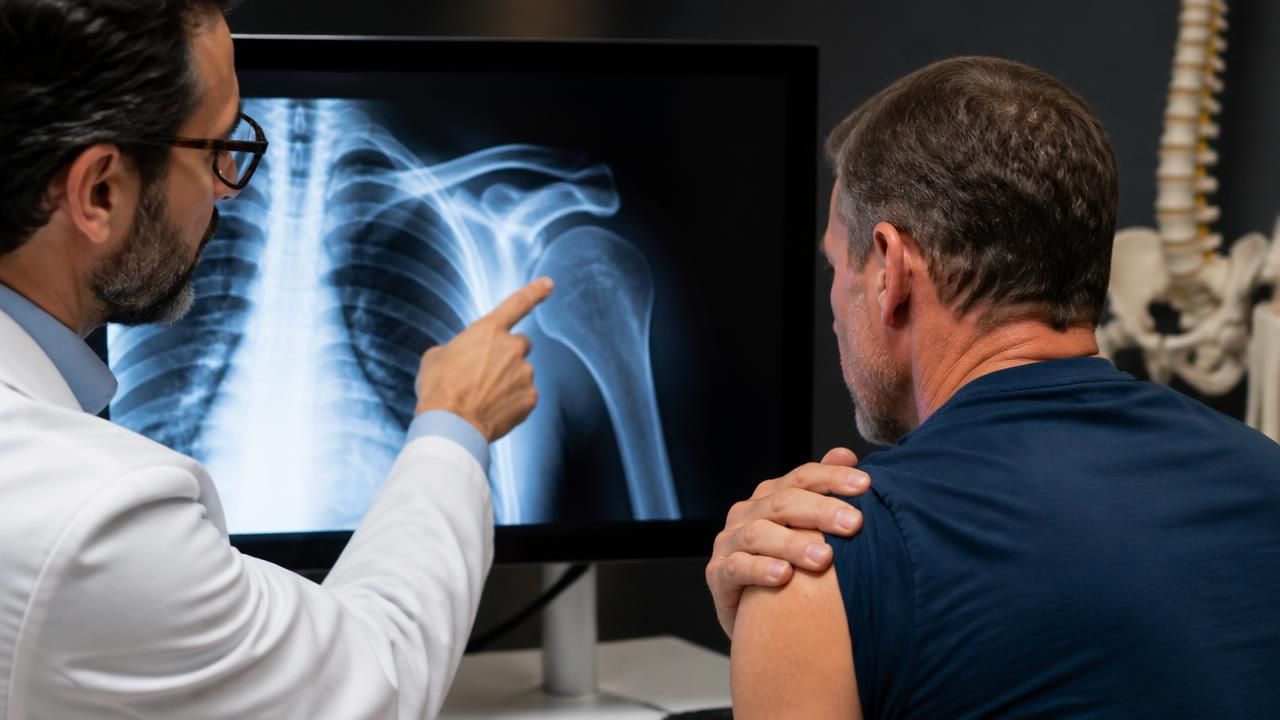
When a 45-year-old construction worker walked into an emergency department with a swollen, painful right shoulder, doctors expected to find a fracture, a dislocation, or perhaps a severe rotator cuff injury. Instead, the X-ray delivered a medical shock: his entire shoulder joint was missing. The ball of the humerus (the upper arm bone) had vanished, and the socket of the shoulder blade was no longer intact. The man's upper arm was floating freely, detached from his body.
Published as a case report in the New England Journal of Medicine, the findings were first reported by Ars Technica and have quickly become a topic of intense discussion among orthopedic specialists and the public. The case is a stark reminder of how dramatically joint destruction can occur—and of the many ways modern medicine can respond.
The Anatomy of a Vanishing Joint
The shoulder is a ball-and-socket joint: the rounded head of the humerus sits in the glenoid socket of the scapula, held in place by muscles and tendons of the rotator cuff. According to the case report, the patient's X-ray showed that the humeral head was completely gone, and MRI revealed that three of the four rotator cuff tendons (supraspinatus, infraspinatus, and subscapularis) had full-thickness tears. In essence, the joint had self-destructed.
“When the images came through, it was what they didn't see that explained the situation: His entire shoulder joint was gone.” — Case description as reported by Ars Technica
While the report does not specify the underlying cause, orthopedic experts point to several possibilities. A severe bacterial infection (septic arthritis) can rapidly destroy joint tissue. A neuropathic (Charcot) joint, often linked to diabetes or nerve damage, can also cause progressive joint degeneration. In some cases, advanced rheumatoid arthritis or long-term corticosteroid use may contribute. The construction worker's profession raises the question of occupational trauma, but any definitive cause remains speculative.
Treatment Pathways: Modern Shoulder Replacement
For a patient with such extensive damage, shoulder replacement surgery is often the only viable option. This procedure, which involves replacing the damaged joint with artificial components, has evolved significantly in recent years. According to features from Sanford Health and the University of Iowa, custom implants and reverse total shoulder replacement can restore function even in the most severe cases. Augusta University's Jagwire highlighted a rarely performed but life-changing surgery for shoulder injuries, emphasizing that patients can return to active lives.
However, surgery is not the only answer. Many patients with less severe joint issues benefit from physical therapy, lifestyle changes, and anti-inflammatory nutrition. The Good Housekeeping Institute recently reviewed more than 30 joint supplements, recommending options that emphasize evidence-based ingredients. Turmeric, for example, has gained attention for its anti-inflammatory properties, as noted in Prevention and Good Housekeeping. AARP offered five practical ways to care for joints after 50, including weight management and low-impact exercise.
Joint Health in the Spotlight: Prevention and Remedies
The case has coincided with a wave of consumer-focused health coverage, suggesting that joint pain is a major public concern. Forbes and AARP both published lists of the best mattresses for shoulder pain, recognizing that sleep quality directly affects joint health. Health.com tested posture correctors, and Hackensack Meridian Health offered tips for neck and shoulder pain from working from home. Even unconventional options like Botox injections for shoulder tension have been explored by GQ.
For those seeking complementary approaches, Medical News Today has tested CBD gummies, creams, and heating pads, while other outlets have weighed in on fish oil, glucosamine, and vitamin D. The sheer volume of advice reflects a population in pain: nearly 70% of adults over age 50 experience joint discomfort at least occasionally, according to a University of Michigan poll cited by Good Housekeeping.
The Dismissal of Pain—and a Call to Listen
One particularly important thread emerged from Harvard Health: the dangerous dismissal of women's pain. The article argues that women's symptoms are often minimized or attributed to emotional causes, leading to delayed diagnoses and worse outcomes. This perspective is relevant to the shoulder case, as chronic joint conditions such as rheumatoid arthritis disproportionately affect women, and symptoms like shoulder pain can be overlooked until structural damage becomes irreversible.
The BBC also shared a patient's story of being left barely able to walk after taking fluoroquinolone antibiotics, a known but rare cause of tendon and joint damage. These narratives underscore the need for both patients and doctors to take persistent pain seriously and investigate thoroughly.
Conclusion: A Call for Vigilance and Innovation
The case of the man whose shoulder joint disappeared is an extreme illustration of what can go wrong with the human body. But it also highlights the resilience of modern medicine: even when a joint is beyond repair, surgeons can rebuild it with cutting-edge implants and techniques. For the rest of us, the lesson is simpler—pay attention to joint pain, seek timely care, and consider the broad range of treatment and prevention strategies recommended by experts. Whether it's a better mattress, a turmeric supplement, or a timely X-ray, the path to healthier joints starts with awareness.