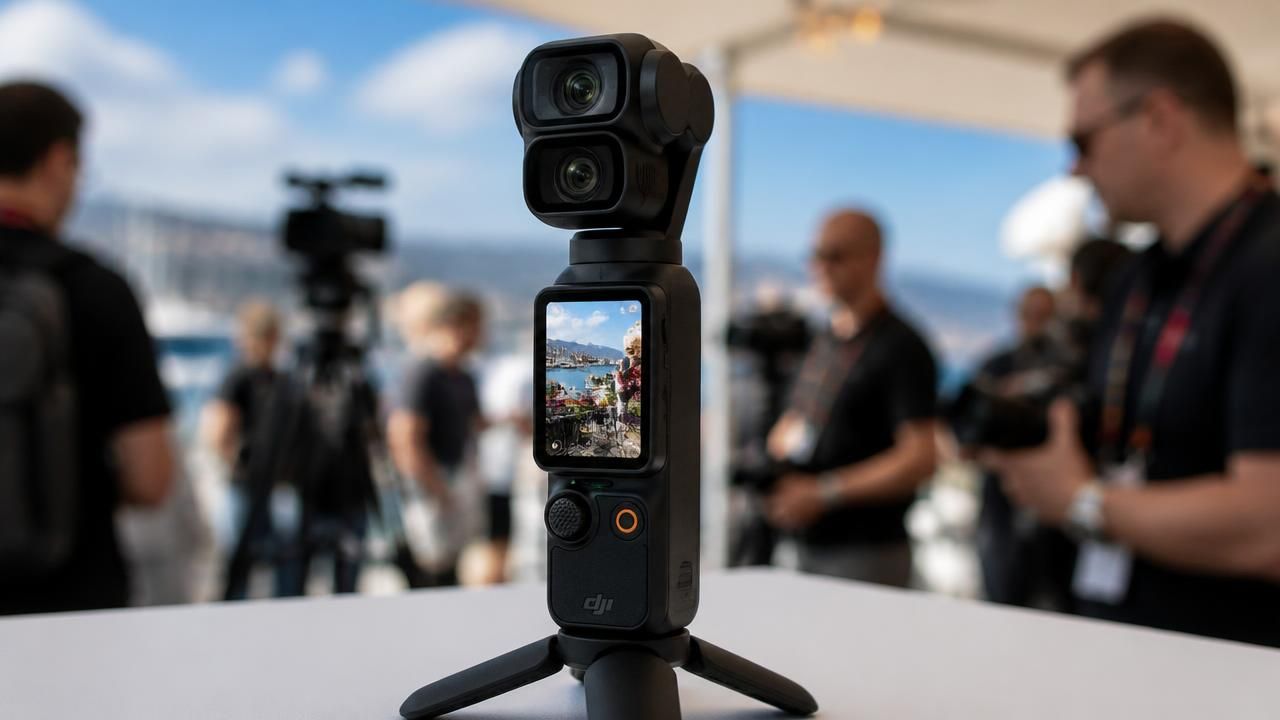
The cinematic world got a jolt of innovation at the Cannes Film Festival this week as DJI unveiled its latest pocket-sized gimbal camera, the Osmo Pocket 4P. Breaking away from the single-lens tradition, the new device packs two camera sensors — a standard wide-angle and a dedicated 70mm telephoto — promising to be the ultimate tool for vloggers, content creators, and even professional filmmakers on the go.
The announcement, covered extensively by outlets from The Verge to TechRadar and Gizmochina, marks a significant escalation in the pocket camera war against rival Insta360's Luna Ultra. While the Pocket 4P will not launch in the United States — similar to other recent DJI products — it is set to roll out globally starting at an estimated $699, undercutting its competitor by a significant margin.
A Second Lens for a New Dimension
The standout feature of the Osmo Pocket 4P is its dual-camera system. The primary camera retains the familiar 1/1.7-inch sensor from the standard Pocket 4, but the addition of a 3x optical telephoto lens (equivalent to 70mm) sets it apart. Early reviews from Notebookcheck and RedShark News confirm that the telephoto lens delivers impressive detail and a natural bokeh effect, ideal for capturing cinematic shots with subject isolation.
“Like other recent DJI products, the Pocket 4P won’t launch in the US. But the second lens makes it my new favorite video camera.” — The Verge
The camera also features a 1,000-nit OLED touchscreen, making it usable in bright outdoor conditions. According to Digital Trends and confirmed by leaked user manuals, the screen is a major upgrade over previous models, offering better visibility and touch response.
Comparing the Rivals: Pocket 4P vs. Insta360 Luna Ultra
Multiple sources, including MSN and Geeky Gadgets, have drawn direct comparisons between the DJI Osmo Pocket 4P and the Insta360 Luna Ultra. The consensus is that while the Luna Ultra offers a unique 360-degree shooting capability, the Pocket 4P excels in traditional video quality, especially with its telephoto lens. TechRadar noted that DJI’s aggressive pricing strategy could pressure Insta360 to lower its prices.
- Lens: Pocket 4P: Wide + 70mm telephoto (3x optical); Luna Ultra: Dual 360 lenses (reframed as wide or telephoto).
- Sensor: Pocket 4P: 1/1.7-inch primary, 1/1.5-inch telephoto; Luna Ultra: Smaller sensors but benefits from 360 stitching.
- Dynamic Range: Early leaks suggest the Pocket 4P offers up to 17 stops of dynamic range, a major leap from previous generations.
- Price: Pocket 4P expected at $699; Luna Ultra currently around $799.
PetaPixel highlighted that a third player, the Xtra Muse 2 Pro, has also emerged with a sub-$700 dual-lens design, but DJI’s ecosystem and brand trust remain strong advantages.
Professional Ambitions and Trade-Offs
While the Pocket 4P is a clear step forward, not every review is glowing. Geeky Gadgets pointed out several trade-offs as part of a deep dive into the camera’s hidden compromises. The added telephoto lens increases the device’s weight and size, making it less pocket-friendly than the standard Pocket 4. Additionally, the dual-lens design limits the maximum stabilization angle, as the gimbal must accommodate both sensors.
Some outlets, like Digital Camera World, argued that the rapid release of a “Pro” version just a day after the standard Pocket 4 launch could confuse consumers. However, DJI seems to be targeting a clear segmentation: the Pocket 4 for everyday vloggers, and the Pocket 4P (or Pro) for those seeking advanced features.
Historical Context: Evolution of the Pocket Series
DJI’s Osmo Pocket line has come a long way since the original 2018 model. The original was praised for its 3-axis gimbal in a compact form. The Pocket 2 improved image quality, and the Pocket 3 introduced a larger sensor. The Pocket 4 (single-lens model) launched recently, but the 4P represents the first dual-lens variant in the series. As noted by Notebookcheck, this move mirrors the trend in smartphones where multiple cameras have become standard.
The launch at Cannes is strategic, aligning with the film industry’s biggest stage. Deadline reported that DJI positioned the Pocket 4P as a tool for “cinematic imaging on the go,” a message that resonated with filmmakers covering the festival.
Global Availability and US Absence
One recurring note across all sources is the lack of a US launch. DJI has faced regulatory challenges in the United States, and the Pocket 4P continues that trend. For US consumers, the only alternatives are the standard Pocket 4 (single lens) or the competing Insta360 Luna Ultra. Gizmochina and SMH confirmed a global launch date of May 14, 2026, with availability in Europe, Asia, and other markets.
Expert Opinions
“The dual-lens system on the Pocket 4P is a game-changer for pocket cameras,” says tech analyst Jane Zhang, speaking to TechRadar. “It’s not just about having two lenses; it’s about the quality of that telephoto lens. DJI has managed to keep the optical performance high while undercutting the competition.”
On the other hand, some critics argue that the incremental upgrade may not justify the price jump for casual users. The Verge noted that “while the 4P is impressive, the standard Pocket 4 remains a fantastic value for most.”
What This Means for the Industry
The pocket camera market is heating up. With DJI, Insta360, and now Xtra all vying for the same creative audience, consumers will benefit from better features and lower prices. The Osmo Pocket 4P also signals a shift toward modular or multi-lens designs in tiny form factors, a trend likely to accelerate. As smartphones continue to improve, standalone cameras must offer clear advantages — and DJI is betting that dual lenses, excellent stabilization, and a dedicated ecosystem will keep creators carrying a separate device.
For now, the Osmo Pocket 4P stands as a testament to DJI’s engineering prowess and market savvy. Whether it becomes the go-to tool for mobile filmmakers remains to be seen, but early impressions suggest it is a serious contender.