In a dramatic turn of events on Capitol Hill, Dr. Anthony Fauci, the former director of the National Institute of Allergy and Infectious Diseases, invoked the Fifth Amendment during a Senate hearing on the origins of the COVID-19 pandemic. The hearing, led by Senator Rand Paul (R-KY) and other Republicans, sought to probe Fauci’s role in funding gain-of-function research and the initial response to the outbreak. Meanwhile, on the international stage, the United States launched a wave of strikes against Iranian military targets after Iran attacked U.S. forces in the Middle East, marking a significant escalation in tensions.
Fauci’s Fifth Amendment Stand
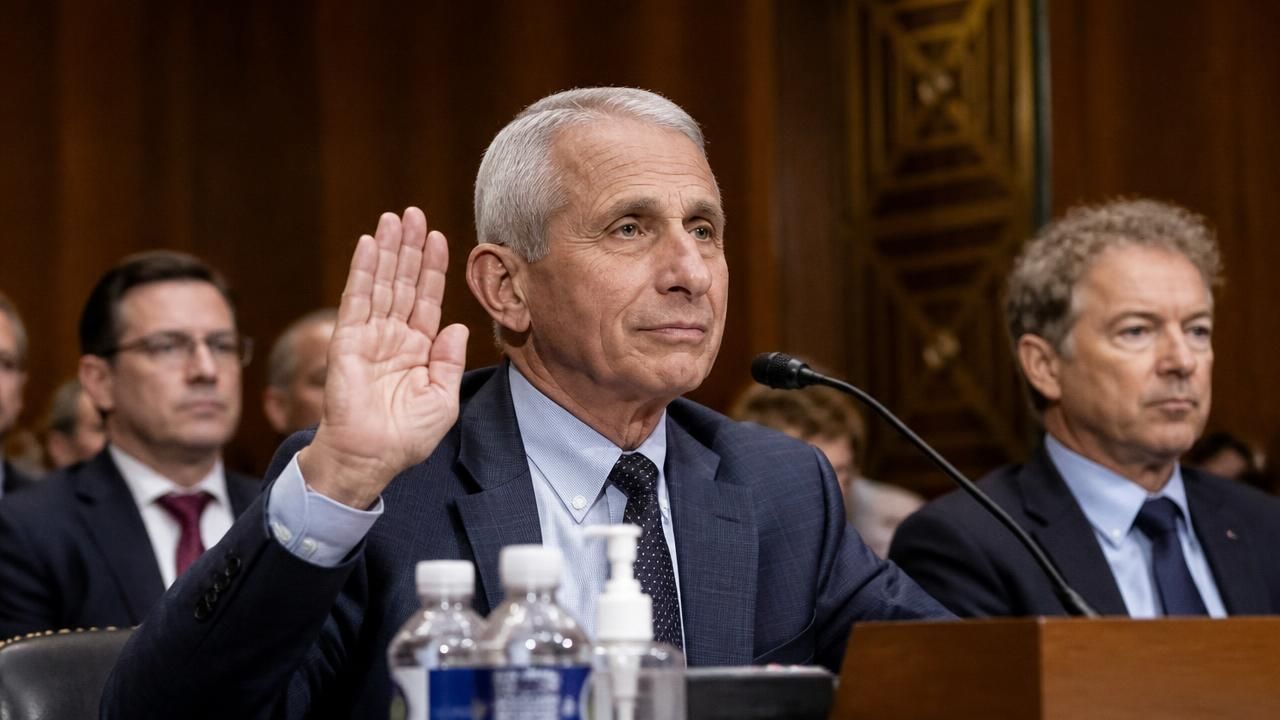
Dr. Fauci’s appearance before the Senate Health, Education, Labor, and Pensions Committee was highly anticipated. Multiple sources, including NPR and BBC, reported that Fauci repeatedly declined to answer questions, citing his Fifth Amendment right against self-incrimination. The hearing, part of a Republican-led investigation into the pandemic’s origins, focused on whether Fauci misled Congress about the National Institutes of Health’s funding of research at the Wuhan Institute of Virology.
“I respectfully decline to answer on the grounds that my answer may incriminate me,” Fauci stated, according to transcripts and live coverage from outlets like The Times Herald and SRN News.
Senator Rand Paul, a frequent critic of Fauci, pressed him on emails suggesting that Fauci’s agency helped fund potentially dangerous virus research. Fauci’s legal team argued that the questioning was part of a politically motivated attack, and that the Fifth Amendment was a necessary protection against potential prosecution. The move drew sharp reactions: Republicans accused Fauci of hiding the truth, while Democrats defended his right to remain silent.
Political and Public Reactions
The hearing quickly became a partisan flashpoint. Senator Paul called Fauci’s refusal to testify “an admission of guilt,” while Democrats like Senator Patty Murray criticized the proceedings as a “waste of time.” Public opinion remains divided, with many Americans still seeking clarity on the pandemic’s origins. Dr. Fauci, who served as chief medical advisor to President Biden, has faced repeated scrutiny since the outbreak began in 2020. This is not the first time he has appeared before Congress, but the invocation of the Fifth Amendment is unprecedented in his long career.
Escalation in the Middle East
Simultaneously, the U.S. military conducted airstrikes against Iranian targets in Iraq and Syria, according to reports from NPR and BBC. The strikes were in response to a drone attack by Iranian-backed militias that killed three American soldiers and wounded dozens more at a U.S. base in Jordan. President Biden authorized the retaliatory strikes, which hit command centers, intelligence facilities, and weapons storage sites used by Iran’s Islamic Revolutionary Guard Corps (IRGC) and affiliated groups.
“The United States does not seek conflict in the Middle East or anywhere else in the world. But let all those who might seek to do us harm know this: If you harm an American, we will respond,” President Biden said in a statement, as quoted by NPR.
Iran condemned the strikes, warning of “unpredictable consequences.” The attacks mark a significant escalation after months of tit-for-tat violence since the Israel-Hamas war began in October. Analysts fear that the region could spiral into a broader conflict. The Pentagon confirmed that the strikes were aimed at deterring future attacks, but experts express skepticism, noting that previous retaliatory actions have not stopped militia groups.
Historical Context
The U.S.-Iran conflict has deep roots, dating back to the 1979 Iranian Revolution and the hostage crisis. Tensions escalated after the U.S. withdrew from the Iran nuclear deal in 2018, leading to a series of incidents including the assassination of Qasem Soleimani in 2020. The latest strikes are reminiscent of those earlier actions, raising questions about long-term strategy.
The Biden administration has stated it does not want a war with Iran, but the cycle of attacks and retaliation continues. Iran’s proxies in Yemen, Syria, and Iraq have been active throughout the Gaza war, and the U.S. has struggled to contain the violence.
Implications for the Future
The convergence of these two major events—a high-profile congressional hearing and a military confrontation—underscores a volatile political landscape both domestically and abroad. For Fauci, the Fifth Amendment invocation could have legal and reputational consequences, potentially fueling further investigations. For the Middle East, the strikes risk escalating into a broader regional war, especially as Iran threatens retribution.
As the world watches, the twin stories highlight the challenges facing the U.S. government: navigating partisan divisions over pandemic accountability and managing military entanglements. The coming days will likely bring more developments in both arenas.