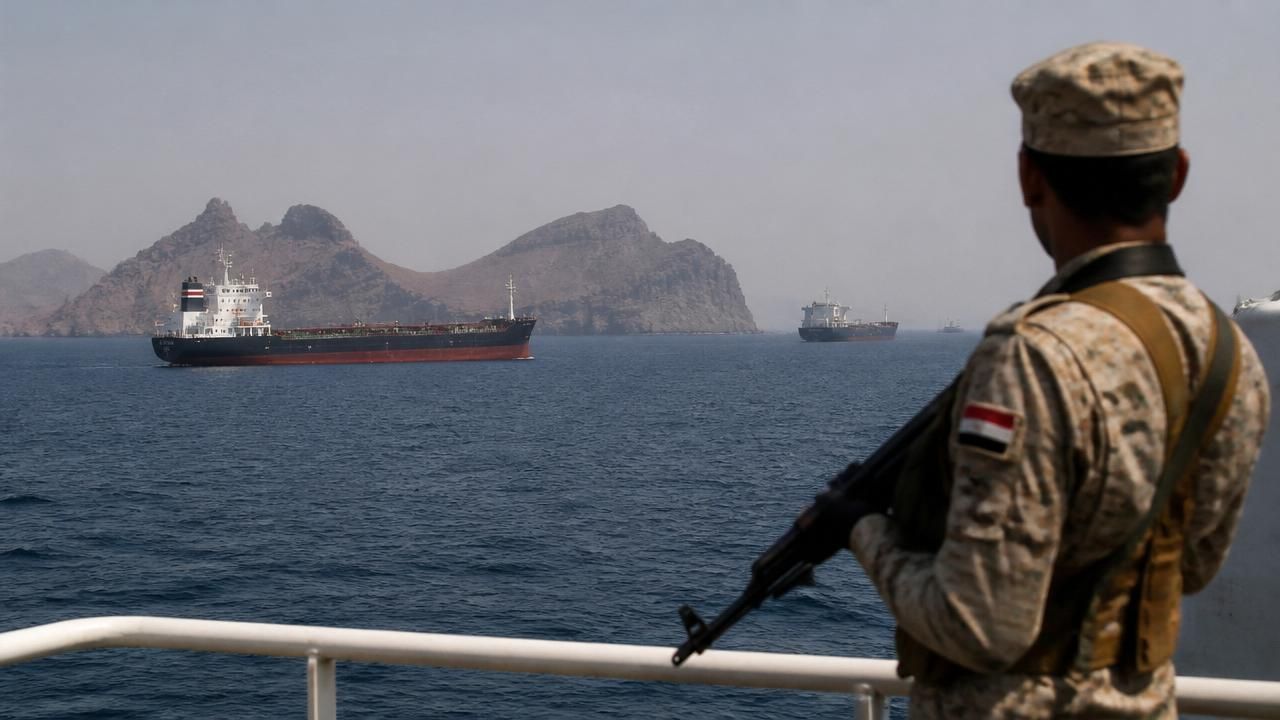
The Iran war, already choking the Strait of Hormuz, now threatens a second critical maritime chokepoint: the Bab al-Mandeb Strait. Yemen's Houthi rebels, backed by Iran, have announced a naval blockade off the coast of Yemen, directly endangering the Red Sea route that handles about 10% of global seaborne oil trade. This escalation, reported by Reuters and the Wall Street Journal, could cripple energy supplies and push the global economy toward recession.
A New Front in the Iran War
The conflict, which began with US airstrikes on Iranian nuclear sites and has drawn in regional proxies, is expanding rapidly. The New York Post notes that the Houthis, who already control significant territory in Yemen, have declared readiness to join the war directly. Their leader, Abdul-Malik al-Houthi, has threatened to take control of the Bab al-Mandeb Strait if the US invades Iran's Kharg Island—a key oil terminal. Al Monitor and ABC News emphasize that this strait, known as the 'Gate of Tears,' is a vital conduit for oil tankers and cargo ships heading to Europe and North America.
From Hormuz to the Red Sea
Initial attacks focused on the Strait of Hormuz, where Iran targeted tankers, disrupting about 20% of global oil flow. According to Sky News, oil prices spiked sharply as shipping routes were disrupted. The New York Times reported that Saudi Arabia had been relying on an alternative route through the Red Sea after Hormuz became unsafe. Now, that alternative is under threat. The Houthis announced a naval blockade of Saudi ports, further tightening supply.
"A new front is opening in the Iran war. Oil faces ‘no way out’," warned Yahoo Finance, highlighting the dual chokehold on global energy arteries.
US Response and International Pressure
The United States has carried out additional strikes against Houthi positions, as reported by CBS News. President Trump threatened Iran and the Houthis with "major military punishment" and, according to The Guardian, called on the UK to send warships to keep the Strait of Hormuz open. PBS News quoted Trump telling allies: "Go get your own oil," reflecting frustration with allied dependence on US protection of sea lanes.
Meanwhile, a US refueling plane crashed in Iraq, as reported by the New York Times, underscoring the high tempo of operations. The conflict has also seen Iran prepare to bury its Supreme Leader, a sign of internal turmoil amid external pressure.
Economic Shockwaves
Economists warn that sustained oil price spikes could trigger a global recession. According to the New York Post, if oil hits a benchmark of $120 per barrel, recession risks mount sharply. Reuters reports that the Iran war poses a new risk to US economic resilience, which had been showing signs of recovery. Inflation expectations are rising, and credit markets are tightening, as noted by Arab News.
The impact is especially severe for energy-importing nations. France24 highlights that China’s energy security is at risk, as it relies heavily on Middle Eastern oil. Deutsche Welle notes that India, dependent on Gulf hubs for crude and remittances, faces an economic storm. The BBC explains that India's stakes are high, with millions of workers in the Gulf and significant oil imports. Australia, too, is bracing for economic minefields, according to Commonwealth Bank.
Sicily and European Vulnerabilities
Il Sole 24 Ore reports that Sicily, with its strategic position in the Mediterranean, is under observation as the crisis could reroute traffic and impact refineries. European nations are particularly exposed given their reliance on oil transiting the Suez Canal and Red Sea.
Expert Perspectives and Data
Analysts from the International Energy Agency (IEA) estimate that a blockage of both Hormuz and Bab al-Mandeb would remove roughly 30 million barrels per day from global markets—about 30% of total supply. The Wall Street Journal quotes shipping executives warning of skyrocketing insurance premiums and potential rerouting around Africa, which would increase costs and delays.
Different outlets frame the story through distinct lenses. The New York Times emphasizes human costs and geopolitical isolation, while the Wall Street Journal focuses on market risks. Al Monitor provides regional context on the Houthi threat. YouTube and less relevant sources (e.g., Cubans in blackouts, Venezuela) are omitted as peripheral. The New York Post adopts a more alarmist tone, while PBS and Reuters offer calm analyses.
Implications and Outlook
The widening conflict risks transforming a regional war into a global economic crisis. The dual threat to oil routes is unprecedented in modern history. As the US and its allies weigh military responses, and Iran and its proxies escalate, the world watches the 'Gate of Tears' become a symbol of vulnerability in global energy supply chains.
Whether diplomacy can avert a full blockade remains uncertain. But for now, the Iran war has opened a second front—one that could make the first seem like a prelude.