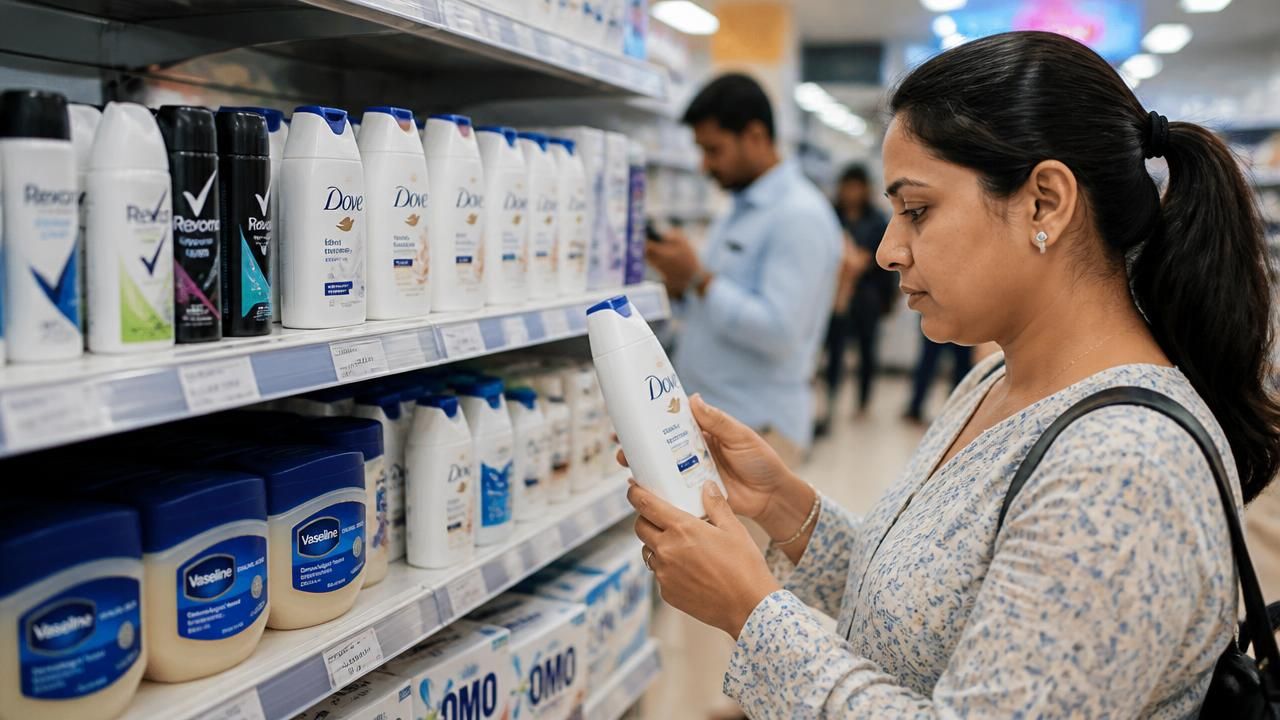
Unilever Plc has raised its 2026 sales outlook after reporting better-than-expected second-quarter results, driven by robust demand for its core brands such as Dove, Rexona, and Vaseline. The company posted its strongest volume growth since 2010 in the first half of the year, according to an earnings call transcript, outperforming analyst estimates and signaling a successful turnaround under CEO Hein Schumacher.
A Surge in Emerging Markets
The growth was particularly pronounced in key emerging markets, including Latin America and parts of Asia, where rising middle-class populations have fueled demand for Unilever's personal care and home care products. In the United States, consumers also snapped up Dove soap and OMO laundry detergent, contributing to a 5.8% increase in underlying sales for the second quarter, well above the 4.2% consensus forecast. Bloomberg Markets reported that Unilever’s revised outlook reflects confidence in sustained momentum, with the company now expecting full-year sales growth at the upper end of its 3-5% range.
Power Brands Lead the Charge
Unilever’s so-called “power brands” — including Dove, Rexona, Sunsilk, and OMO — were the primary drivers, posting aggregate underlying sales growth of 6.2% in the first half. MSN.com noted that Vaseline also saw a strong uptick, benefiting from renewed marketing campaigns and product innovations. The company’s focus on 30 key brands, which account for over 70% of its revenue, is paying off as consumers trade up to trusted names amid inflationary pressures.
“We are seeing real traction from our power brands, which are delivering both volume and value growth,” said CEO Hein Schumacher during the earnings call. “Our strategy to streamline the portfolio and invest behind these winners is clearly working.”
Strategic Context and Historical Background
Unilever’s latest results mark a sharp reversal from the previous two years, when the company struggled with price-sensitive consumers and rising input costs. In 2024, Unilever embarked on a major restructuring, shedding underperforming categories like ice cream (including the Magnum and Ben & Jerry’s brands) to focus on higher-margin personal care and home care segments. The divestiture, completed in early 2025, freed up capital for marketing and innovation.
Industry analysts view the current performance as a validation of that strategy. “Unilever has successfully navigated the post-pandemic normalization by cutting costs and doubling down on its strongest assets,” said Emma Walsh, a consumer goods analyst at Bernstein. “The volume growth is particularly impressive because it indicates that consumers are not just buying more due to price increases—they are actually purchasing more units.”
The company’s volume growth in the first half of 2026 reached 2.8%, the highest since the first half of 2010, according to transcript data from investing.com. This metric is closely watched because it reflects genuine consumer demand rather than just price hikes.
Differing Perspectives from the Sources
The various news outlets framed the story with distinct emphasis. Bloomberg Markets highlighted the geographic breadth of the growth, noting strong performance in both the US and Latin America. In contrast, msn.com focused on the brand-level success, praising the performance of Dove and Vaseline. EconoTimes took a more macro view, underscoring the volume growth and the upward revision to the 2026 sales outlook. The investing.com transcript provided granular detail on the CEO’s remarks and the comparison to historical growth rates.
While all sources agreed on the positive trajectory, some cautioned about ongoing headwinds. Persistently high raw material costs and currency volatility in emerging markets pose risks. Additionally, the company is facing increased competition from private-label brands in Europe, where Unilever’s volume growth was comparatively flat.
What’s Next for Unilever?
Unilever’s raised outlook sets the stage for a strong finish to 2026. The company is expected to continue its brand simplification and invest in digital marketing and sustainability. The next milestone will be the third-quarter results in October, where investors will look for sustained volume momentum. If current trends hold, Unilever could be on track to hit the upper end of its margin targets by year-end.
Beyond the numbers, the story of Unilever’s revival may offer lessons for other consumer goods giants navigating a polarized market: that focusing on core strengths and emerging market expansion can still drive growth, even in a challenging economic climate.