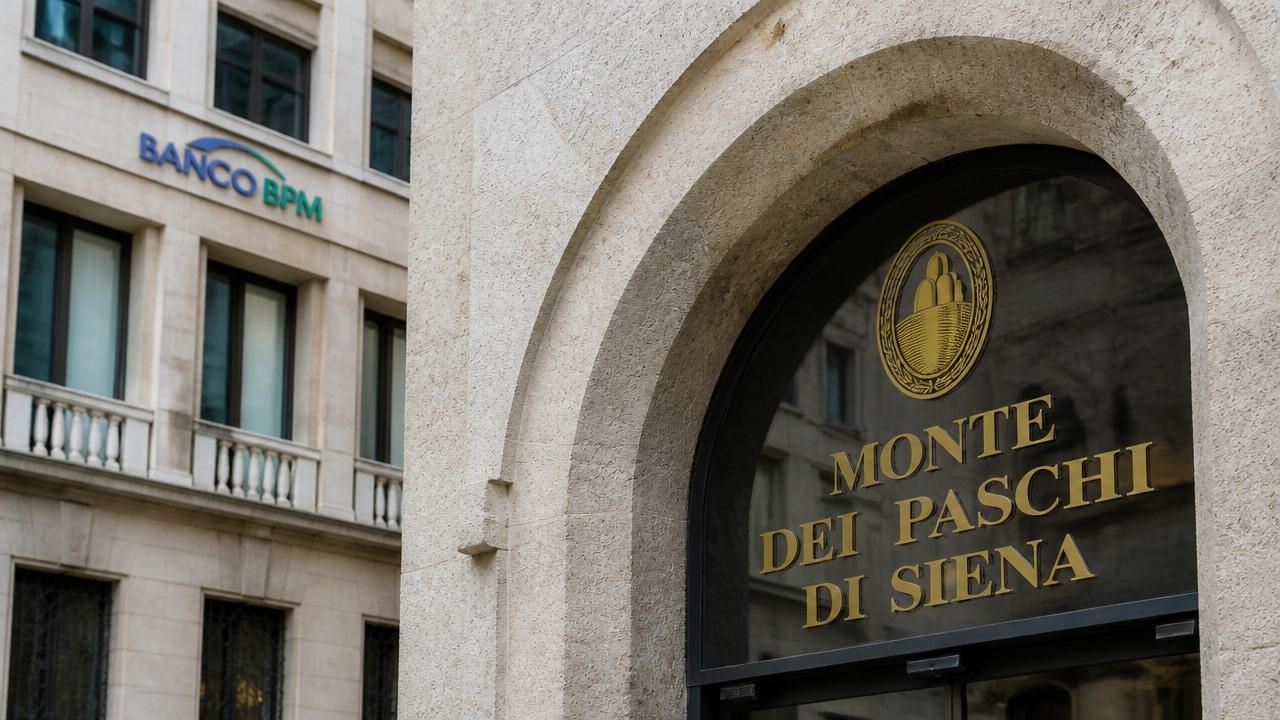
In a dramatic twist to Italy's banking consolidation saga, Banca Monte dei Paschi di Siena SpA (MPS) and Banco BPM SpA are in advanced talks over a merger of equals, structured as a mix of shares and cash, according to people familiar with the matter. The proposed deal emerges as a direct counterweight to Intesa Sanpaolo SpA's blockbuster €35 billion ($40 billion) bid for Monte dei Paschi, which itself would redraw the country's financial landscape.
The Deal on the Table
Advisers for both banks are working on a framework that would combine the two lenders into a single entity, with shareholders receiving a combination of stock and cash. While the exact valuation and exchange ratio remain under negotiation, sources indicate that the deal is being structured as a 'merger of equals,' a term suggesting no single institution would dominate the combined group. Bloomberg News first reported the discussions, which were later confirmed by Reuters and other outlets.
The cash component is particularly notable, as it would provide immediate liquidity to shareholders of both banks, potentially sweetening the offer compared to Intesa's all-share proposal. However, analysts caution that regulatory hurdles and the need for Italian government approval—given its 64% stake in MPS—could complicate the process.
Intesa's Bold Move
Intesa Sanpaolo, Italy's largest banking group, threw a bombshell into the sector with its €35 billion bid for Monte dei Paschi. The offer, which Intesa characterized as a 'strategic opportunity,' would create a banking giant with over €1 trillion in assets, dominating the Italian market. However, the proposal has faced skepticism from some quarters, with concerns about market concentration and job losses.
"Intesa's bid is a power play that could reshape Italian banking," said a Milan-based analyst. "But the alternative being crafted by MPS and BPM shows that the game is far from over."
Historical Context
Monte dei Paschi, the world's oldest surviving bank, has been a lightning rod for Italy's banking woes. It was bailed out by the state in 2017 after a series of scandals and losses, leaving the government as the majority shareholder. Banco BPM, formed from the merger of Banca Popolare di Milano and Banco Popolare in 2017, has been seen as a potential consolidator. A tie-up with MPS would create Italy's third-largest bank, trailing only Intesa and UniCredit.
The Intesa bid itself is part of a broader wave of consolidation in European banking, as lenders seek scale to compete with larger global rivals and cope with low interest rates and digital disruption. Italy's fragmented banking sector, with dozens of small cooperative banks, has long been seen as ripe for mergers.
Different Framings
The story has been reported with varying emphasis. Bloomberg's initial scoop framed the MPS-BPM deal as a 'cash component' alternative, highlighting the financial engineering. Reuters and AOL focused on Intesa's bid as the primary driver, with AOL's headline calling it a move to 'redraw Italy's financial map.' MSN reported Intesa's offer as €30.6 billion, a slight discrepancy possibly due to foreign exchange or timing. Euronext and other outlets largely recirculated the Bloomberg report.
From a regulatory perspective, the Bank of Italy and European Central Bank would need to approve any combination. The Italian Treasury, which holds a golden share in MPS, has publicly supported consolidation but has not endorsed any specific deal.
What's Next?
Negotiations are ongoing, and no final decision has been made. Both banks are expected to update their boards in the coming weeks. Meanwhile, Intesa's bid remains on the table, though it could be revised if a competing offer emerges. Investors are watching closely: MPS shares jumped 5% on the news of the alternative deal, while Banco BPM rose 3%.
"This is a high-stakes chess game," said a senior banking consultant. "The outcome will determine the shape of Italian banking for a generation."