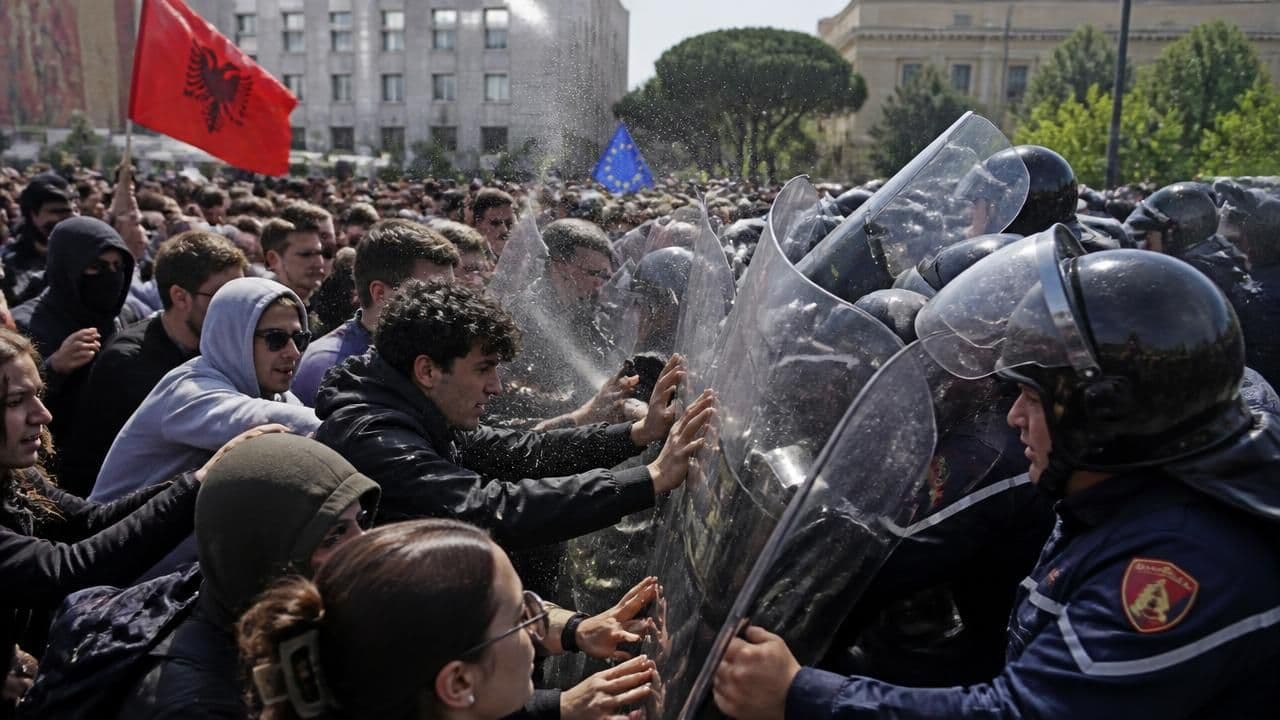
In the wake of racist, mob violence in Northern Ireland this month, a fresh wave of attention has turned to so-called 'active clubs' — a global network of fascist, white nationalist youth groups that center their activities around mixed martial arts (MMA). Multiple sources, including NPR, Wired, CBS News, BBC, and Hope Not Hate, have reported that these groups played a key role in orchestrating the Belfast riots, which saw anti-immigrant violence erupt across the city.
Who, What, When, Where, Why, and How
The Belfast Riots
In early August 2024, Belfast experienced a series of violent protests targeting immigrant communities. Mobs attacked businesses, homes, and individuals perceived as foreign, leading to injuries and widespread fear. The violence was widely condemned by political leaders, but investigations quickly revealed a coordinated effort behind the scenes.
The Role of Active Clubs
According to Wired, a white supremacist youth group helped orchestrate the riots. These 'active clubs' are not merely online trolls but physical, militant organizations that use MMA training as a cover for building a paramilitary force. The BBC quoted experts warning that these groups are using sports to 'build a militia,' while Hope Not Hate exposed an 'Active Club Midlands' as a fascist fight club.
“They are using martial arts to recruit young men, and now increasingly young women, into a violent extremist ideology,” said a researcher from Hope Not Hate.
Global Reach and Recruitment
CBS News highlighted that white nationalist groups have long attracted young men in the U.S., but now they are actively recruiting girls. This shift is part of a broader strategy to normalize extremism through fitness and combat sports, making it appealing to a wider demographic. The groups operate in countries including the United States, United Kingdom, Canada, Australia, and across Europe.
Differing Perspectives
The coverage from various outlets offers distinct angles. NPR focused on the local impact in Northern Ireland, emphasizing the 'active clubs' as a new threat. Wired framed the story as a direct link between the youth group and the organized violence, suggesting a deliberate plot. CBS News broadened the lens to include gender dynamics, noting the recruitment of girls. The BBC and Hope Not Hate provided expert analysis on the militia-building aspect, warning of long-term dangers. Global Extremism reported on the international far-right stoking the protests, though its content was behind a paywall.
Historical Context
The rise of active clubs is not an isolated phenomenon. They are part of a lineage of white supremacist movements that have evolved from the Ku Klux Klan, neo-Nazi groups, and modern alt-right online communities. What sets active clubs apart is their emphasis on physical training and local, decentralized cells, making them harder to monitor. Experts trace their origins to the United States around 2018, inspired by the rise of 'accelerationism' — the belief that violence can hasten societal collapse and pave the way for a white ethnostate.
Data and Expert Views
Data from the Institute for Strategic Dialogue shows that active clubs have grown exponentially, with over 50 known groups in the U.S. and at least 20 in Europe. In the UK, groups like Active Club Midlands have been linked to violent incidents. Dr. Julia Ebner, a researcher at the University of Oxford, stated: “These clubs are not just about fitness; they are a recruitment pipeline for terrorism. They build camaraderie and trust, then radicalize members.”
Implications
The Belfast riots mark a dangerous escalation. Unlike previous far-right violence, which was often spontaneous or online-organized, the active clubs demonstrated a capacity for on-the-ground coordination. This raises urgent questions for law enforcement and intelligence agencies. If these groups continue to grow, they could pose a significant threat to public safety and social cohesion.
Moreover, the recruitment of young women signals a strategic shift. By including girls, these groups aim to create a self-sustaining community, with women playing roles as supporters, recruiters, and even fighters. This mirrors historical fascist movements that idealized motherhood and racial purity.
Conclusion
The active clubs represent a new face of white supremacy: youthful, athletic, and dangerously organized. The Belfast riots were a wake-up call, showing that these groups are not just online provocateurs but real-world actors capable of violence. As experts warn, the combination of martial arts training, extremist ideology, and global networking could lead to more such incidents. Governments and civil society must act to counter this growing threat before it escalates further.