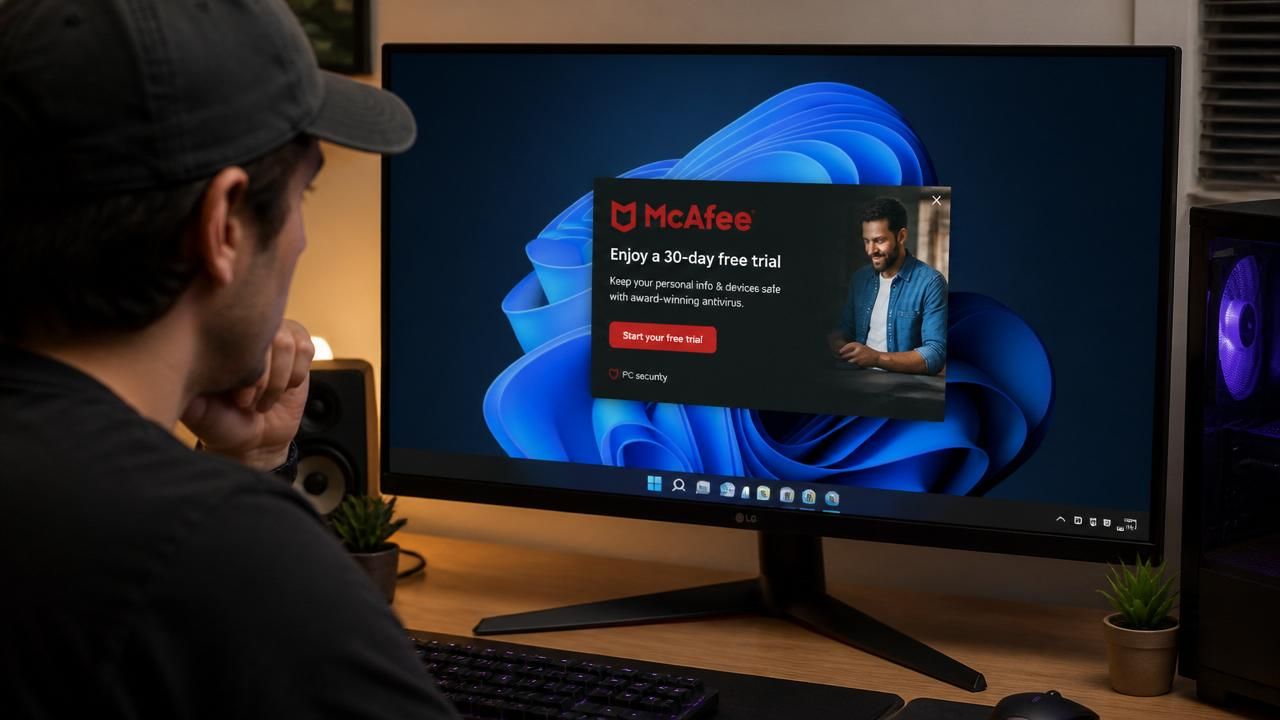
In a startling revelation that has sparked widespread backlash, LG monitors have been found to silently install an app that pushes McAfee advertisements onto Windows PCs without user consent. The issue, first highlighted by YouTube channel Gamers Nexus and echoed across Reddit, involves an app called 'LG Monitor App Installer' that installs itself through Windows Update alongside monitor driver updates. The app then displays pop-up ads for a 30-day free trial of McAfee, as well as other software, leading many to label it as adware or even spyware.
The Discovery and User Outcry
Steve Burke, editor-in-chief of Gamers Nexus, demonstrated the behavior in a video, showing that after connecting an LG UltraGear 27GP950-A gaming monitor to a Windows 11 system, the McAfee pop-up appeared repeatedly. Burke noted that the publication replicated the issue 'several times' across 'multiple' Windows 11 systems. The backlash was immediate, with users taking to Reddit and social media to express outrage. Some called the practice 'pretty revolting,' while others raised concerns about privacy, especially given LG's simultaneous requirement for TV owners to warn guests about AI-powered voice recording features that could violate wiretapping laws.
'Whoever came up with this is a massive idiot,' one user commented on a forum, reflecting the sentiment of many who felt blindsided by the unsolicited software installation.
Microsoft's Intervention
Following the uproar, Microsoft intervened. The tech giant reportedly pressured LG to remove the unwanted pop-ups, confirming that LG had responded to the issue. According to multiple sources, including The Verge, PCMag, and TechSpot, Microsoft's involvement was key. A Microsoft spokesperson stated that the company takes such matters seriously and works with partners to ensure a secure and reliable Windows experience. LG, for its part, announced plans to remove the pop-up ads. However, details on the timeline and whether the underlying app will be completely removed remain unclear.
The Technical Mechanism
The app installs automatically when a user connects an LG monitor and Windows Update delivers the driver. This method bypasses typical user consent, as driver updates are often set to install automatically. Once installed, the LG Monitor App Installer runs in the background and periodically displays full-screen ads. Users have reported that the ads appear even after closing them, making the experience particularly intrusive. TechRadar noted that while there is a workaround—disabling the app via Windows settings—the fix should not require such effort from users.
Broader Implications for Privacy and Trust
This incident raises significant questions about the ethics of using automatic driver updates to push advertising. Security experts warn that such practices blur the line between legitimate driver software and adware. 'This is a clear violation of user trust,' said a cybersecurity analyst quoted by HackRead. 'Drivers are meant to enable hardware functionality, not serve as a vector for marketing.' The controversy also comes amid broader privacy concerns, as LG's TVs have been criticized for requiring users to inform guests about AI features that may record conversations—a move that many see as an attempt to comply with wiretapping laws while still collecting data.
How to Protect Yourself
Until a permanent fix is rolled out, users can block the ads by uninstalling the LG Monitor App Installer from the Windows Settings app. Alternatively, disabling automatic driver updates through Windows Update settings can prevent the app from installing in the first place. However, this may also delay critical driver updates. Some users have also reported success by blocking the app's network access via firewall rules.
Industry Reaction and Future Outlook
The backlash has been swift, with publications like Kotaku, Tom's Hardware, and Happy Gamer covering the story extensively. Many have called for stricter controls on what hardware manufacturers can install via Windows Update. Microsoft has not commented on whether it will implement new policies to prevent similar incidents. For now, LG's promise to remove the pop-ups offers some relief, but the damage to consumer trust may linger. As one Ars Technica commenter put it, 'This is a reminder that even trusted brands can overstep.'
The incident also highlights the growing tension between hardware vendors seeking new revenue streams and consumers demanding privacy and control. With the line between software and advertising increasingly blurred, users must remain vigilant. For now, the message from the community is clear: adware has no place in driver updates.