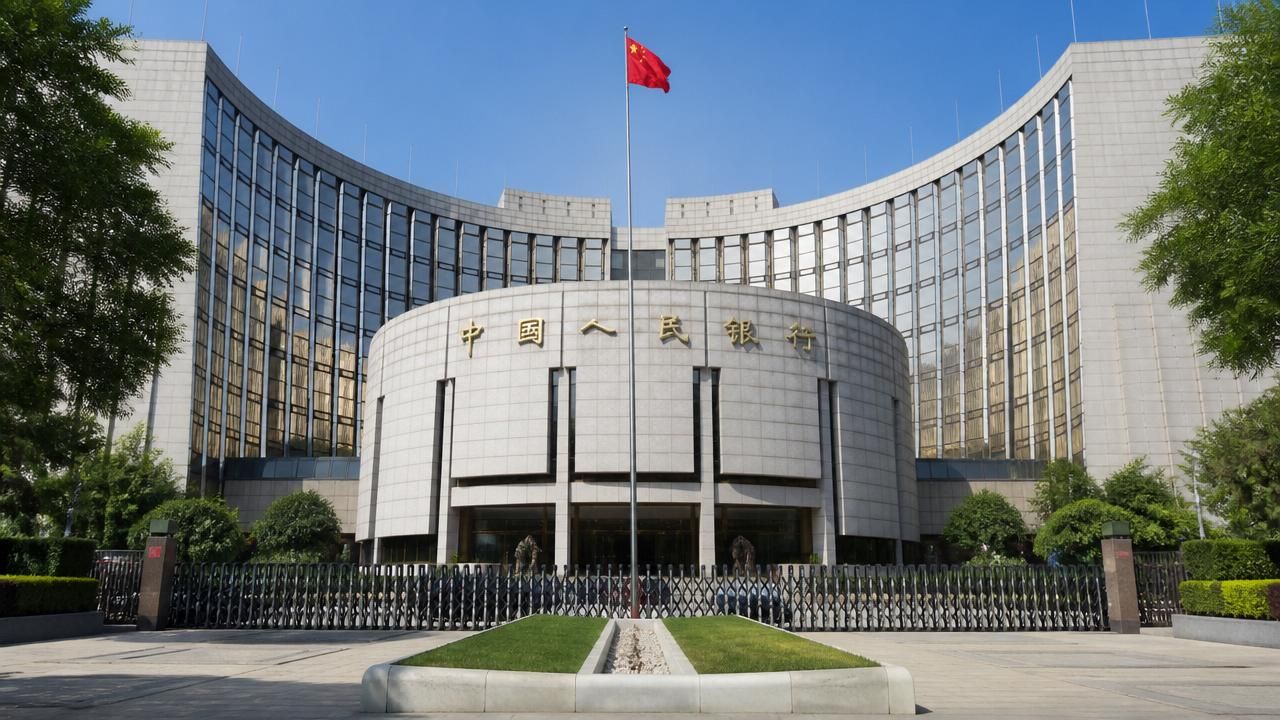
In a move that underscores Beijing's cautious approach to economic stimulus, the People's Bank of China (PBOC) on Thursday injected the largest amount of liquidity into the banking system in five months via its medium-term lending facility (MLF), while leaving key interest rates unchanged for the 14th consecutive month. The dual action comes ahead of a pivotal Politburo meeting expected later this month, where top leaders will map out economic priorities for the second half of the year.
Liquidity Injection Details
According to Bloomberg Markets, the PBOC added 200 billion yuan ($27.7 billion) through the MLF, the biggest infusion since February. The central bank set the one-year MLF rate at 2.85%, unchanged from previous operations. The move is widely seen as an effort to accommodate a surge in government bond issuance and support slowing economic growth without resorting to aggressive monetary easing.
Rates Held Steady Despite Calls for Cuts
Despite growing pressure from some economists and market participants for lower borrowing costs, the PBOC kept its benchmark loan prime rate (LPR) unchanged for a 14th straight month, as reported by wixx.com. The one-year LPR, which influences corporate loans, remained at 3.70%, while the five-year LPR, a reference for mortgages, stayed at 4.45%. The decision surprised some analysts who had anticipated a cut following recent data showing weak credit demand and a faltering property sector.
However, China Daily reported that there is still room for further interest rate cuts, citing economists who believe that subdued inflation and a sluggish economy justify more accommodative policy. The newspaper noted that consumer price inflation remains well below the government's 3% target, giving the PBOC leeway to ease further.
Low Inflation: A Double-Edged Sword
A blog post on pekingnology.com by Miao Yanliang delved into the causes of China's persistently low inflation. Miao argued that weak domestic demand, excess industrial capacity, and falling commodity prices have kept price pressures in check. While low inflation provides room for monetary easing, it also signals underlying economic weakness, as consumers and businesses remain cautious about spending and investment. This perspective adds nuance to the debate over whether the PBOC should cut rates more aggressively.
Contrasting Views on Rate Cuts
Caixin Global reported that the central bank bucked expectations of a key interest rate cut, highlighting the tension between market hopes for stimulus and the PBOC's concerns about financial stability and capital outflows. Some analysts argue that lowering rates could further weaken the yuan and trigger capital flight, especially as the Federal Reserve continues its aggressive tightening cycle. Others contend that without rate cuts, the economic recovery could stall, particularly in the property sector, which remains mired in a debt crisis.
Context and Implications
The PBOC's actions come at a critical juncture for China's economy. Growth slowed to 0.4% in the second quarter from the previous quarter, the weakest since the pandemic's early days, and the government has rolled out a series of measures to stabilize employment and boost infrastructure spending. The Politburo meeting, expected in late July, is likely to provide clearer guidance on fiscal and monetary policy for the remainder of the year.
Historical context: China has used MLF operations since 2014 to manage liquidity and guide medium-term interest rates. The current MLF rate of 2.85% is at a record low, following a 10-basis-point cut in January. The LPR has not changed since December 2021, when both rates were trimmed by 5 basis points.
Data points: China's CPI rose 2.5% year-on-year in June, up from 2.1% in May but still below the 3% target. Industrial producer prices, meanwhile, increased 6.1%, down from a peak of 13.5% in October 2021, indicating easing cost pressures for manufacturers.
Expert views: Zhang Zhiwei, chief economist at Pinpoint Asset Management, told Bloomberg that the MLF operation was "a signal that the PBOC wants to support the economy but is constrained by external factors." He added that a rate cut could come later this year if growth disappoints. In contrast, Lu Ting, chief China economist at Nomura, argued in a note that "the PBOC is likely to keep rates unchanged for the rest of the year" due to inflation concerns and the need to maintain financial stability.
Looking Ahead
The divergent perspectives from the five sources highlight the complex trade-offs facing Chinese policymakers. While the liquidity injection provides short-term relief, the decision to hold rates steady suggests that the PBOC is prioritizing stability over aggressive stimulus. The upcoming Politburo meeting will be closely watched for any shift in stance, with markets hoping for more decisive action to revive growth. For now, China's monetary policy remains in a holding pattern, balancing domestic needs against global headwinds.