The ongoing redistricting battle, ignited by former President Donald Trump, has disproportionately affected predominantly Black congressional districts in Republican-led states, according to new maps analyzed by NPR. The battle has now escalated into a high-stakes political confrontation, with the NAACP and South Carolina lawmakers calling on Black athletes to boycott college sports programs at the University of South Carolina and Clemson University. Meanwhile, the Congressional Black Caucus (CBC) has vowed to block college sports reform legislation until Southern states address redistricting grievances.
Redistricting's Racial Impact
NPR's analysis of six states—including South Carolina, Florida, and others—shows that largely Black areas have been fragmented or packed into fewer districts, diluting their political power. The maps, created by researcher Rahul Mukherjee, illustrate how GOP-controlled legislatures have redrawn boundaries to consolidate Black voters into fewer districts, often weakening their influence in surrounding areas. This practice, critics argue, violates the Voting Rights Act and undermines representation.
South Carolina: A Flashpoint
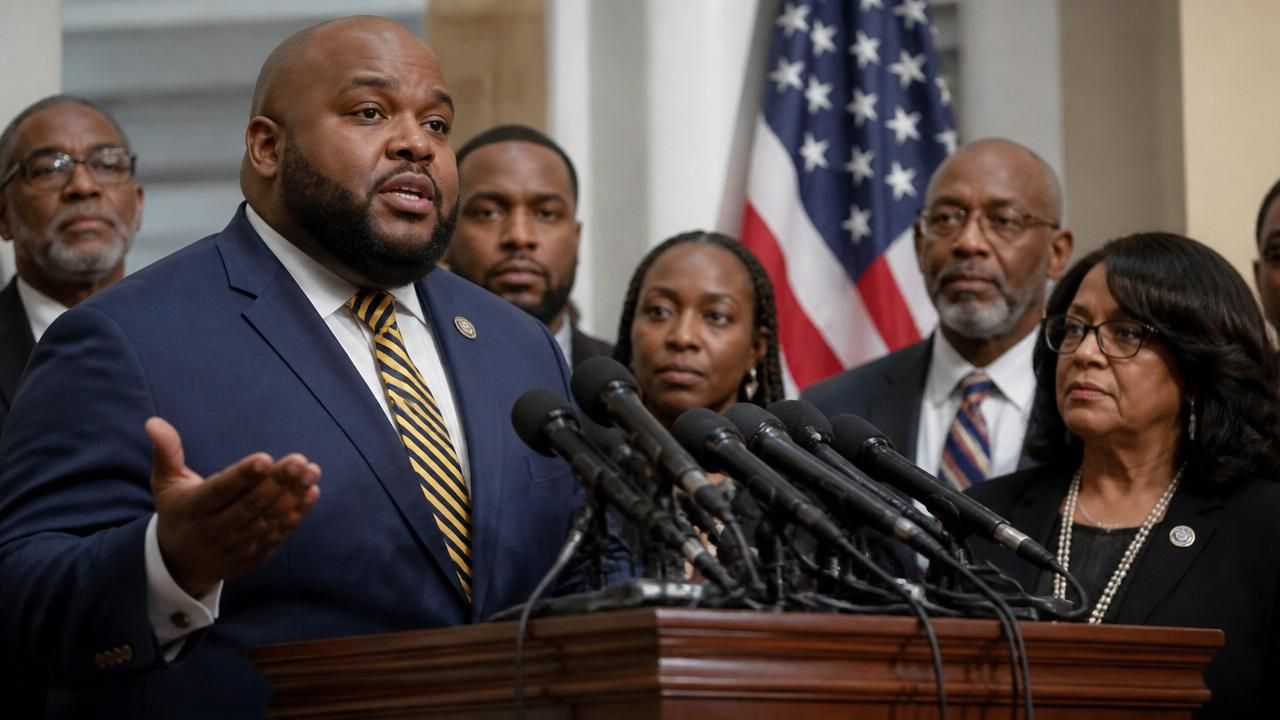
In South Carolina, the NAACP and state Representative Justin Bamberg have urged Black athletes to boycott the University of South Carolina and Clemson University, two major football programs. The call aims to pressure state lawmakers to redraw congressional maps that the NAACP says unfairly target Black communities. “Athletes have immense power to drive change,” Bamberg stated. “If the state won't respect our votes, they shouldn't benefit from our talent.” The boycott threat has sent shockwaves through the college sports world, with potential economic repercussions for the universities.
CBC Leverages College Sports Reform
The Washington Examiner reports that the Congressional Black Caucus has explicitly tied its support for college sports reform—a bipartisan priority—to fair redistricting in Southern states. CBC members have vowed to block any legislation that would overhaul the NCAA or athlete compensation unless states like South Carolina, Florida, and Georgia adopt non-discriminatory maps. This move transforms the redistricting dispute into a national issue, linking voting rights to the multi-billion-dollar college sports industry.
Florida's Single-Candidate Strategy
In Florida, Black Democratic candidates are considering a single-candidate strategy in a House race after a challenger switched to a newly drawn Black-majority district. The district, created under the state's redistricting plan, has sparked internal debate among Democrats about whether to consolidate support behind one candidate to maximize the chance of retaining the seat. This development, reported by MSN, highlights the complex tactical decisions forced by redistricting.
Historical Context and Expert Views
Redistricting has long been a tool for partisan and racial gerrymandering. The Voting Rights Act of 1965 prohibits racial discrimination in redistricting, but recent Supreme Court decisions have weakened key provisions. According to election law expert Dr. Kareem Crayton, “The current maps in many Southern states represent a return to tactics that systematically minimize Black voting strength. The sports boycott and legislative linkage are creative but risky strategies to force change.”
The NAACP's boycott call has drawn mixed reactions. Some argue it unfairly targets student-athletes, while others see it as a necessary escalation. “We cannot separate the field from the ballot box,” said NAACP president Derrick Johnson. “When our communities are silenced, we must use every tool available.”
Implications and Next Steps
The intersection of redistricting and college sports could reshape both arenas. If the CBC follows through on its threat, popular reforms like athlete compensation or health benefits could stall indefinitely. Meanwhile, the NAACP's boycott could cost universities millions in ticket sales and donor contributions. Legal challenges to the maps are ongoing in multiple states, with civil rights groups seeking court intervention.
As the 2024 election cycle approaches, the battle over fair maps remains a central political fault line. The involvement of athletes and the CBC signals that voting rights advocates are willing to leverage any platform to demand equitable representation. Whether these tactics succeed will depend on public pressure, judicial rulings, and the willingness of state legislatures to compromise.