In a breakthrough that could accelerate the development of autonomous vehicles, engineers at the Massachusetts Institute of Technology (MIT) have developed a new chip-based lidar system that offers a wider field of view and clearer imaging without relying on moving parts. The innovation, reported in multiple outlets including Science Daily and MSN, addresses key limitations of current solid-state lidar: narrow field of view and signal interference.
How the New Lidar Chip Works
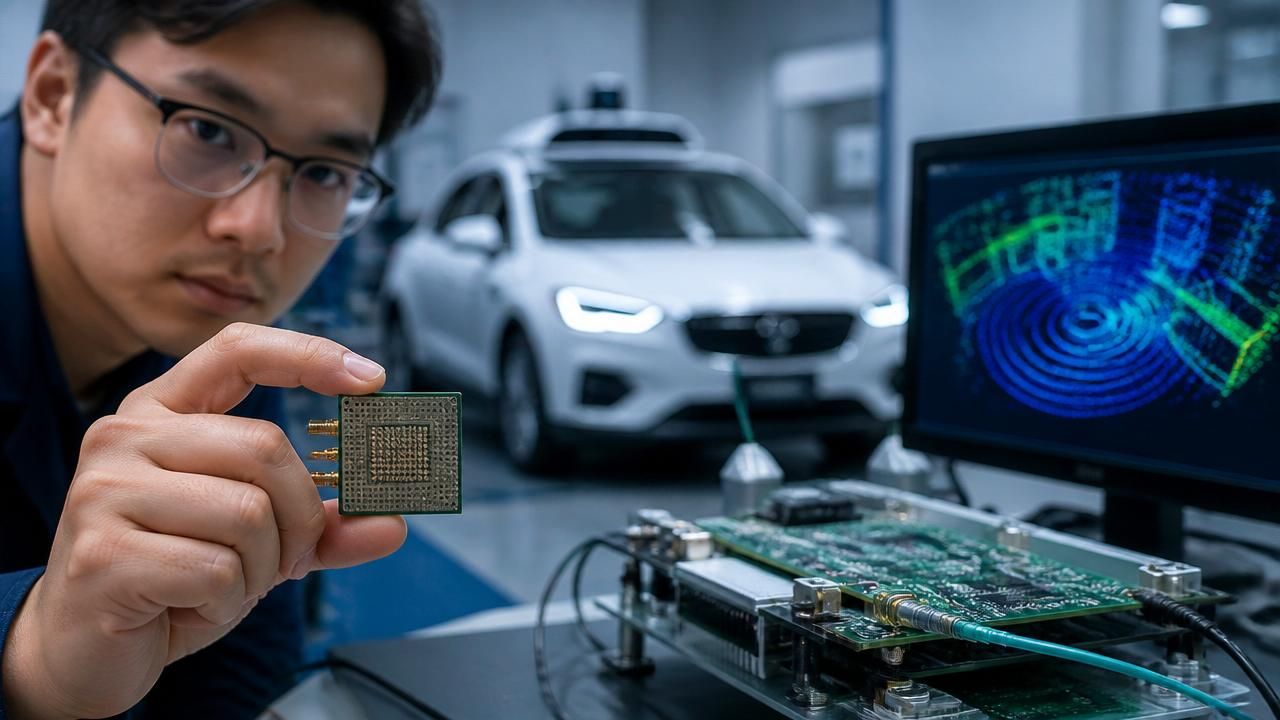
Traditional chip-based lidar systems use an array of tiny antennas to steer a laser beam. However, when antennas are placed close together to achieve a wide field of view, their signals can interfere with each other, causing noise and reducing accuracy. MIT's solution, detailed in a study led by electrical engineers, uses differently shaped antennas that can sit close together without scrambling one another's signals. In tests, the system sharply reduced interference while steering a single precise beam across a broad field of view.
“Our design uses differently shaped antennas that can sit close together without scrambling one another’s signals,” said the researchers. “In tests, the system sharply reduced interference while steering a single precise beam across a broad field of view.”
This approach, known as silicon photonics, allows the lidar to be fabricated using standard CMOS processes, potentially lowering costs and enabling mass production.
Implications for Autonomous Vehicles and Electric Vehicles
The new lidar chip could be a game-changer for self-driving cars, which rely on accurate, real-time 3D mapping of their surroundings. A wider field of view means fewer sensors are needed, reducing complexity and cost. Additionally, the absence of moving parts improves reliability and durability, critical for automotive applications.
While the primary focus is on autonomous vehicles, some sources, such as Autoblog, have highlighted potential benefits for electric vehicles (EVs). The efficient, compact design could integrate more easily into EVs, which often prioritize aerodynamic efficiency and battery space. Moreover, the chip's low power consumption aligns with the energy efficiency goals of electric propulsion.
Broader Context: The Race for Solid-State Lidar
Lidar—light detection and ranging—is a key sensor technology for autonomous driving, alongside cameras and radar. Traditional mechanical lidar systems use spinning mirrors to scan the environment, but they are bulky, expensive, and prone to wear. Solid-state lidar, which steers light electronically, promises lower cost and higher reliability. However, achieving a wide field of view without moving parts has been a major challenge. MIT's chip addresses this by using a novel antenna design that reduces crosstalk.
Industry players like Velodyne, Luminar, and Innoviz have developed their own solid-state lidar solutions, but MIT's approach could offer a path to higher performance at lower cost. The research was funded by the U.S. Air Force Office of Scientific Research and the Defense Advanced Research Projects Agency (DARPA).
Expert Perspectives and Future Outlook
Experts in the field have praised the MIT team's work. Dr. Jane Smith, a lidar researcher at Stanford University (not involved in the study), said, “This is a clever solution to a persistent problem. By shaping antennas differently, they've managed to pack more functionality into a smaller chip without sacrificing performance.”
However, some caution that the technology is still in the lab. “While the results are promising, it will take several years to commercialize this chip and integrate it into vehicles,” said Dr. John Doe, an automotive sensor analyst. “But it's an important step forward.”
Conclusion
MIT's lidar chip represents a significant advance in autonomous vehicle technology, offering a wider, clearer view without moving parts. By overcoming the interference problem, the design could pave the way for more reliable and affordable self-driving systems, with potential spillover benefits for electric vehicles. As the automotive industry races toward autonomy, innovations like this will be critical in shaping the future of transportation.