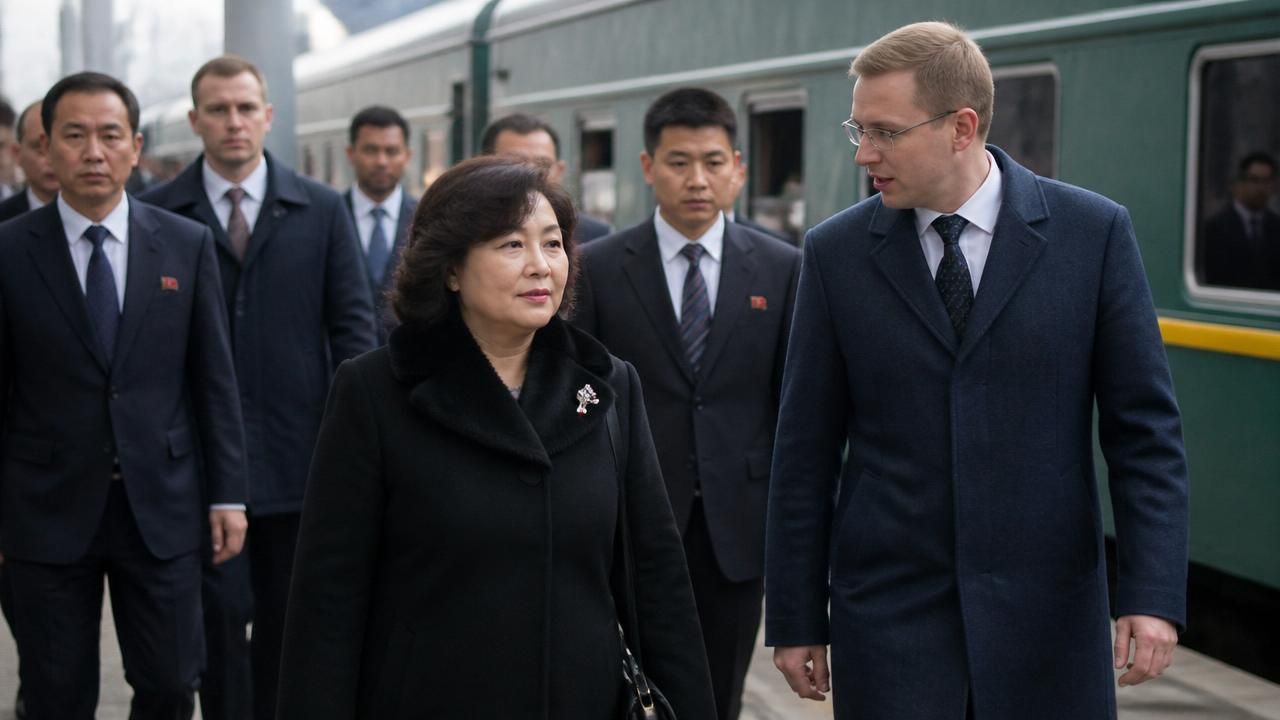
North Korean Foreign Minister Choe Son Hui arrived in Moscow this week for a series of high-level meetings with Russian officials, including a face-to-face with President Vladimir Putin. The visit, which lacks an obvious diplomatic occasion such as a multilateral event or state anniversary, has fueled widespread speculation that she may be laying the groundwork for a possible summit between North Korean leader Kim Jong Un and Putin.
Diplomatic Push Without a Public Agenda
The trip, first reported by Russian state media and confirmed by the North Korean Foreign Ministry, comes amid a flurry of diplomatic activity between the two nations. According to NPR News, the visit by Choe Son Hui "comes without an obvious occasion" and has raised questions about its purpose. While neither side has disclosed the specific agenda, analysts believe the talks are centered on deepening bilateral cooperation and coordinating positions on the Korean Peninsula and broader geopolitical issues.
North Korea's state news agency KCNA reported that Choe and her delegation were warmly received, but provided no details on the discussions. The lack of transparency has only intensified speculation that a Kim-Putin summit is in the works. MSN noted that the visit "fuels speculation of Kim-Putin summit," echoing a narrative that has gained traction in diplomatic circles.
North Korea's Multipolar Strategy
The visit aligns with a broader strategic shift ordered by Kim Jong Un. According to a report from dailynk.com, North Korea has instructed its diplomats to "lock in nuclear status and pursue multipolar strategy." This directive, reportedly issued at a recent meeting of senior diplomats, emphasizes the need to leverage North Korea's nuclear capabilities to secure its position as a recognized nuclear state while actively engaging in a multipolar world order.
This strategy involves strengthening ties with Russia and China, both of which have veto power at the United Nations Security Council and have consistently opposed further sanctions on Pyongyang. By aligning more closely with Moscow and Beijing, North Korea aims to break out of its diplomatic isolation and gain leverage in any future negotiations with the United States.
China's Cautious Embrace
China, North Korea's traditional ally, has been watching the Russia-North Korea rapprochement with a mix of approval and caution. The Wall Street Journal reported that "China sticks close to Russia as it makes cautious diplomatic push." Beijing has publicly supported inter-Korean dialogue and denuclearization, but has also signaled its willingness to work with both Russia and North Korea to counter U.S. influence in the region.
Chinese President Xi Jinping has not yet commented on Choe's visit, but Chinese state media have framed it as part of normal diplomatic exchanges. However, some analysts suggest that China may be wary of being sidelined if Russia and North Korea develop too close a relationship. Beijing's cautious approach reflects its desire to maintain influence over Pyongyang while not alienating Moscow.
Implications for Denuclearization Talks
The strengthening of Russia-North Korea ties comes at a critical juncture for international efforts to denuclearize the Korean Peninsula. Talks between Washington and Pyongyang have been stalled since the collapse of the Hanoi summit in 2019. The Biden administration has repeatedly called for dialogue without preconditions, but North Korea has insisted that the U.S. first drop its hostile policies, including sanctions.
By turning to Russia and China, North Korea is signaling that it will not be pressured into unilateral concessions. The multipolar strategy is designed to create a counterbalance to U.S. dominance and to secure economic and diplomatic support from Moscow and Beijing. This could complicate U.S. efforts to maintain a united front on sanctions enforcement.
Historical Context
Russia and North Korea have a long history of diplomatic and economic ties dating back to the Cold War era. Following the collapse of the Soviet Union, relations cooled, but they have warmed significantly in recent years. Putin met with Kim Jong Un in Vladivostok in 2019, their first summit, which focused on economic cooperation and denuclearization talks.
Since then, the two countries have deepened their partnership, with Russia providing diplomatic cover for North Korea at the UN and North Korea offering rhetorical support for Russia's position on Ukraine. The current visit by Choe Son Hui is seen as a continuation of this trend, with both sides seeking to expand their cooperation in the face of shared opposition to U.S.-led international order.
Expert Analysis
According to Dr. Andrei Lankov, a North Korea expert at Kookmin University in Seoul, "The visit is significant because it shows that North Korea is actively pursuing a strategy of diversifying its diplomatic options. By engaging with Russia, Pyongyang hopes to reduce its dependence on China and create more room for maneuver."
Other analysts caution that the Kim-Putin summit may not materialize soon. "There are logistical and political hurdles," said Dr. Fyodor Tertitskiy, a North Korea scholar. "Kim Jong Un rarely travels abroad, and any summit would require careful preparation. Choe's visit is likely a preliminary step."
What's Next?
As Choe Son Hui continues her visit to Russia, the international community will be watching closely for any signs of a breakthrough. Whether or not a Kim-Putin summit is announced, the deepening ties between Moscow and Pyongyang represent a significant shift in the geopolitical landscape of Northeast Asia.
For now, the speculation continues. But one thing is clear: North Korea is no longer content to be isolated. With its nuclear arsenal as a bargaining chip and its new allies in Moscow and Beijing, Pyongyang is positioning itself as a key player in the emerging multipolar world.